Award

Applications open

Peter Goldacre Award

The Society's early-career award, recognising outstanding original research in plant science and honouring the memory of Peter Goldacre.

Apply now

Applications close Friday 12 March 2027

Value

$2,000 and a medal

Eligibility

ASPS members within 10 years of their PhD, or 10 cumulative years of employment since their thesis was submitted (career breaks excluded). Apply directly or be nominated by another member.

Sponsor

Functional Plant Biology, the official journal of ASPS

Lecture

The plenary Goldacre Lecture at the ComBio or ASPS meeting

About

Peter Goldacre was an enthusiastic researcher who was held in great respect by his peers. His tragic death in 1960 from stomach cancer at age 34 shocked and saddened all his friends and colleagues. The Goldacre Medal was subsequently established as a lasting tribute to his contributions in plant physiology, and as an encouragement to young researchers.

Peter Goldacre was a foundation member of the Australian Society of Plant Physiologists and an enthusiastic member of the Society from its inception. He completed a Science degree at the University of Sydney, majoring in chemistry and biochemistry, and took up a research position at (what was then) CSIR Division of Plant Industry in Canberra in 1947. His brief was to study the biochemistry of plant hormone action, and at that time this meant the study of auxin action, because other classes of plant growth regulators had not yet been discovered.

Peter’s early work concentrated on the biochemistry of auxin breakdown in plant tissues. In the early 1950s Peter did his PhD at CALTECH with James Bonner and in the company of such well-known plant physiologists as Arthur Galston, George Laties, Joe Varner and Sam Wildman. He returned to CSIRO Plant Industry and continued his work on plant growth regulators.

In 1955, after Peter’s return from CALTECH, a compound was isolated from degraded DNA by Carlos Miller and collaborators in Wisconsin. In its presence in a nutrient solution, cell division of cells of tobacco pith tissue was initiated, and it was hailed as a cell division hormone and named kinetin. However, it was quickly realised that, despite its activity, kinetin was an artifact, and the quest for a naturally occurring cell division initiator (cytokinin) began. It was surmised that a likely source would be tissue in which cells were rapidly dividing. Peter located an apple orchard on the outskirts of Canberra which was about to be bulldozed to make way for Narrabundah High School, and in the late 1950s almost the whole of the Division of Plant Industry spent several days harvesting tiny apple fruitlets as a potential source of rapidly dividing cells.

This operation, in which Ned Kefford and Rick Bottomley were prominent participants, was followed by many months of extraction on a semi-industrial scale to concentrate a cell division factor which was known locally as ‘kinapple’. By late 1959, Peter and his colleagues had succeeded in isolating from apple fruitlets a highly concentrated fraction with strong cytokinin activity. Peter’s tragic death from stomach cancer in early 1960, aged 34, shocked and saddened his friends and colleagues. The work on ‘kinapple’ was continued by Peter’s colleagues after his death, but the race for the first chemically characterised, naturally occurring cytokinin was won by Stuart Letham with his characterisation of zeatin from immature maize kernels.

Peter Goldacre was an enthusiastic researcher who was held in great respect by his peers. Soon after his death the Association established the Goldacre Medal as a lasting tribute to his contributions to plant physiology and as an encouragement to young researchers in this discipline.

Links of interest

Colleagues

Compiled by Don Spencer with help from John Zwar and Tony Ashton.

Application details

1. The Award

  1. The Award honours the memory and attainments of Peter Goldacre, a young scientist and foundation member of this Society.
  2. The Award will be made on the merit of original research in one area, the findings of which have been published, or accepted for publication. The papers presented for the Award must have been published, or accepted for publication, since the applicant received their PhD and must not encompass research performed during their PhD. More than one paper may be submitted (maximum of five), but these should clearly be related to one theme. The candidate need not be the sole author, but it should be evident that they have played a major role in both the design and the execution of the work. Review papers are not considered. The work should have been done within 10 years of the candidate submitting their PhD (see Rules 2.3 and 2.4).
  3. The work presented for assessment shall be in any branch of plant science represented by the Society.
  4. The Award shall not be made for work carried out under supervision while the applicant was a candidate for a research degree.
  5. The work need not have been carried out in Australia, if the candidate is an Australian citizen or permanent resident (see Rule 2.5).
  6. The Award will be made at intervals specified by the Society. Normally, an award will be considered yearly.
  7. The value of the Award will be determined by the Society. The current value is $2,000, and is sponsored by Functional Plant Biology. A medal is also presented.
  8. The Award need not be made on any occasion when the Society considers that there is no candidate of sufficient merit.
  9. The successful applicant will be invited to present their work in a plenary Goldacre Lecture at the ComBio or ASPS meeting, and to submit this presentation, with additional material as appropriate, for subsequent publication in Functional Plant Biology (continuing Australian Journal of Plant Physiology).

2. The Candidate

  1. A person may apply for the Award or a nomination may be made on their behalf.
  2. Candidates are not restricted as to the number of occasions on which they apply for the Goldacre Award. Previous recipients of the Goldacre Award cannot reapply. Previous recipients of the Anderson Award are ineligible to apply for the Goldacre Award.
  3. To be eligible for this early career award, the candidate cannot exceed 10 cumulative years of employment subsequent to the year their PhD was submitted at the time of applying (excluding career breaks).
  4. A candidate must have carried out the research within 10 cumulative years of employment subsequent to the year in which their PhD thesis was submitted. The papers presented for the Award must have been published, or accepted for publication, since the applicant received their PhD and must not encompass research performed during their PhD.
  5. The candidate should be an Australian citizen, a permanent resident, or have carried out all the research for the Award in Australia.
  6. A joint application or nomination from two or more persons, each fulfilling all requirements, will be considered.
  7. Candidates should be members of the Society, and their nominators also should be members of the Society.

3. Application procedure

  1. Applications close at a date set by the Society each year, normally at least six months before the ComBio or ASPS meeting at which the Award is announced, to enable the Awardee to present their work in a Goldacre Lecture.
  2. Applications are made through the online form on this page. Each application shall include a one-page statement describing the merits of the applicant’s work, a full CV (including date of birth and employment history), and copies of each of the published papers forming the basis of the application. The statement and papers are uploaded together as a single file, with the CV uploaded as a separate file. The form also asks for a summary limited to 100 words that can be used as a citation at the Award ceremony, and for details of any career breaks (the nature and length of each break).
  3. The Secretary of the Society only will maintain a register of applications. Thus those assessing applications will not know whether they have originated as nominations or direct applications.
  4. The Award will be made by the Society on the recommendation of its Committee, who may co-opt expert assessors for this purpose. The Secretary and President will select appropriate Australian and international assessors, whose identity will remain known only to them. In cases where more than one candidate receives a strong recommendation, the President or Secretary will decide on the Award on the basis of the advice received.

Application checklist

  • A one-page statement describing the merits of the candidate’s work
  • The candidate’s full CV, including date of birth and employment history
  • Copies of each published paper the application is based on (up to five, on one theme)
  • The statement and papers combined into one PDF or Word file (up to 30 MB), and the CV as a separate file (up to 5 MB), to upload with the online form
  • A summary of up to 100 words for use as the citation at the award ceremony
  • The year the candidate’s PhD thesis was submitted, and details of any career breaks (their nature and length)
  • If you’re nominating someone else, your own name and email as the nominator

Apply online

Applications open

Applications close Friday 12 March 2027

Questions

If you have a question, please email the ASPS Secretary at [email protected].

Past recipients

2026

Renée Marchin Prokopavicius

Western Sydney University

2025

Stephanie Watts-Fawkes

Wageningen University & Research

2024

Dr Peter Crisp

University of Queensland

2023

Dr Tatiana Soares da Costa

University of Adelaide

2022

Dr Maria Ermakova

Australian National University

2021

Dr Joanna Melonek

University of Western Australia

2020

Dr Alex Wu

University of Queensland

2019

Dr Simon Williams

Australian National University

2018

Dr Caitlin Byrt

University of Adelaide

2017

Jonathan Plett

Western Sydney University

2016

2015

Mark Waters

University of Western Australia

2014

Brett Ferguson

2013

Min Chen

2012

Josh Mylne

2011

Chanyarat Paungfoo-Lonhienne

2010

Christopher Cazzonelli

2009

Ben Trevaskis

2008

Jason Able

2007

Ulrike Mathesius

2006

Peter Dodds

2005

Yong-Ling Ruan

2004

Stephen Swain

2003

Harvey Millar

2002

Spencer Whitney

2001

Christine Beveridge

2000

Barry Pogson

1999

Daniel Schachtman

1998

Jim Whelan and Adrienne Clarke

1997

Peter Ryan

1995

Jon Lloyd

1994

Mark Thomas

1992

Bob Furbank

1991

John Evans

1990

Geoff McFadden

1989

Ian Dry

1988

Adrienne Hardham

1987

Steve Tyerman

1986

Jim Burnell

1984

Simon Robinson and Joe Wolfe

1982

Murray Badger

1981

Margaret Sedgley

1980

Graham Farquhar

1979

Brian Loveys

1978

TJ Higgins

1977

Ray Rose

1976

John Andrews

1974

Andrew Smith

1972

Barry Osmond

1970

Roger Slack

1968

Bob Smillie

1965

Joe Giovanelli

Other awards

All Awards & Funding Opportunities
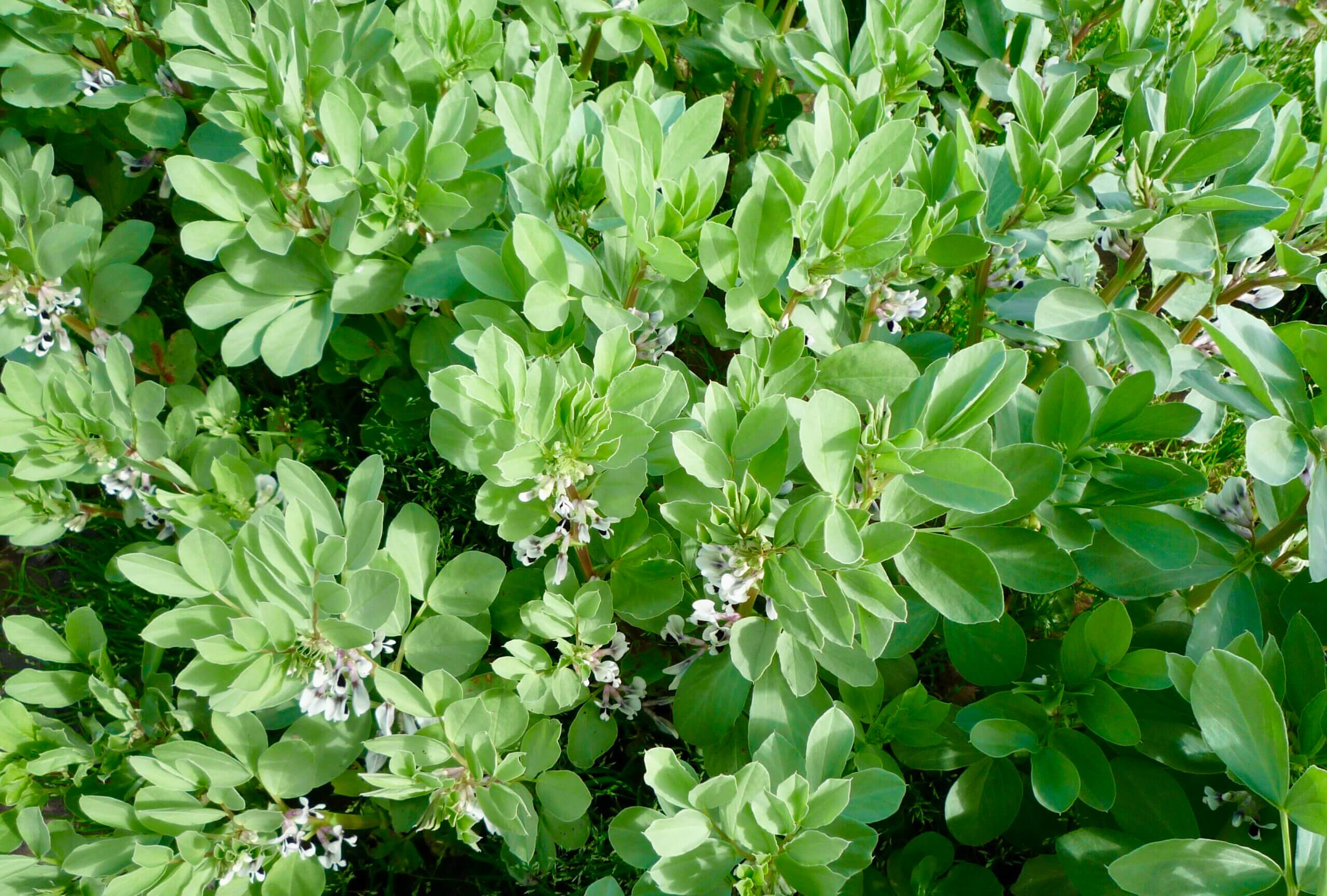
Faba bean (Vicia faba) plants in flower seen from above, with white and black flowers among grey-green leaves

Become a member

Join a community of plant scientists

Membership makes you eligible for the Society's awards, grants and fellowships, and supports the next generation of plant science in Australia.

Protein power: developing faba bean (Vicia faba)

Search


Can't find what you're looking for?

Get in touch
Info

About ASPS

Directories

Publications

All publications
Awards & Funding

Current Awards

Grants

Fellowships

Invitations

Past Awards

Events

Events

Annual Conference

Become a Member Contact