
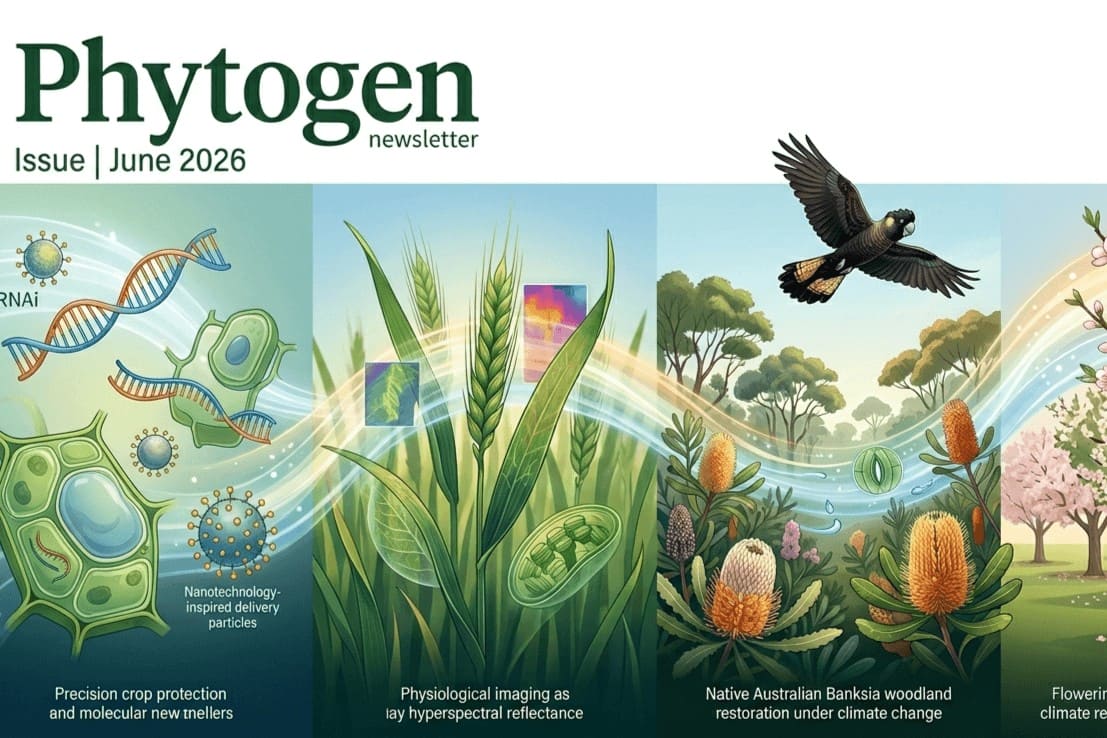
In this issue, we are pleased to feature contributions celebrating plant science across scales, from molecular approaches for crop protection to tree responses under heat stress and flowering biology in horticultural crops. We also share student achievements, fellowship success stories, postgraduate travel award reflections, and introduce our new Picture This section inviting students and researchers to share images from their research. This issue also highlights upcoming conferences, scholarships, postdoctoral opportunities, and events for the plant science community — come be a part of the conversations advancing plant science in Australia and beyond.
Connect with ASPS on social media: LinkedIn: Australian Society of Plant Scientists; BlueSky: @asps-oz.bsky.social
Join the conversation using #AusPlantSci #ComBio2026 (for the upcoming conference). Tag us to help promote your science on our platforms!
Phytogen is a community-driven newsletter, and we welcome contributions from ASPS member students, early- and mid-career researchers, and established scientists at any time. We are always looking for:
- Student or lab research highlights
- Conference or workshop reports
- Opinion pieces and perspectives
- Field or extension insights
- Upcoming events, webinars, and symposia suggestions
Contributions can be sent anytime to Phytogen co-editors Raz ([email protected]) or Sneha ([email protected]).
ComBio 2026

COMBIO 2026 PROGRAM NOW AVAILABLE!
We are delighted to release the full three-day program for ComBio 2026, showcasing the latest research across a diverse range of disciplines.
- Cell and Developmental Biology
- Biochemistry and Metabolism
- Proteins, Peptides, and Structural Biology
- Plant Biology
- RNA
- ‘Omics and Systems Biology
- Education
This diverse and comprehensive program features:
- 2 Keynote Plenary and 13 Plenary presentations
- 54 Symposia featuring more than 100 Invited Speakers
- Over 140 oral and 70 lightning presentations
- Extensive Poster Gallery showcasing the latest research
- Student and ECR Meet the Mentors lunch
- Networking at the Welcome Reception & Poster Session

Tickets for the ASPS cocktail event are also now available at these links:
https://www.combio.org.au/social-program
https://www.asps.org.au/asps-2026-cocktail-evening
Registration is now open: REGISTER HERE
Follow the conversation: on LinkedIn
2026 ASPS Award Winners Spotlight

2026 Goldacre Award Winner
Renée Marchin Prokopavicius
Western Sydney University
Renée Marchin Prokopavicius is a plant ecophysiologist who studies the effects of warming, drought, and heatwaves on terrestrial ecosystems. She aims to determine which species succeed in changing environments by measuring plant functional traits related to growth and survival – leaf gas exchange, transpiration (sap flow), photosynthetic heat tolerance, plant water relations, and tree dieback. She obtained her PhD in Plant Biology in 2013 studying how warming and extreme drought affect temperate forests in the USA. Her current research at the Hawkesbury Institute for the Environment of Western Sydney University examines plant responses to extreme heatwaves.
Dr Marchin recently completed her DECRA research project entitled, “Green or crispy: Which plants use transpiration to survive heatwaves?” Her project investigated how trees respond to extreme heat by tracking dynamic changes in water use during both natural and experimental heatwaves, representing current and future stress levels. Earth’s forests and cities are increasingly exposed to deadly heatwaves >40 °C that approach the physiological limits of life. Extreme heat leading to accelerated tree water loss could be a key reason why forest and urban trees are dying more rapidly under hotter drought. Her research found that the 2019-2020 Black Summer caused extensive dieback of 20% and the death of 8% of surveyed trees in Sydney’s urban forest. This cumulative heat stress had long-lasting effects on urban trees, with the most affected species having reduced height and diameter growth that persisted for over three years.
Predicting tree species vulnerability to extreme heat and hotter drought remains difficult, in part because key plant functional traits associated with drought-induced tree dieback often fail to capture responses to heat plus drought stress. To address this, Dr Marchin has exposed diverse tree and shrub species to drought stress followed by extreme heatwaves (maximum Tair≥ 40 °C) in controlled glasshouse and whole-tree chamber experiments. Her ongoing research is comparing species growing in common garden experiments in western Sydney, where summer temperatures regularly exceed 40 °C. She also works with city councils to test if innovative water-sensitive urban design projects can help to protect urban street trees on hot, dry summer days. This recent research aims to identify tolerant species and key strategies to help prioritise the climate resilience of Australia’s forests.
Get Involved with ASPS
Life & Corresponding Membership
Life Membership
Life Membership of the Australian Society of Plant Scientists recognises an outstanding and sustained contribution to the Society by a longstanding ASPS member who, through their professional activities, has substantially enhanced the international profile of Australian plant science research.
Nominations for ASPS Life Membership can be made at any time to the Honorary Secretary (Mary Byrne [email protected]). A one-page summary addressing the above criteria must accompany the nomination.
Corresponding Membership
Corresponding Membership of the Australian Society of Plant Scientists recognises overseas colleagues, with a high profile of research achievement in any field of plant science, who have a strong track record of successfully contributing to and promoting plant science research within Australia.
Nominations for ASPS Corresponding Membership can be made at any time to the Honorary Secretary (Mary Byrne [email protected]). A one-page summary addressing the above criteria together with a curriculum vitae of the applicant must accompany the nomination.
Discipline Representatives
Applications for the following Representatives are open and close on 11th September. Application form can be found on the ASPS website Committees & Representatives — Australian Society of Plant Scientists
- Cell Biology
- Plants and the Environment
- Plant-Microbe Interactions
- Plant Science Education and Outreach
- Diversity and Inclusion
- Student Representatives (numerous positions)
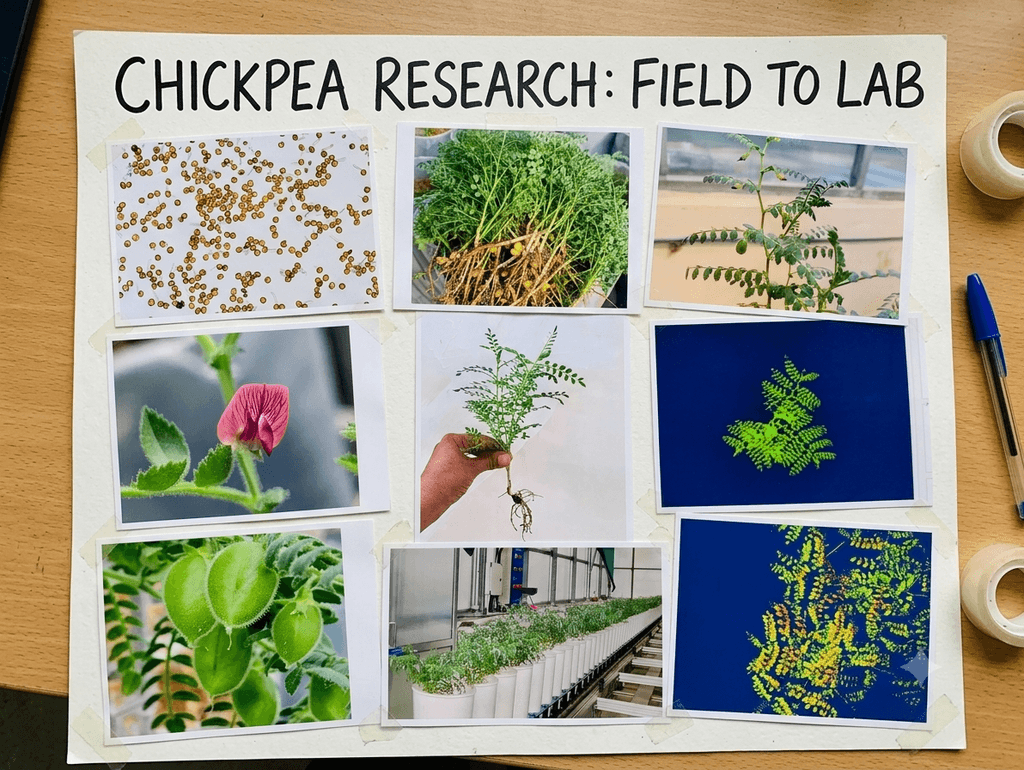
Picture This!
Got a great shot from your research?
We’re launching a new feature in Phytogen and want your photos! From muddy field days and greenhouse experiments to microscopic views and field sites; if it tells a science story, we want to see it.
Send your image with a short 1–2-line caption and we’ll feature selected submissions in upcoming issues.
Here are one from our editor Sneha
Discipline Representative Contribution
Genetics & Molecular Biology
Stephanie Kerr
Queensland University of Technology (QUT)
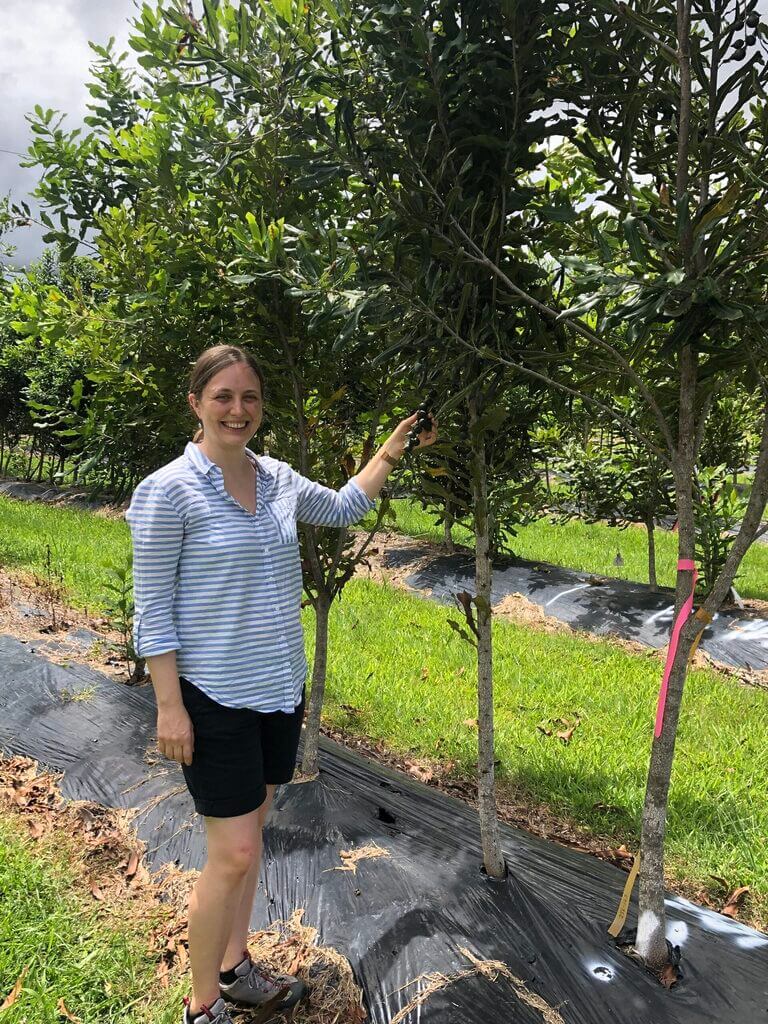
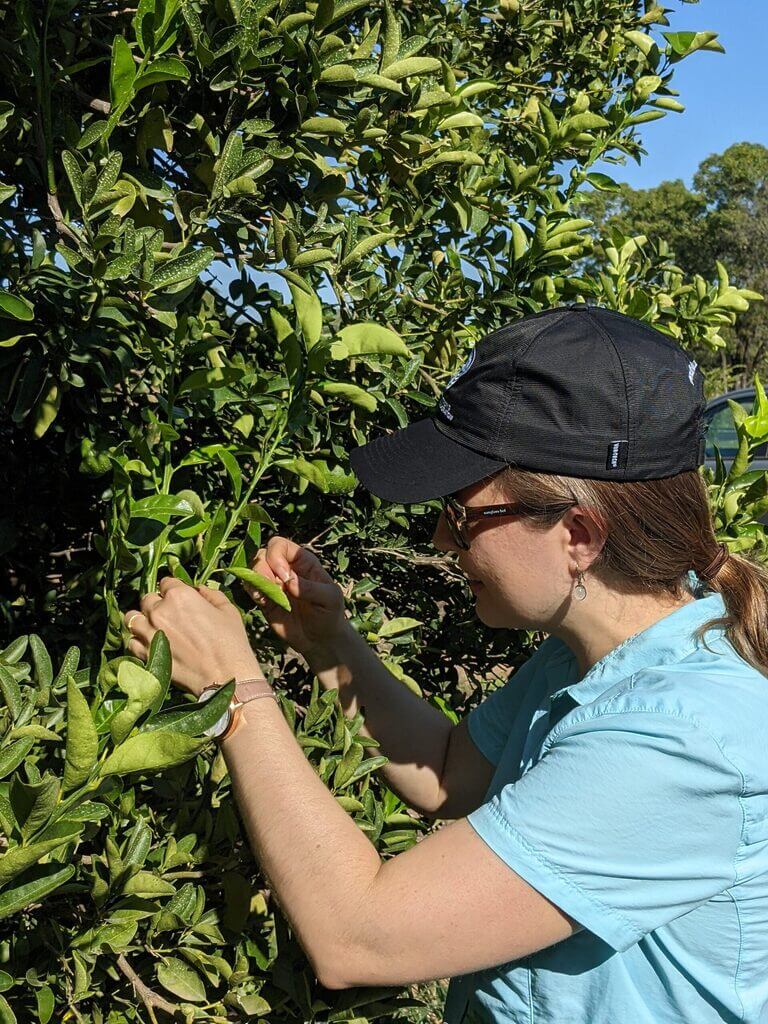
I would like to introduce myself as one of the new Discipline Representatives for Genetics & Molecular Biology with the Australian Society of Plant Scientists (ASPS). I am excited to join the ASPS team and look forward to contributing, along with the other discipline representatives, to plant science in Australia. Currently, I am a research fellow at the Centre for Agriculture and the Bioeconomy and the School of Biology and Environmental Science at the Queensland University of Technology (QUT) in Brisbane. My research focuses on using different genomic and biotechnological approaches to understand and improve key traits influencing horticultural tree crop productivity1. Horticultural tree crops, such as mango, citrus and macadamia, are important for the Australian economy, valued at over $1B annually. However, in comparison to well-studied annual crops like rice and wheat, tree crops have been relatively understudied, especially in the genomics space.
My research focuses on several key traits in these tree crops, including flowering, vigour and abiotic and biotic stresses. Flowering, in particular, is an important trait in tree crops. Tree crops have an extended juvenile period, meaning they can take several years or even decades before they first flower and produce fruit. This affects growers, who must wait years before seeing a return on their investment, as well as breeding programs as long generation times delay crosses and assessment of key traits such as fruit quality. Once a tree reaches maturity, the timing and intensity of flowering each season is also an issue for ensuring consistency of yield. Flowering is influenced heavily by both the internal genetics of the tree and the external environment; in particular, low temperatures are often required to induce flowering of many tree crops when grown in sub-tropical regions. Therefore, changing climates are expected to have an influence on flowering, with anecdotal observations already noting a decline in reliable floral induction occurring in regions around Australia.
Our team at QUT is using a combination of approaches to understand the genetic regulation of flowering and other traits of interest in these tree crops and then use this information to help breeding programs develop cultivars with improved traits. We are using sequencing approaches to understand the genetic regulation of key traits, as well as identify genetic markers associated with traits of interest using genome-wide association tools such as QTL and GWAS. In Citrus we successfully identified a major QTL associated with precocious flowering that involved chromosomal translocation and duplication of a key flowering gene, FT3. This marker is currently being used in the Citrus breeding program based in Bundaberg, QLD to select parents for introgressing precocious flowering into commercial cultivars. We are also using biotechnological approaches, such as CRISPR gene editing and nanoparticle-mediated gene silencing to directly manipulate traits in the tree crops. CRISPR technologies have advanced significantly in recent years, and the ability to generate non-genetically modified edited crops with improved traits has the ability to revolutionise crop breeding. However, the application of CRISPR in many tree crops is challenging due to high heterozygosity and recalcitrance to tissue culture and transformation. Despite these challenges, we have successfully generated CRISPR-edited Citrus lines and are now attempting to apply this technique to more recalcitrant tree crops such as mango. Nanoparticle-mediated gene silencing is another technology that is being used in agriculture, mainly for targeting pests and diseases. Our research is applying these technologies to silence endogenous genes to manipulate traits in the trees, such as the induction of flowering. Our group is always exploring new technologies to help our research into tree crops, so if you are interested in our research, please get in touch!
This research is being conducted under the QUT-led Genetics for Next Generation Orchards program funded through Hort Innovation Frontiers with co-investment from QUT, the University of Queensland, Queensland Alliance for Agriculture and Food Innovation, Western Sydney University, Murdoch University, Adelaide University, and The University of Western Australia; Department of Primary Industries (Queensland), Department of Primary Industries and Regional Development (Western Australia), and Northern Territory Department of Agriculture and Fisheries; Bioeconomy Science Institute, CIRAD, AbacusBio; and contributions from the Australian Government.
1 Kerr, SC, Shehnaz, S, Paudel, L, Manivannan, MS, Shaw, LM, Johnson, A, Velasquez, JTJ, Tanurdzic, M, Cazzonelli, CI, Varkonyi-Gasic, E, Prentis, PJ. 2024. Advancing Tree Genomics to future proof next generation orchard production. Frontiers in Plant Science. https://doi.org/10.3389/fpls.2023.1321555
Student Representative Contribution

Soumitra Patekar
PhD candidate, Centre for Agriculture and the Bioeconomy, Queensland University of Technology (QUT)
ASPS Student Representative for Queensland (2025-2026)
I am Soumitra Patekar, a final year PhD student at the Centre for Agriculture and the Bioeconomy, QUT, Brisbane. I am excited to be onboard as a student representative in the ASPS committee for 2025-26 and look forward to engaging more with the plant science community through my new role.
My research journey began at the Indian Institute of Science, Education and Research, Pune where I pursued my Master of Science thesis in chemical ecology. I was looking at the tri-trophic interactions between the Diamondback moth (P. xylostella), its plant host and its natural enemy as a means to develop a biological control strategy. Working with insects in rearing chambers and in agricultural crop fields was a fascinating experience for me as budding researcher and got me tethered to the field of plant biology. This helped me streamline my research path and led me to my next step which was a research assistant position at the Central Institute for Medicinal and Aromatic Plants, Bangalore where I stepped into core plant molecular biology and worked on elucidating the terpene biosynthesis pathway in aromatic grasses. Thereafter, with some closely relevant experience, I joined the Waterhouse group at QUT, Brisbane for a PhD project aimed at developing sustainable solutions to control Lepidopteran insect pests.
My current research primarily focuses on developing topical RNA delivery systems for transient crop protection through RNA interference (RNAi). Due to the heavy reliance on chemical pesticides, RNAi, which works through a sequence-specific degradation mechanism, has emerged as an attractive and environmentally safer solution to control pests in agriculture. RNAi was initially demonstrated as a pest control method using transgenic plants expressing the active ingredient, i.e., pest lethal gene-targeting double-stranded RNA (dsRNA). In the past few years, there has been a shift away from transgenic approaches to applying dsRNA non-transgenically to crops. However, a few bottlenecks mainly associated with dsRNA delivery to plants still exist. Delivering exogenous dsRNA into plants to achieve functional effects is quite challenging due to plant or leaf structural barriers and environmental factors thereby necessitating the use of carriers. Developing alternative and simpler ways of introducing exogenous dsRNA into plants remain less explored though.
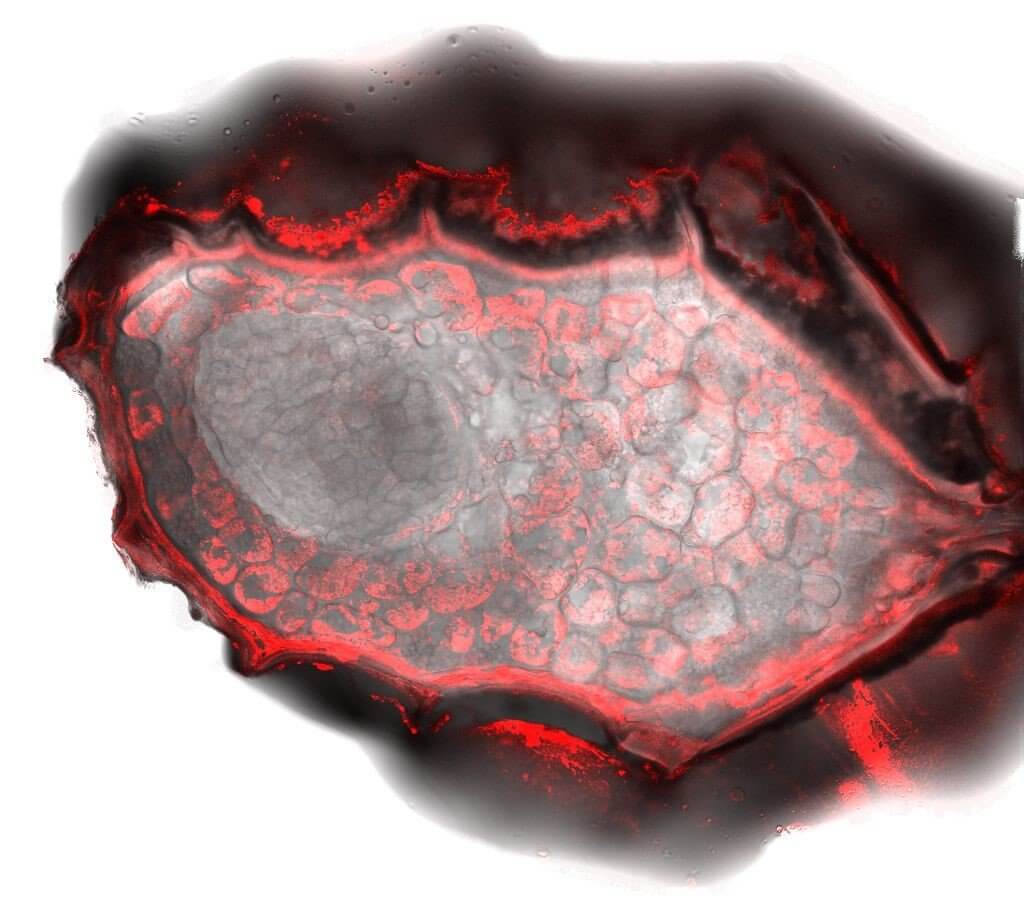
We showed in our recently published pre-print1 that the seed can be used as one such alternative route to deliver dsRNA into plants. Interestingly, between the two different dsRNA designs that we used our study, we observed striking differences in their localization, movement and fate post-delivery. This led us to not only develop a non-transgenic, seed-mediated plant dsRNA delivery method but also to deduce a mechanism to alter biological outcomes by modifying the input dsRNA design. Essentially, seed-delivered 22nt siRNAs are able to access the cellular RNAi machinery and trigger transitive RNAi against endogenous plant targets leading to whole plant silencing phenotypes. Whereas, long dsRNAs are retained in the plant apoplast, taken up by feeding insects and trigger RNAi-mediated growth defects. We also showed that simultaneous co-delivery of these two triggers could give dual outcomes of plant modification as well as RNAi-based insect protection. Such seed-based dsRNA treatment represents a scalable and economic application method and opens several exciting avenues for topical RNAi-based crop improvement in agriculture.
Please feel free to connect with me on LinkedIn to share your thoughts, get research updates or to discuss potential collaborations.
References
1. Bally J, Patekar S, De Campos S B, Maxwell B, An J, Narva K and Waterhouse P. (2026). Seed-delivered dual action RNAi for insect protection and modified plant traits. Springer Science and Business Media LLC. doi.org/10.21203/rs.3.rs-9195507/v1
Reports from Postgraduate Travel Award Recipients
We are pleased to feature more reports from postgraduate students who received ASPS travel awards to attend the 2025 Adelaide conference. We will be featuring more reports in upcoming issues through the year.

Russell Woodford
Monash University
The ASPS 2025 conference was a fantastic meeting and an ideal opportunity for me to connect with fellow researchers while learning about the latest plant science being conducted across Australia. One of the major highlights was the poster sessions, which allowed me to present my recent work, discuss research ideas with fellow students and academics, and hear from others working on topics closely related to mine. These sessions, along with the social events and the excellent conference dinner, helped me build new relationships and develop collaborations that will benefit my future work. Overall, I found the ASPS 2025 conference academically enriching and inspiring, and I am grateful to the society for supporting my travel.

Francis Kuang
The University of Melbourne
The 2025 ASPS Conference in Adelaide was the first conference I attended during my PhD and an exciting opportunity to engage with diverse plant research across Australia. My poster attracted researchers working on pollen development, hybrid breeding, and wheat, leading to valuable discussions, constructive feedback, and new connections. I was particularly impressed by Stephanie Watts-Fawkes’ talk on arbuscular mycorrhizal fungi and zinc nutrition, which clearly linked molecular mechanisms to crop and human nutrition outcomes. The smooth narrative and comprehensive data made the research especially compelling. Overall, the meeting strengthened my research direction and motivation.
Ben McDermot
University of Newcastle
Receiving the ASPS Student Travel Award to attend the 2025 Adelaide conference was an invaluable experience. The highlights for me were the sessions on emerging phenotyping technologies and advances in salt stress research, which showcased innovative approaches to studying plant performance under challenging conditions. Presenting my research on stress responsive RNA-binding proteins provided constructive feedback and stimulating discussion that will help refine my experimental direction. The poster sessions and networking events also created opportunities to connect with researchers across diverse fields. Overall, the conference broadened my perspective and strengthened the direction of my work in plant stress biology.

Yunpeng Tao
University of Western Australia
Attending the 2025 ASPS conference in Adelaide was an invaluable experience for my PhD journey. I had the opportunity to present my research on barley responses to phosphorus deficiency through a poster, which sparked engaging discussions with fellow researchers and provided constructive feedback. The plenary sessions on plant nutrition and rhizosphere interactions were particularly inspiring and directly relevant to my work. I also enjoyed networking with students and established scientists during social events, which led to meaningful connections and potential collaborations. This conference broadened my perspective on plant science research and reinforced my passion for sustainable agriculture.
Szczepan Glewicz
University of Sydney
The talks were very informative and extremely detailed, covering a wide range of topics in plant science. My poster presentation attracted a friendly audience of conference attendees, who were all genuinely curious of my research on the role of mucilage in rhizosheath development. The social activities were well-organised, and of those, I especially enjoyed the visit to McLaren Vale. ASPS 2026 was my first ever introduction to networking and presenting outside of my university, and as such, I consider it a milestone in my career as a plant scientist.
Member News
Fellowship Success Story: Herchel Smith Postdoctoral Award
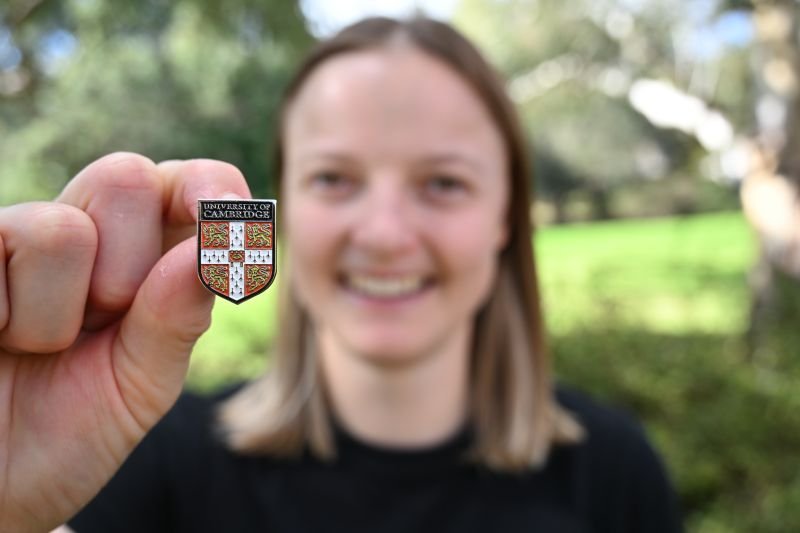
We are delighted to share that Dr Ali Gill has been awarded a Herchel Smith Postdoctoral Research Fellowship at the University of Cambridge, commencing April 2027.
“After two years of persistence, multiple fellowship applications, and many rejections along the way, this achievement reflects remarkable dedication and resilience”. Ali describes the journey as an invaluable learning experience that ultimately strengthened both the project and the vision behind it.
Ali will join Prof Alex Webb’s lab in the Department of Plant Sciences, Cambridge, where her research will explore plant physiology and photosynthesis, with new directions into circadian rhythms and growth regulation. The project also aligns closely with her work within the ARC Centre of Excellence in Plants for Space.
On behalf of the ASPS community, we congratulate Ali on this outstanding achievement and well-deserved recognition.
Find Ali on LinkedIn
Student Achievement: Jann Conroy Award for Outstanding Presentation

We are delighted to congratulate Marie-Emma Denarié, PhD candidate at the Hawkesbury Institute for the Environment, on being awarded 1st prize for the Jann Conroy Award for Outstanding Student Presentation.
At the Higher Degree Research Forum, Marie-Emma presented key findings from her PhD research in a 10-minute talk, highlighting her work on the silicification of early-stage wheat seedlings and its implications for fungal pathogen performance.
This recognition reflects both the quality of her research and her ability to communicate complex science with clarity and impact.
Congratulations, Marie-Emma, on this well-deserved achievement!
PhD Completion Highlight

Congratulations to our ASPS student member Samantha Norman on the successful completion of her PhD at the University of Western Australia.
Thesis Title: “Investigating the Molecular Evolution of C4 Photosynthesis in the Genus Neurachne”.
Opportunities
Conferences, Webinars & Symposia
Soil Science Australia Conference 2026
The Soil Science Australia Conference 2026 will be held in Perth, bringing together researchers, practitioners, and students working across soil health, agriculture, and environmental systems.
This is a great opportunity to share research, build networks, and engage with the latest advances in soil science.
📅 1–5 November 2026
📍 Boorloo (Perth)
🎟️ Early bird registration is now open — don’t miss the discounted rate (check the website for closing date details).
👉 More information and registration:https://www.soilscienceaustralia.org.au
🌼 11th Australian Wildflower Conference & Expo 2026
The 11th Australian Wildflower Conference & Expo will bring together growers, researchers, designers, and industry professionals from across Australia and beyond to celebrate and advance the wildflower sector.
Held only every three years, this flagship event features presentations, networking, workshops, and industry insights across all aspects of wildflower science and trade.
📅 14–15 August 2026
📍 Marcoola, Sunshine Coast, QLD
👉 More information:https://www.wildflowersaustralia.com.au/2026-conference-1
76th Australasian Grain Science Conference
📅 26-28 August 2026
📍 The Brighton Hotel – MGallery, Sydney, Australia
The 76th Australasian Grain Science Conference, hosted by the Australasian Grain Science Association (AGSA), will be held under the theme “Grain Diversity and Resilience Towards 2050.” The conference will bring together researchers, industry professionals, breeders, food scientists, and agribusiness stakeholders to discuss innovations in grain production, digital agriculture, sustainable breeding, grain quality, nutrition, processing technologies, and future challenges facing the grains industry.
Website: Conference – AGSA
🌾 AWiA 2026 National Conference
The Australian Women in Agriculture National Conference 2026 will bring together women across Australia’s agricultural sector for three days of connection, learning and leadership.
Under the theme “Grounded Voices – National Impact”, the conference will feature keynote speakers, panel discussions, practical workshops, regional tours and networking opportunities.
📅 27–29 July 2026
📍 Orange, NSW
🎟️ Earlybird tickets close 15 June
👉 More information and tickets: https://www.awia.org.au/conference26
UWA Institute of Agriculture Industry Forum 2026
📅 8 July 2026
📍 University Club of Western Australia, Crawley
⏰ 1:15–7:00 pm
The UWA Institute of Agriculture Industry Forum is set to bring together leading voices from across Australia’s agrifood sector to discuss the future of agriculture, innovation, and food systems.
This year’s theme explores the question:
“2030 agrifood opportunity – can we capitalise on $200 billion growth?”
The forum will feature industry leaders, researchers, and producers, followed by a networking sundowner.
👉 More information and registration: https://www.eventbrite.com.au/e/2026-industry-forum-2030-agrifood-opportunity-tickets-1985567394527
PhD, Postdoctoral positions & Scholarship
🌱 Postdoctoral Opportunity – Plant–Microbe & Soil Systems (UWA)
A Postdoctoral Research Associate (Agriculture & Plant Microbe) position is currently open at The University of Western Australia.
This role focuses on sustainable agriculture, plant–microbe interactions, soil health, and crop resilience, with opportunities to collaborate across global research and industry partners.
📍 Location: Perth, WA
📅 Full-time, fixed-term (3+ years)
👉 https://external.jobs.uwa.edu.au/en/job/523634/postdoctoral-research-associate-agriculture-plant-microbe
🌿 Postdoctoral Research Fellow – Fungal Competition & Forest Systems
A research position is available investigating fungal interactions, molecular signalling, and ecosystem function in Australian forestry systems.
This project links molecular biology with ecosystem-scale outcomes in plant health.
📍 Location: Western Sydney University, Sydney
🔬 Postdoctoral Fellowship – Direct Air Capture of CO₂ (CSIRO, Newcastle)
A CSIRO Early Research Career (CERC) Postdoctoral Fellowship is currently open in Newcastle, focusing on direct air capture (DAC) of CO₂ and next-generation carbon removal technologies.
The role involves developing and testing chemical/engineering solutions for capturing CO₂ from the atmosphere, with strong links to climate mitigation and industrial decarbonisation.
📍 Newcastle, NSW
📅 Applications close: 5 July 2026
🎓 Scholarship Opportunity to visit Europe for Students – Don’t Miss Out!
CEI:AgER, UWA is offering student scholarships with opportunities for international exposure, industry engagement, and real-world agricultural innovation experience.
👉 Check it out: https://www.uwa-cei.org/student-opportunities
🌱 PhD Opportunities in Plant Ecological Genetics (Germany)
Exciting PhD opportunities are now open within the TRR 341 “Plant Ecological Genetics” consortium, a major interdisciplinary research network across leading German universities and institutes.
The program offers multiple fully funded doctoral positions investigating how plants adapt genetically to changing environmental conditions — integrating ecology, molecular biology, evolution, and computational approaches.
Successful candidates will join a vibrant international cohort and benefit from structured training through the GEcoGen Graduate School, along with access to a strong interdisciplinary research network across Europe.
📅 Application deadline: 10 July 2026
📍 Positions available across multiple partner institutions in Germany
👉 More details and application:https://web.archive.org/web/20260713121643/https://trr341.uni-koeln.de/join-us
ASPS Student Travel Grant 2026
Support for students attending ASPS2026 (ComBio) conference. Funds are set aside to sponsor student travel to our annual conference to contribute to their professional development in plant science. Applicants and their supervisor must be current financial members of ASPS. Funding is contingent on giving a presentation (poster or oral).
Applications are to be emailed to the Hon. Treasurer of ASPS: Joseph Pegler ([email protected])
Application forms can be found HERE.
The deadline for applications received for ASPS2026 is Friday 31 July 2026.
Editors’ Note
Thank you for reading!
As we get closer to ComBio2026, we encourage you to submit an abstract and get involved. This surely will be another memorable conference in Sydney for the Australian plant science community. We also invite you to send your contributions to our new segment “picture this” where you can share snippets of your work or behind the scenes look at your life as a plant scientist. With numerous conferences being held in the coming months, there is no shortage to expand your research network and share your research.
Phytogen is a community-driven newsletter, and we welcome contributions from ASPS member students, early- and mid-career researchers, and established scientists at any time. If you have research highlights, opinions, event reports, or field stories to share, we encourage you to get in touch for future issues
Newsletter written & edited by Razlin Azman & Sneha Reddy
We thank the following members for their contributions to this issue: Renée Marchin Prokopavicius, Stephanie Kerr, Soumitra Patekar, Russell Woodford, Francis Kuang, Ben McDermot, Yunpeng Tao and Szczepan Glewicz.
We also thank the ASPS executive for their continued support of Phytogen.