
Weedy plant species can be present in very high numbers and exhibit characteristics such as high fecundity, plasticity, resistance to environmental stress and considerable genotypic diversity. Weeds of agriculture are often exposed to catastrophic environmental changes when attempts are made to eradicate them. Total eradication is rarely successful because weeds possess genetic traits that enable them to survive these stresses. In general, genetic variation is essential if a population is to survive catastrophic environmental change. The source of this variability is assumed to be the underlying mutation rate at the gene level. So, herbicide application is a powerful selection pressure applied to huge populations, exposing any individuals with a genetic ability to survive herbicide treatment. While the population as a whole suffers high mortality, the herbicide is effectively selecting for rare individuals that possess any genetically endowed traits (resistance genes) that enable them to survive at the herbicide dosage used. These survivors produce seed and contribute to the gene pool of subsequent generations, enriching the population with resistance genes. Thus, herbicide resistance results from selection pressure working on genetic diversity in a classical Darwinian sense.
 [1]
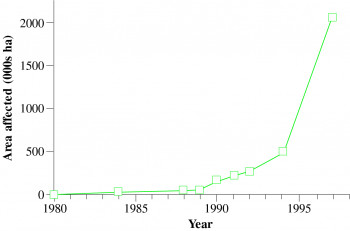
Figure 20.1 The area affected by herbicide-resistant weeds in Australia, showing a dramatic rise during the 1990s
L. rigidum in Australia provides a spectacular demonstration of herbicide resistance, as thousands of populations of L. rigidum over vast areas have evolved resistance to many herbicides. Why is this species so resistance prone? Key biological features are that L. rigidum is a highly plastic, fecund and genetically diverse cross-pollinated annual diploid grass. Furthermore, L. rigidum has been a valuable and widely established pasture grass across southern Australia since the nineteenth century. Since a shift towards arable crops began in the 1960s, this previously well-regarded pasture plant became Australia’s most important weed of crops. Because L. rigidum was once so favoured, it is still found across some 40 million hectares of southern Australia at densities of up to 4000 seedlings m–2. These huge, genetically diverse populations have now been exposed to strong selection pressure by sudden introduction of potent new herbicides, causing high mortality. Persistent application of herbicides might be expected to drive L. rigidum to extinction. Instead, it selects for resistant genotypes by the same mechanism whereby selection with antibiotics gives rise to resistant microbes (Figure 20.1).
 [2]
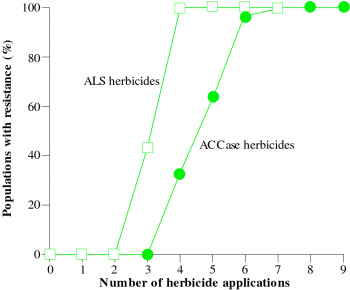
Figure 20.2 Acetyl-coenzyme A carboxylase (ACCase)- and acetolactate sythase inhibiting herbicides generate herbicide resistance in populations of Lolium rigidum growing in the cropping belt of Western Australia after only three to four applications. (Based on Gill 1995)
Many factors influence the development of resistance, including abundance, genetic diversity and biological characteristics of the weed species, characteristics and application of the herbicide, and genetic basis and expression of resistance genes. Crucial factors are initial frequency of resistance genes in field populations prior to herbicide use and intensity of the selection pressure. Clearly, with a higher initial frequency of resistant individuals there will be more rapid development of resistance and, conversely, if resistance genes are extremely rare then resistance takes many years to develop, or may never develop at all. Australian populations of L. rigidum can become resistant to a new herbicide applied once yearly after only three years! Thus, within three generations a population can change from being highly susceptible to being highly resistant (Figure 20.2). Large, genetically diverse populations of L. rigidum harbour high numbers of resistant individuals at frequencies reaching 0.01%. Selection with highly effective herbicides causes resistance levels to rise alarmingly.
Links:
[1] http://plantsinaction.science.uq.edu.au/edition1//?q=figure_view/923
[2] http://plantsinaction.science.uq.edu.au/edition1//?q=figure_view/922