
 [1]
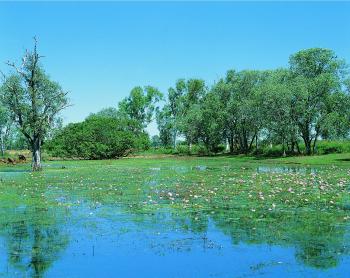
A permanent body of water in Kakadu National Park, Northern Territory, showing a range of species thriving in a flooded environment. Submerged tubers of Nymphaea violacea produce long underwater stems that support a floating leaf, while spectacular flowers are supported on petioles projecting from the water surface. Woody species that also exhibit flood tolerance can be seen in the background: these include the dense canopy of a freshwater mangrove (Barringtonia acutangula), a single tree (Lophostemon grandiflorum ssp. Riparius) growing in the open water and stands of river red gum (Eucalyptus camaldulensis) growing along the waterlogged banks (Photograph courtesy S. Jacobs)
After Colonel Byrd discovered and named The Great Dismal Swamp in seventeenth century America, his disenchantment was recorded in the Westover Manuscripts thus:
...the fould damps ascend without ceasing, corrupt the air and render it unfit for respiration...Never was Rum, that cordial of Life, found more necessary than in this Dirty place.
(Colonel William Byrd III (1929), a Histories of the Dividing Line Betwixt Virginia and North Carolina, North Carolina Historical Commission, Raleigh)
Water is essential for all plant life. Clearly, however, water is not uniformly distributed across the planet: the success of some vascular plants has been achieved through colonising waterlogged and flooded lands, and even totally aquatic habitats. The reviled wetlands discovered by Byrd are just one such waterlogged environment. Oceans, saltwater and fresh-water lakes, rivers, canals and ponds all provide permanent water bodies to which plants have acclimated through a wide range of physiological processes. Seagrasses are a spectacular case of tolerance to complete submergence throughout an entire life cycle. These plants have evolved from their terrestrial ancestors to colonise seabeds, overcoming salinity and anoxic sediments to out-yield all but the most luxuriant tropical forests. Even sexual reproduction is possible in seagrasses through major modifications to pollination and seed dispersal mechanisms.
The swamp paperbark (Melaleuca halmaturorum) is presented as a land plant that can grow in saline, anoxic wetlands providing its stems are not inundated. Bodies of fresh water are also colonised by higher plants, with unrelated species having independently evolved mechanisms of rapid stem and leaf growth to maintain contact with the atmosphere (e.g. waterliles — Nymphaea spp.). Wetland plants have, in other words, evolved a genetic makeup that allows them to survive deepwater habitats and minimise competition from land plants.
Many other higher plants are periodically waterlogged through flooding of the land. Roots are often primarily affected but leaves and stems might also be inundated, leading after several days to tissue damage, slower growth and some-times plant death. Tolerance to these conditions varies greatly, with species that evolved in flood-prone environments better able to acclimate than those which are rarely inundated. How-ever, surprisingly little is known about flood tolerance, even of common species. Against the common view, soybean is shown in Case study 18.2 to be relatively flood tolerant, reflecting the ancient practice of mutual cultivation with rice. This chapter describes the factors that damage plants during and after flooding, focusing especially on disruption of energy metabolism. A suite of adaptive changes that enable land plants to overcome some effects of waterlogging are illustrated, showing the importance for plant survival of coordinated structure (e.g. air space formation) and physiology (e.g. fermentative pathways).
Soil waterlogging arises from excessive rain or irrigation, poor internal drainage or impeded runoff. Two major problems for plant growth ensue. O2 becomes scarce around roots while other gases like CO2 build up, sometimes damaging plants. Through depletion of O2, which stimulates the activity of anaerobic microbes, soil redox potential becomes very low (below –200 mV) and toxic forms of microelements such as iron and manganese appear.
 [2]
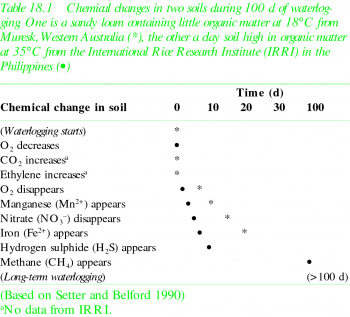
Table 18.1
When soil becomes waterlogged, air is displaced from soil pores by water and the chemistry of the soil alters radically. Gas exchange between soil and the atmosphere is inhibited because the diffusivity of gases in water is about 10 000 times slower than that in air. Consequently, O2 depleted by respirat-ory activity of soil organisms is not replaced, and eventually all but the top few millimetres of the soil becomes anaerobic. Mean-while, gases produced by the metabolic activity of these soil organisms accumulate, most notably CO2 and ethylene (Chapter 9). Bacteria adapted to these anaerobic conditions can proliferate, generating energy by catabolism of organic compounds and reducing electron acceptors other than O2, such as iron (Fe3+), manganese (Mn4+) and, under very reducing conditions, sulphate (SO42–). The reduced forms, Fe2+, Mn2+ and the gas hydrogen sulphide (H2S) are phytotoxic. Because Fe2+ and Mn2+ are particularly soluble they are taken up by plants in toxic amounts. Reduced forms of nitrogen also become dominant: denitrification of nitrate (NO3–) to gaseous N2 occurs and ammonium (NH4+) often accumulates following mineralisation of organic nitrogen. After prolonged water-logging, the gas methane (CH4) is produced as a consequence of the reduction of organic compounds. Production of noxious gases is referred to in the opening quote where ‘foul damps’ were believed to render the air ‘unfit for respiration’. This sequence of events following flooding and the rates of change measured in two soil types differing in temperature and organic matter are illustrated in Table 18.1.
O2 is a fundamental requirement for root growth. Without O2, plant roots and aerobic microorganisms lose 85–95% of their capacity to produce energy and they stop growing. During temporary soil waterlogging, leaf and shoot extension of herbaceous and woody species often slows and older leaves become yellow, suggesting premature senescence. More prolonged waterlogging kills those plants which lack a genetic capacity to adapt to the changes in metabolism and external chemistry described.
Characteristic red-brown deposits are frequently observed on roots of flood-tolerant species such as rice when grown under waterlogged conditions. These deposits are precipitates of iron oxides (ferric form), and they occur as a consequence of O2 leaking from roots into the rhizosphere. The process, known as radial oxygen loss, is made possible through gas spaces that are continuous from shoots through roots: once O2 reaches the roots it leaks passively from intercellular gas spaces into the anaerobic root environment under its concentration gradient. This serves the important function of oxygenating the rhizo-sphere, thereby oxidising phytotoxic, reduced forms of microelements and allowing growth of aerobic microbes such as nitrifying and nitrogen-fixing bacteria. Oxygenation of the rhizosphere by radial O2 loss from roots of one species may benefit a second species growing in close proximity. For example, radial O2 loss from roots of kikuyu grass appears to enhance the survival of subterranean clovers during transient waterlogging of west Australian pastures. Radial O2 loss from roots has also been demonstrated in tree and herbaceous species by placing platinum O2 electrodes around roots or observing the reoxidation of reduced dyes.
Two principal factors control the rate of radial O2 loss. These are permeability to O2 of the outer cell layers of roots (exodermis and epidermis) and concentration gradient of O2 from internal gas spaces of roots to surrounding soil; the latter depends heavily on how much O2 is used in root and microbial respiration. Despite its benefits, loss of O2 from roots into soil restricts the amount of O2 that reaches the root apex via O2 transport from shoots (Section 18.1.2a). Excessive O2 leakage from basal root tissues leads to anoxia in apical regions of long roots. A balance must therefore be achieved between the competing demands of rhizosphere oxidation and root apex aeration.
 [3]
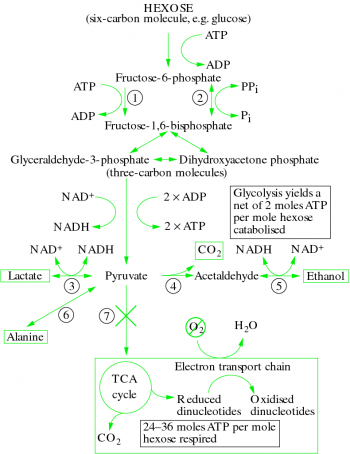
Figure 18.1 Scheme denoting the important metabolic reactions during anaerobic carbohydrate catabolism. Anoxia prevents pyruvate from entering the TCA cycle because O2 is unavailable as a terminal electron acceptor. Carbon is diverted to fermentative end-products, allowing oxidation of NADH and sustained catabolism of carbohydrates. The enzyme that catalyses oxidation of NADH as oyvuvate is converted to alanine has not been identifed. Key enzymes are: 1. ATP-dependent phosphofructokinase; 2, Ppi-dependent phosphofructokinase; 3, lactate dehydrogenase; 4, pyruvate decarboxylase; 5, alcohol dehydrogenase; 6, glutamate-pyruvate transaminase; 7, pyruvate dehydrogenase. Note that some reactions are reversible (two-way arrows)
Roots growing in well-drained soils respire by catabolising carbohydrates in the tricarboxylic acid (TCA) cycle; energy in the form of ATP is generated, predominantly through oxidative phosphorylation in mitochondria (Section 2.4). However, in waterlogged soils O2 is scarce and as aerobic respiration becomes inhibited carbohydrates are broken down via fermentative pathways (Figure 18.1). This causes two problems in root tissues. First, anaerobic cells often generate insufficient energy, even for cell maintenance, because of the 85–95% decrease in energy production per hexose unit following engagement of fermentative pathways. Second, end-products of anaerobic carbo-hydrate catabolism are sometimes toxic if left to accumulate in plant cells. Fermentative pathways use their own inter-mediates as hydrogen acceptors; coupling of these reductive steps to oxidation of NADH to NAD+ is an essential feature of fermentation. Breakdown of carbohydrates to ethanol and CO2 is the principal fermentative pathway in plants. Some lactate and alanine are also produced but in contrast to fer-men-tation leading to lactate and alanine, alcoholic fermentation can be sustained over days in anoxic tissues, end-product toxicity being minimised by leakage of ethanol and CO2 to the root medium.
 [4]
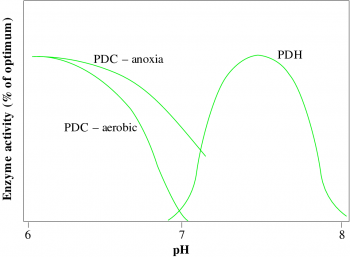
Figure 18.2 Curves showing pH optima of enzymes at the branch point for carbon flow to aerobic and anaerobic pathways. These in vitro determinations from extracts of rice coleoptiles indicate how cytoplasmic pH controls carbon flow. In aerobic coleoptiles, pyruvate dehydrogenase (PDH) catalyses entry of pyruvate to the TCA cycle when pH is above 7 whereas pyruvate decorboxylase (PDC) becomes engaged at pH below 7. Anoxia has two effects on metabolism. Cytoplasmic pH drops below 7, causing PDH activity to give way to PDC and fermentation to commence. In addition, PDC extracted from coleoptiles previously exposed to anoxia is in more active form, enhancing pyruvate consumption for ethanol production. (Based on Morrell et al. 1989)
Carbon flow from pyruvate to ethanol and CO2 occurs via the fermentative enzymes pyruvate decarboxylase (PDC) and alcohol dehydrogenase (ADH) (Figure 18.1). This flow is probably regulated by the activity of PDC which catalyses the first step of alcoholic fermentation. Increases in the amount of PDC and ADH through synthesis (transcriptional control) has been observed in a range of plant genotypes in response to O2 deficiency. Indeed, these enzymes form part of a suite of ‘anaerobic’ proteins, enzymes synthesised during anoxia (Section 18.1.2c). In addition to coarse control, the activity of PDC already present in a cell is regulated by fine control (post-translational regulation) exerted by subtle changes in cytoplasmic pH, which decreases from around 7.5 in aerated tissue to around 6.8–7.2 in anoxic tissue. Below pH 7.2, the activity of PDC reaches its optimum. For example, PDC extracted from anoxic rice coleoptiles becomes very active as pH drops below 7 according to the broad pH response curve in Figure 18.2. Following a return to aerobic conditions, cytoplasmic pH increases, the activity of PDC decreases and carbon flows via pyruvate dehydrogenase (PDH) to the TCA cycle. Energy yield increases by at least an order of magnitude. During anoxia, the rate of carbohydrate catabolism is regulated by activity of a few key enzymes. In wheat roots, PDC is likely to be the main rate-controlling enzyme because its in vitro activity closely approximates the measured in vivo rate of fermentation. In rice coleoptiles the glycolytic enzyme, ATP-dependent phosphofructokinase (PFK), might also contribute to control (Section 2.4.2), providing carbohydrate supply to glycolysis is adequate. Low light and deep submergence can conspire to reduce carbohydrate levels to a point where they limit the rate of anaerobic carbohydrate catabolism.
O2 is required in a number of metabolic processes in addition to aerobic breakdown of carbohydrates, for example in the synthesis of unsaturated fatty acids, which are essential components in the maintenance of membrane structure in plants. The enzymes involved in these O2-requiring processes generally have a higher Km for O2 than cytochrome oxidase so they are inhibited at higher O2 concentrations than that which inhibits carbohydrate catabolism. Metabolism of water-logged plants is therefore altered by inhibition of oxidative reactions not directly linked to energy production, as well as an energy shortfall caused by inhibition of oxidative phosphorylation.
What mechanisms do plants use to adapt to the hostile en-vironment of waterlogged soils and to submergence of shoots during floods? Anatomical and morphological adaptations in roots, shoots and stems allow ventilation of submerged organs and lessen or even avoid the impact of waterlogging and flooding. In some plants, such as grasses, these structural adap-tations are linked to the action of plant growth regulators, in particular the gaseous hormone ethylene. A common view of how ethylene exerts its effect on flooded tissues entails several factors: ethylene synthesis accelerates under O2 deficits, diffusion of ethylene away from tissues is impeded when surrounding gases are replaced by water and perception of ethylene by receptor molecules also changes developmentally.
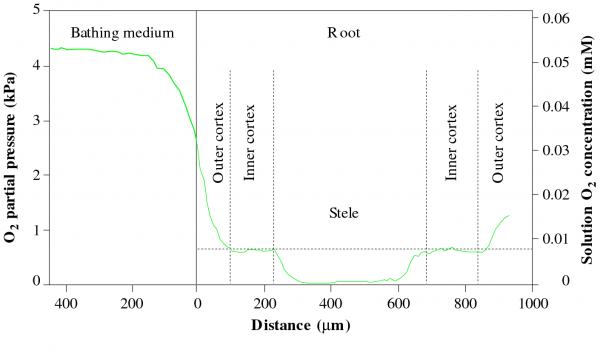
There are also metabolic adaptations which confer tolerance to anoxia, prolong tissue survival and, in a few exceptional cases, even allow growth in the absence of O2. When tissues are completely submerged and O2 is exhausted by respiration, complete anoxia can occur. The few higher plant species which tolerate this condition are rhizomes, tubers and shoots of some wetland species and germinating seeds of rice, barnyard grass and other weeds found in paddy fields. More commonly, submerged plant organs (e.g. roots and tubers) form anoxic ‘cores’ deep within the tissue, surrounded by zones of hypoxic or aerobic tissue, which derive O2 by diffusion from adjacent waterlogged soil or airspaces (aerenchyma) within the ground tissues. For example, coexistence of an anoxic stele and aerobic cortex in maize roots exposed to intermediate O2 deficiency has been demonstrated using microelectrodes (Figure 18.3) and biochemical indicators of fermentative metabolism (Thomson and Greenway 1991). In keeping with the view that ‘plants are unlikely to adapt to their environment in a single-minded manner’ (Davies 1980) one might expect that plants tolerant to waterlogging and flooding would engage a combination of adaptive mechanisms.
 [5]
Figure 18.3 O2 concentration (mM) measured across a maize root by using an O2 - sensitive microelectrode. The transect was through differentiated tissues 75 mm from the apex of a 135 mm long root. O2 concentration in the bathing medium was about 0.05 mM (hypoxia), causing the abrupt gradient in oxygen status observed. (Courtesy W. Armstrong)
 [6]
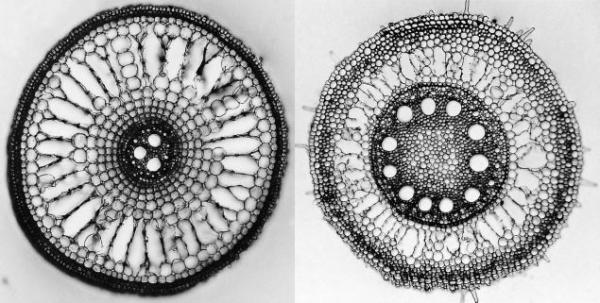
Figure 18.4 Transverse sections of adventitious roots of (a) rice an (b) maize taken 50 mm from the root apex and showing lysigenous aerenchyma formation. Note the cubic cell packing in the rice cortex contrasting with the hexagonal packing in maize. (Micrographs courtesy E. Armstrong)
 [7]
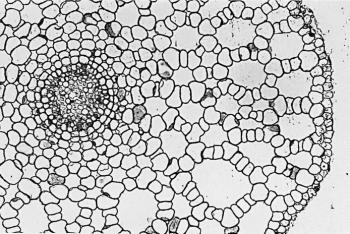
Figure 18.5 Transverse sections of a lateral root of Rumex hydrolapathum showing schizogenous aerenchyma formation about 5 mm from the apex (Micrograph courtesy W. Armstrong)
 [8]
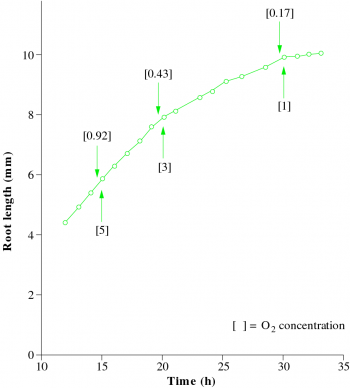
Figure 18.6 Root growth of rice seedlings relies on transport of O2 from the atmosphere surrounding shoots. Elongation of a 7cm long root was measured in an anoxic solution using a travelling microscope while O2 concentrations denoted by arrows below the growth curve (kPa). Note air contains about 21 kPa O2. O2 supply to roots through aerenchyma decreased accordingly, resulting in lower O2 concentrations (kPa) at the surface of root tips, denoted by arrows above the growth curve (Based on Armstrong and Webb 1985)
Armstrong and co-workers from the University of Hull, UK, have made the most thorough analysis of O2 transport from shoots to roots in waterlogged soils, giving quantitative argu-ments for internal ventilation as a factor in flood tolerance (Armstrong et al. 1993). Adequate supply of O2 to submerged organs requires enhanced development of internal gas spaces, principally by formation of large interconnected lacunae called aerenchyma (Figures 18.4 and 18.5). The geometry of cell packing prior to gas spaces forming also affects how porous aerenchymatous tissues can become. For example, cubic cell packing, observed in rice roots (Figure 18.4a), has a maximum porosity of 22% while hexagonal cell packing, as in maize (Figure 18.4b), has a maximum of only 9%. Greatly enhanced root porosity achieved through formation of aerenchyma improves gas movement, mostly by diffusion but in some species of reeds and waterlilies also by convection. Improved delivery of O2 to roots by simple diffusion through aerenchyma can be demonstrated in rice, a species with exceptional tolerance to O2 deficiency. When O2 concen-trations in the gas phase around shoots were lowered, O2 release at the root tip decreased within minutes, reflecting successively smaller concentration gradients driving O2 diffusion downwards through aerenchyma (Figure 18.6).
In large aquatic macrophytes such as Phragmites australis, mass flow of gases (convection) is generated within the plant by both Venturi- and humidity-induced gradients. Continuity of gas spaces through leaf sheathes, rhizomes and major root axes provides a complex pathway for such a gas flow. Con-vective O2 flow can raise rhizosphere redox potential from critically low values around of –250 mV to 500 mV, keeping the medium surrounding delicate growing apices free of phytotoxins like H2S and Fe2+. Venturi-induced gradients entail wind blowing across old, broken culms to create a suction through submerged rhizomes; suction depends on the square of wind speed so gusts of wind during the day or night can ventilate root systems. Humidity-induced gradients are created through dilution of O2 in substomatal airspaces by water evaporating from cell walls; atmospheric O2 then diffuses into leaves through stomata and flows under pressure to roots through internal gas spaces. Humidity-induced flows depend on heat to evaporate water and light to keep stomata open — they are a daytime phenomenon. These pressurised flows have the added advantage of flushing excess CO2 and ethylene out of the roots of aquatic plants, preventing build up to unfavourable levels. Internal ventilation promotes survival and growth of roots in a soil environment essentially devoid of O2, in much the same way that a snorkel allows a swimmer to breathe under water. Finally, O2 transport is not the only ad-vantage of internal gas spaces for aquatic plants. By committing 10–50% of tissue volume to gas spaces, carbohydrate demand for tissue maintenance is significantly reduced, leaving reserves for the metabolic adjustments discussed in Section 18.1.2c.
Aerenchyma formation is induced by poor aeration in common plants as diverse as Rumex species, dicotyledonous marsh plants, through to dryland cereals like maize and wheat. Aerenchyma form by two distinct developmental processes: lysigeny — the collapse of files of cells (Figure 18.4) — and schizogeny — cell separation characteristic of many dicoty-ledonous wetland species (Figure 18.5). With inhibitors, Jackson and co-workers (Jackson and Drew 1984) demonstrated that lysigenous formation of aerenchyma in the cortex of poorly aerated maize is mediated by ethylene. They also showed that low O2 concentrations stimulated ethylene synthesis in maize roots, possibly through increased synthesis of the ethylene precursor 1-aminocyclopropane-1-carboxylic acid (ACC) in the anoxic stele that develops within O2-deficient roots (see Figure 18.3); ACC produced in this anoxic stele can diffuse radially into the aerobic cortex where it is converted to ethylene. In tomato, two ACC synthase genes are induced by anoxia, consistent with increased ACC synthesis in flooded roots. If little is known about lysigenous aerenchyma formation, almost nothing is known of the mechanism of schizogeny. Adjacent cell walls appear to separate by weakening of the middle lamella but how any ‘wall weakening factors’ are coordinated awaits discovery.
 [9]
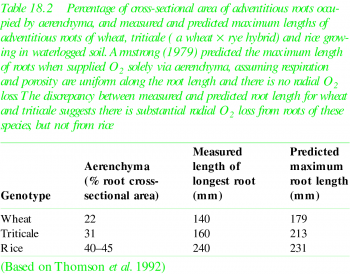
Table 18.2
Root systems are morphologically diverse with categories of roots having distinct capacities to form aerenchyma in waterlogged soils. For example, when wheat roots are water-logged, adventitious (nodal) roots develop a greater proportion of aerenchyma than seminal roots, allowing plants to survive even when seminal roots have died. Mathematical models based on O2 transport rates accurately predict the maximum length to which adventitious roots can grow in waterlogged soil; this length depends on the proportion of aerenchyma (Table 18.2). Logically, waterlogged plants generally have shorter roots than those in drained soil because of the restriction imposed by long-distance O2 delivery through aerenchyma.
In addition to anatomical adaptations, plants can adapt mor-pho-logically to mitigate O2 deprivation during waterlogging or submergence. For example, fine surface roots proliferate in response to waterlogging in both dryland species (e.g. pea) and marsh plants (e.g. Melaleuca spp.). These surface roots benefit from a thin aerobic layer at the surface of waterlogged soil (Case study 18.1). Fine roots can use their large surface area to volume ratio to scavenge O2 effectively from surface water, at the same time generating energy for nutrient acquisition from this enriched zone.
In a number of flood-tolerant plant species, shoots elongate following submergence to establish a connection with the atmosphere, so allowing ventilation of the submerged plant parts. Examples include the anaerobic elongation of a rice coleoptile after its seed has been sown directly into water and elongation of stem internodes following inundation. Aquatic species capable of extraordinary stem elongation include deepwater and floating rices from Southeast Asia and the dicotyledonous Rumex species from European flood plains (see Figure 18.5). Native waterlilies like Nymphaea gigantea from tropical Australia produce petioles more than 2 m long to raise their leaves and flowers to the water surface. As with aerenchyma formation, ethylene entrapped within submerged tissues often plays a role in adaptation, for example enhancing stem elongation in rice (Raskin and Kende 1984a) and Rumex species (Blom et al. 1990). How this extraordinary elongation is achieved at the cell level is not clear but ethylene is unlikely to be the sole hormonal factor in the phenomenon. Gibberellins, for example, contribute to internode lengthening in rice by stimulating proliferation of new cells at the nodes.
Plant adaptation to O2-deficient environments involves the anatomical and morphological changes outlined above which allow ventilation of submerged parts. However, metabolic responses to anoxia are essential if particular cells like root apices are to survive. Mutants and transgenic plants and mol-ecular approaches such as promoter analysis open exciting possibilities for understanding the full interaction of plant response to inundation.
 [10]
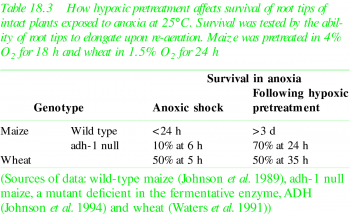
Table 18.3
Drew at Texas A&M University, USA, and Greenway at the University of Western Australia demonstrated that root tissues become much more tolerant to anoxia if pretreated with intermediate O2 concentrations (hypoxic pretreatment) (Table 18.3). Apparently, metabolic adaptations set in train by hypoxia confer tolerance to anoxia. The first of these metabolic adaptations to be considered should be changes to the overall protein complement.
During anoxia, normal protein synthesis is replaced by the selective transcription and translation of a set of proteins called ‘anaerobic’ proteins. In maize roots, there are 20–22 of these proteins which include fermentative enzymes (e.g. PDC and ADH), enzymes involved in anaerobic carbohydrate catabolism (e.g. sucrose synthase and enzymes responsible for the reversible breakdown of sucrose) and several glycolytic enzymes (e.g. aldolase). This, together with the observation that exogenous sugars prolong tissue survival during anoxia, points to carbohydrate catabolism as a factor in tolerance to anoxia. Other ‘anaerobic’ proteins of maize include superoxide dismutase, responsible for scavenging O2-free radicals, and the O2-binding protein haemoglobin. ‘Anaerobic’ proteins are also formed in rice embryos, presumably associated with maintenance and growth of embryos during anoxia — one such enzyme is the tonoplast-located H+-pyrophosphatase (Carystinos et al. 1995). By maintaining an energised tonoplast capable of ion transport, this enzyme might help stabilise cytoplasmic pH. Reliance on pyrophosphate as an energy source reduces direct dependence of tonoplast ion transport on ATP regeneration. Induction of ‘anaerobic’ proteins could be promoted at the transcriptional level by a decrease in high-energy compounds such as ATP, cytoplasmic pH or O2 concentration.
The key to anoxia tolerance lies in integration of energy production via anaerobic carbohydrate catabolism and energy consumption in reactions essential for survival. Accumulating evidence suggests two modes of tolerance based on slow and rapid rates of fermentation. Lettuce seeds appear to survive anoxia by slowing anaerobic carbohydrate catabolism to less than 35% of the rate in air. After 14 d without O2, lettuce seeds germinate normally (Raymond and Pradet 1980).
 [11]
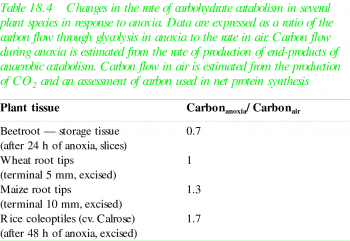
Table 18.4
By contrast, fermentation accelerates in tissues which grow rather than just survive in anoxia, for example coleoptiles of rice. Faster fermentation is sustained by accelerated glycolysis after exposure to anoxia by a phenomenon known as the Pasteur Effect. However, even in rice, glycolytic rate is only about twice as fast in anoxia as in air (Table 18.4). Two lines of evidence support the view that rapid fermentation ameliorates the energy deficit caused by anoxia. First, roots of maize and wheat survive anoxia more than three times longer if exposed first to hypoxia rather than an aerated solution (Table 18.3). Hypoxic pretreatment raised activities of the fermentative enzymes PDC and ADH, and resulted in a faster rate of alcoholic fermentation on transfer to anoxia. Second, in maize mutants deficient for the gene encoding ADH-1 (an isoform of ADH), the rate of alcoholic fermentation following hypoxic pretreatment was 30–35% slower than in the wild type. Only 70% of these mutant plants survived 24 h of anoxia whereas all wild-type plants survived 48 h of anoxia (Drew et al. 1994). Fermentative capacity was vital to survival. Root tips of mutant plants were almost all killed when anoxia was imposed abruptly (Table 18.3).
Other plant tissues which survive but do not grow in anoxia produce an initial burst of fermentative activity over 6–24 h before settling to much slower fermentation rates. This two-phase pattern of adaptation provides adequate ATP as tissues adapt to anoxia then conservation of carbohydrates for long-term survival. Slices of beetroot, a familiar storage organ, survive for 5 d in anoxia if they are pretreated with hypoxia. Glycolytic rate falls steadily in anoxia, reaching 70% of the rate in aerobic tissue after 24 h despite an adequate supply of carbohydrates and sufficient activity of the critical enzyme, PDC (Zhang and Greenway 1994). To be of adaptive value, this conservation of substrates through slower catabolism must be compatible with the smaller ATP yield available for cell maintenance. Calculations show that non-growing beetroot tissue in anoxia used 10- to 25-fold less ATP for cell maintenance than aerobic tissues.
While energy generation is important, a rapid rate of fermentation does not always endow anoxia tolerance. Pea root tips, for example, ferment 45% faster than maize tips but survive less than half as long in anoxia. Subtle aspects of energy consumption are thought to be involved in anoxia tolerance such as a reduction of energy requirements for cell maintenance and the redirection of energy flow to essential cellular processes, including maintenance of membrane integrity, regulation of cytoplasmic pH and synthesis of appropriate ‘anaerobic’ proteins.
Commercial varieties of soybean (Glycine max L.) are intolerant of drought and transient waterlogging when grown as a summer crop in northern Australia. In this regard, soybean behaves as a typical upland grain legume. It is therefore not surprising that reports in the early 1980s of soybean growing and yielding well on soils with a water table maintained just below the soil surface were met with scepticism. Slowly, however, agronomists accepted that soybean can acclimate to sustained waterlogging of most of the soil profile; the physio-logical basis of this phenomenon is the subject of this case study.
 [12]
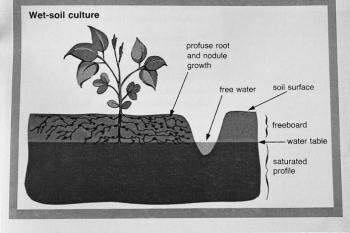
Figure 1 Diagrammatic representation of soybean growing in a partially waterlogged soil bed ('saturated soil culture'). The water table is maintained 5-15 cm below the soil surface while roots with associated nodules develop in the aerobic surface soil. Water uptake, nutrient acquisition and nitrogen fixation in these plants is adequate to sustain healthy, high-yielding plants. (Courtesy R.J. Lawn)
Soybeans acclimate to waterlogging if the water table is kept at least 3–5 cm below the soil surface. If a surface zone of freely drained, albeit very wet, soil is available, roots and nodules proliferate enough to support a viable plant (Figure 1). In practice, seedlings emerge from a well-drained soil bed before being irrigated to impose a high water table.
Tap roots and associated lateral roots previously established below the new water table die from the effects of flooding (Section 18.1). Shoot growth also exhibits symptoms of flooding, primarily seen as checked leaf expansion rates and sometimes a slight inhibition of photosynthesis. The nitrogen and carbon economy of plants is severely disrupted after flooding. Nitrogen uptake is impaired presumably through death of much of the existing root system and denitrification removing available nitrates from soil. Leaf nitrogen concen-trations fall from 4.5–5.0% to 2.5–3.5%, causing transient yellowing of leaves.
Remarkably, roots in the damp, aerobic surface soil become strong sinks for nitrogen and carbon as fibrous secondary roots develop and rhizobia infect these roots to form nodules. There is also extensive growth of thin-walled aerenchyma tissue from lenticels on the surface of roots and nodules, aiding gaseous exchange (Section 18.1).
Within 10–14 d of saturation, N2 fixation commences and leaves become green again, supporting accelerated photo-synthesis and recovery of shoot growth rates. While shoot biomass and leaf area is reduced by 10–50% in plants two weeks after waterlogging is imposed, subsequent rates of accumu-lation of dry matter and nitrogen exceed those of well-drained plants by 50–100% (Troedson et al. 1989).
 [13]
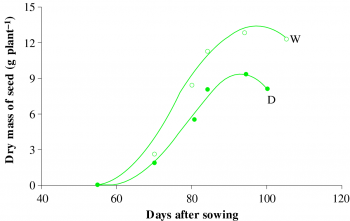
Figure 2 Dry weight seed per plant increased very rapidly when soybeans (cv. Fitzroy) were grown with a water table maintained c. 10 cm from the soil surface (W) compared to plants in well-drained soil throughout the growing season (D). Note the relationship of timing of podfill to N2 fixation rates shown in Figure 4 (Troedson et al. 1989; reproduced with permission of Field Crops Research)
 [14]
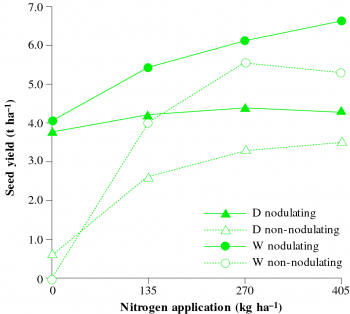
Figure 3 Yield response of nodulating and non-nodulating isolines of soybean (cv. Clark 63) to fertiliser nitrogen applied throughout crop growth. Plants were grown in drained soil (D) or with a water table maintained c. 10 cm from the surface (W). When fertiliser nitrogen was supplied, both isolines yielded more when partially waterlogged than in drained soil. Without fertiliser nitrogen, nodulating isolines produced about 4 t seed ha-1 while non-nodulating soybeans yielded almost no seed. Even when fertiliser nitrogen was supplied, nodulated soybeans yielded more than non-nodulating isolines grown under the same conditions. (Troedson et al. 1983)
 [15]
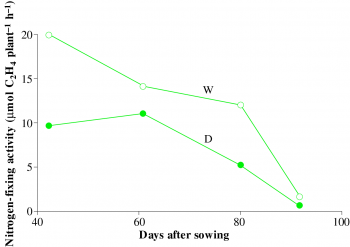
Figure 4 Soybeans growing with a water table maintained c. 10 cm from the soil surface (W) fixed N2 at higher rates than plants growin in well-drained soil throughout the growing season (D). Additional N2-fixing activity was especially important about 70 d after sowing when rapid seed-fill provided a major sink for nitrogen. (Troedson et al. 1989; reproduced with permission of Field Crops Research)
Waterlogged soil beds promote more sustained, vigorous shoot growth than is possible in drained beds by doubling root biomass and elevating nodule numbers in surface soil by up to 170%. These efficient root systems thrive above a waterlogged subsoil and provide plants with abundant water and inorganic nutrients during podfill while soybeans in drained soil fill pods more slowly (Figure 2). New nodules form even after flowering, sustaining nitrogen delivery to pods and arresting leaf senescence through mobilisation of nitrogen from older leaves. Evidence that nitrogen is the primary factor in improved yield of soybeans under partial waterlogging is seen when nodulating and non-nodulating soybeans are supplied nitrogen at rates of up to 400 kg nitrogen ha–1 (Figure 3). Both nodulation and added fertiliser nitrogen enhance the benefits of high water tables by overcoming nitrogen limitation.
An additional advantage of maintaining constantly high water tables is the reduced chance of water deficits during periods of high evaporative demand, particularly in the tropics and subtropics where evaporation rates are high. Hence, seed yields from plants grown in partially waterlogged seed beds exceed 8 t ha–1, 10–25% above those from plants in well-drained plots. Larger plants and extended periods of N2 fixation underpin this yield advantage (Figure 4).
Soybeans, as with other crop species, have greatly contrasting genetic backgrounds. Phenology of grain crops is defined strongly by the genetically determined shift from vegetative to reproductive growth and how well this shift suits crops for a particular environment. In large trials of many soybean varieties, Asian varieties with short vegetative phases entered reproductive growth before full acclimation to waterlogging and suffered yield reductions when water tables were kept high. Soybeans grown in dry season conditions also matured early and suffered yield reductions when roots were waterlogged. A growth duration of more than 80 d is required for plants to overcome the effects of waterlogging and yield better than those in well-drained soils. Long vegetative phases gave plants time to recover but so much foliage developed that they lodged (fell over) during podfill. The best-yielding genotypes had indeterminate developmental patterns (capac-ity to continue producing leaves after flowering has commenced) giving plants time to overcome the setback to leaf development during early waterlogging and maintain substantial leaf areas throughout podfill. In these varieties, the duration of flowering is long enough that negative effects of nitrogen deficiency on podset during early flowering can be offset later.
Further tailoring of genetic makeup to environment comes through selection of strongly nodulating soybean varieties. Weak nodulators yield very poorly in waterlogged soil through nitrogen deficiency (Figure 3) where ‘hypernodulating’ geno-types offer possibilities of substantial yield advantages when water tables are raised.
 [16]
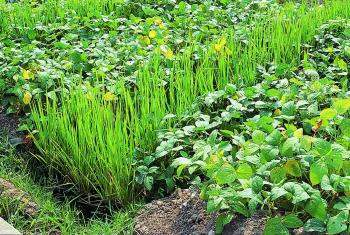
Figure 5 Lowland rice paddies in Southeast Asia showing soybean plants growing in saturated soil on the earthen bunds (banks) that separate rice fields. (Photograph courtesy R.J. Lawn)
Inherited characters conferring tolerance of modern soybean to waterlogging are believed to come from its weedy annual progenitor, Glycine soja, surviving through domestication of soybean in rice-based agriculture. In many parts of Eastern Asia, soybean is still grown on raised earthen bunds separating flooded rice paddies (Figure 5), with very wet soil profiles similar to those we report here. It is therefore not surprising that most genotypes of annual soybean and G. soja can acclimate to raised water tables. However, waterlogging tolerance is not found in the wild, perennial Glycine species indigenous to Australia.
The high degree of tolerance to waterlogging that persists in modern soybean is only now being exploited. Once con-sidered uniquely a crop of well-drained soils, soybean is now shown to have a genetic composition appropriate for more extreme conditions imposed by saturated soils. Intercropping soybean and rice is now an agronomic option, broadening the genetic makeup of paddy crops.
Troedson, R.J., Lawn, R.J. and Byth, D.E. (1983). ‘Saturated soil culture of soybeans’, in Annual Report, 35–36, CSIRO Division of Tropical Crops and Pastures: Brisbane.
Troedson, R.J., Lawn, R.J., Byth, D.E. and Wilson, G.L. (1989). ‘Response of field-grown soybean to saturated soil culture. I. Patterns of biomass and nitrogen accumulation’, Field Crops Research, 21, 171–187.
Garside, A.L., Lawn, R.J. and Byth, D.E. (1992). ‘Irrigation management of soybean (Glycine max (L.) Merrill) in a semi-arid tropical environment. III. Response to saturated soil culture’, Australian Journal of Agricultural Research, 43, 1033–1049.
Hartley, R.A., Lawn, R.J. and Byth, D.E. (1993). ‘Genotypic variation among Glycine spp. for ability to acclimate to saturated soil’, Australian Journal of Agricultural Research, 44, 703–712.
 [17]
Figure 1 A dense stand of swamp paperbark (Melaleuca halmaturorum var. halmaturorum F Muell. Ex Mig.) showing trees growing in Bool Lagoon, South Australia, together with other hydrophytes. All root systems are totally inundated. (Photograph courtesy Department of Environment, Heritage and Aboriginal Affairs, South Australia)
 [18]
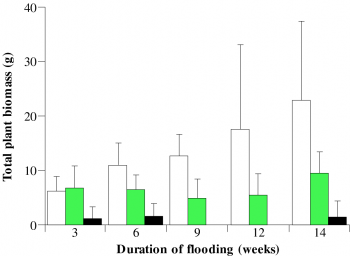
Figure 2 Mean shoot biomass of two-year-old Melaleuca halmaturorum grown in totally waterloggeed soil (white), waterlogged soil with shoots 50% (green) or 100% (black) submerged. (Based on Denton and Ganf 1994)
 [19]
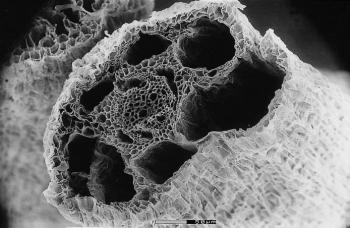
Figure 3 Scanning electron micrograph of a root of Melaleuca halmaturorum after roots and the lower half of shoots had been flooded for 14 weeks. Extensive aerenchyma have formed through breakdown of cortical cell layers. Scale bar = 100 µm (Micrograph courtesy M. Denton)
 [20]
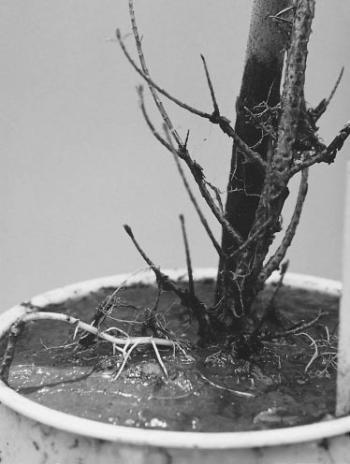
Figure 4 Adventitious roots (arrowed) on plants described in Figure 3. These roots formed when only roots were inundated, not when the entire shoot was flooded (Photograph courtesy M. Denton)
 [21]
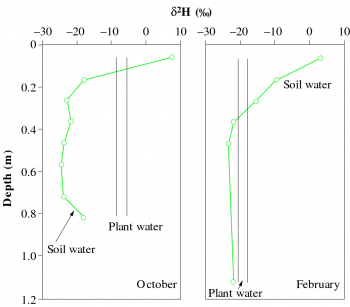
Figure 5 Deuterium enrichment (δ2H) of plant water (straight lines indicate mean values) and soil water in February (late summer) and October (late spring). The point at which the deuterium signature of plant water corresponds to that of soil water (vertical lines cross the depth profile) indicates at which depth roots are currently sourcing transpired water (Based on data from L. Mensforth)
Melaleuca halmaturorum var. halmaturorum F. Muell. ex Miq., commonly referred to as swamp paperbark, forms impressive dense woodlands around permanent and ephemeral wetlands in southeastern Australia (Figure 1). Interdunal areas fed by discharge water and a permanent wetland (Bool Lagoon) provide environments where the interactive effects of waterlogging and salinity on swamp paperbark have been investigated.
Bool Lagoon has stands of mature trees but poor recruitment of new plants led to concerns that regulation of water levels might be needed to stimulate establishment of new seedlings (Denton and Ganf 1994). Adaptations to flooding in mature plants do not always manifest themselves in juvenile growth stages, when well-aerated soil is sometimes necessary for survival. To test this, swamp paperbark juveniles up to two years old were flooded for as much as 14 weeks by adding sufficient water to inundate roots and cover either the lower 50% of stems or the entire shoot. Leaves died on flooded stems, demonstrating physiological damage probably caused by O2 deficits. However, plants returned to well-drained conditions often produced new leaf initials, showing that the woody stems survived flooding better than foliage.
Total submergence killed at least 70% of plants and dramatically impaired growth of the few survivors (Figure 2), suggesting that O2 transport from aerial parts to roots was essential for seedling survival. Development of lacunae able to sustain internal gas transport (aerenchyma) in roots of plants half-submerged for 14 weeks (Figure 3) is powerful evidence for transport of O2 as a factor in survival. Plants with access to atmospheric O2 grew slowly in spite of waterlogged soil conditions (Figure 2) and regenerated when drained. Roots also responded morphologically to waterlogging, generating superficial adventitious laterals (Figure 4) able to exploit O2 in water circulating above the soil surface.
Ontogeny was a critical factor in flood tolerance: four-month-old plants succumbed to submergence within six weeks while one-year-old and two-year-old plants had increasing levels of tolerance. Lowering water levels in the lagoon was therefore implemented to encourage establishment of swamp paperbark seedlings while considering the potential impact on flood-dependent species such as Triglochin procerum. This strategy relieved waterlogging but reduced runoff and increased evaporation, exacerbating another common hazard for wetland plants, salinity. Salt levels rose nine-fold. Con-sequences of this salt can be severe for young plants but mature swamp paperbark have mechanisms to tolerate salinity.
Swamp paperbark growing in an interdunal swamp adapt to saline groundwater by modifying their pattern of root development and thus water extraction. Ratios of stable isotopes of hydrogen (1H v. 2H) and oxygen (16O v. 18O) provide a powerful technique for estimating patterns of water extraction from soils with complex hydrology. Isotope discrimination has been applied to swamp paperbark where winter rainfall recharges surface soil with fresh water bearing a distinctive isotope signature. Meanwhile, subsoil discharge of saline water provides an alternative source of water. The small proportion of water in which deuterium (2H) replaces hydrogen is measured in soil water and sap from twigs to show which position in the soil water profile matches the deuterium signature (δ2H) in sap.
In February, sap water matched most closely soil water from 40 cm below, whereas in October, sap was composed largely of water extracted from surface soil (Figure 5). That is, winter rains provided a fresh water recharge that roots could exploit but in summer deeper groundwater had to be exploited as a source of water. Very saline groundwater (c. 60 dS m–1) was therefore not taken up by paperbarks when non-saline water was present. In summer, evaporation raised surface salt levels as roots tapped progressively deeper sources.
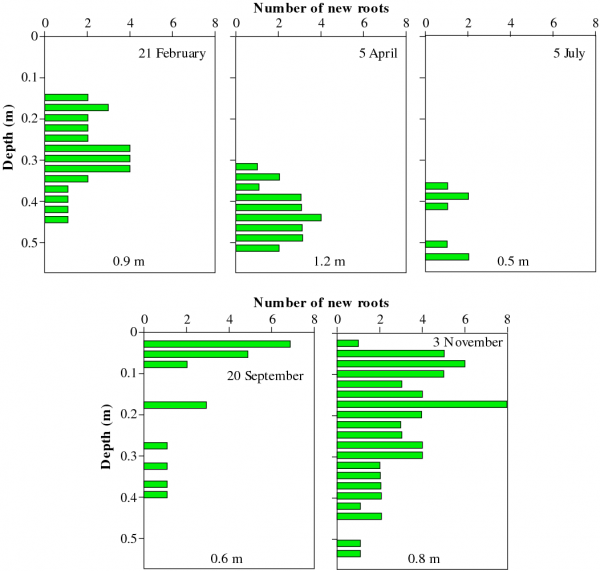
Lateral roots proliferated where water extraction was occurring fastest (Figure 6). For example, up to July most new laterals grew below 30 cm but by September abundant root growth at the surface corresponded with extraction of surface water. In this environment, waterlogging and salinity impose selection pressures on roots interactively. Fine surface roots late in winter would, for example, improve uptake of non-saline water and improve root activity by access to better water with better O2 status. The swamp paperbark adapts to waterlogged, saline habitats with a range of anatomical and morphological modifications, particularly in roots.
 [22]
Figure 6 Appearance of new roots through a season showing proliferation of roots when groundwater rises (water depth in meters shown at bottom of each graph) roots initiate in progressively deeper soil as winter approaches (February to July), followed by a burst of surface root growth after winter rains recharge surface water levels (Based on Mensforth and Walker 1996)
Denton, M. and Ganf, G.G. (1994). ‘Response of juvenile Melaleuca halmaturorum to flooding: management, implications for a seasonal wetland, Bool Lagoon, South Australia’, Australian Journal of Marine Freshwater Research, 45, 1395–1408.
Mensforth, L.J. and Walker, G.R. (1996). ‘Root dynamics of Melaleuca halmaturorum in response to fluctuating saline groundwater’, Plant and Soil, 184, 75–84.
Seagrasses are angiosperms adapted to life on shallow ocean beds. A suite of special ecophysiological features allows seagrasses to colonise saline and often anaerobic marine sediments; these will be discussed in an evolutionary context leading to Case study 18.3. Common features shared by seagrasses and higher land plants subjected to submergence point to some funda-mental questions about plant response to inundation.
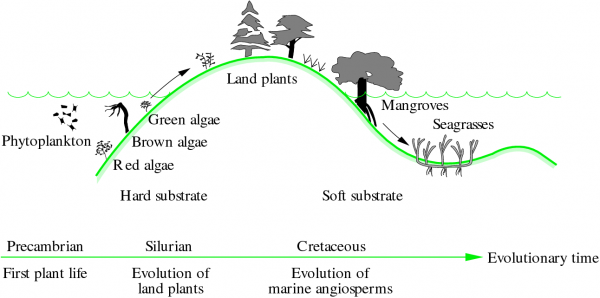
Primitive plants evolved in the Silurian (about 450 million years ago) from green algae, particularly the Charophytes (Figure 18.7). A variety of terrestrial plant groups evolved over the next several hundred million years, for example lycopods, bryophytes, ferns, gymnosperms, yet it was not until 100 million years ago that angiosperms evolved and reinvaded the sea. Mangroves and saltmarsh plants colonise intertidal zones of marine environments (Section 17.3) but only seagrasses live in total submersion. Curiously, all vascular plants inhabiting marine environments are angiosperms.
 [23]
Figure 18.7 Evolution of seagrasses from algae. Algal evolution in the Silurian was followed by appearance of the first land plants which diversified by developing higher plant characteristics such as woodiness and sexual reproduction. During the Cretaceous, marine angiosperms evolved, characterised by mangroves and salt-marsh plants in intertidal zones and seagrasses as the dominant submerged macrophyte. (Courtesy W.C. Dennison)
Limited seagrass fossils combined with taxonomic and evolutionary studies indicate at least four taxonomically distinct seagrass families: Hydrocharitaceae, Posidoniaceae, Cymodoceaceae and Zosteraceae. These families are so unrelated that they probably arose from at least four separate reinvasions of the sea. However, each seagrass family shares a common environment, rooting into soft substrates of shallow oceans. Characteristic conditions are low and unpredictable light, nutrient reserves in anaerobic sediments, slow diffusion of inorganic carbon to the photosynthetic apparatus and, of course, high salinity. Yet the relatively limited number of seagrass species adapted to these stringent environmental conditions have colonised all the major oceans and form extensive meadows along the world’s coastlines. Not surprisingly, sea-grasses exhibit a spectacular suite of survival mechanisms to deal with submergence.
Plants living in deep water receive low and unpredictable amounts of light. Light reaching seagrasses is attenuated by atmospheric (e.g. clouds, dust) and marine (e.g. suspended particles, colour, water absorption) factors. Even when light reaches seagrass leaves, it can be further attenuated by epiphytes such as bacteria, algae and sponges growing on leaf surfaces. Heavy growth of epiphytic algae can reduce light levels reaching chloroplasts so severely that plants succumb to carbohydrate shortage. For example, epiphyte growth induced by nutrient enrichment has led to loss of seagrass meadows through light deprivation in Cockburn Sound, Western Australia. Light attenuation occurs over different time periods depending on the screening agent: wind might raise turbidity transiently while the plume of a flooding river can persist for weeks. Chloroplasts of seagrasses are found predominantly in epi-dermal cells as an adaptation to low light, contrasting with terrestrial plants where chloroplasts are found in leaf mesophyll (Chapter 2). Epidermal chloroplasts capture light and exchange gases free from the barriers imposed on chloroplasts in sub-epidermal tissues. Seagrasses have diminished leaf mesophyll with little structural material, so that most of the shoot is photosynthetic. Thus seagrass leaves have photosynthetic rates and photosynthesis–irradiance relationships consistent with plants adapted to low light levels: light compensation intensities (Ic), light saturation intensities (Ik) and maximal photosynthetic rates (Imax) are all low. As a hedge against periods of low light (e.g. during turbidity), below-ground stems (rhizomes) store carbohydrate as starch and sugar which are mobilised when required to satisfy respiratory demands. Some seagrasses even grow in prolonged darkness for months using these carbo-hydrate reserves (e.g. Posidonia), while others are affected after a few days of low light (e.g. Halophila).
Waves and ocean currents are a unique influence on leaf canopies in marine environments. While seagrass meadows and terrestrial forests can both have epiphytes and dense canopies producing heavy self-shading, light environments in the two canopies differ. In forests, sunflecks moving across the forest floor are important for survival of shade plants in the understorey (Section 12.1.4). Under the sea, waves and currents buffet the canopy backwards and forwards, exposing seagrasses and associated marine plants to alternating high and low light intensities. Such canopy movement achieves a more uniform exposure to light throughout the seagrass canopy than on a forest floor and selects for the formation of isobilateral leaves in seagrasses (identical top and bottom surfaces).
Oceanic waters generally contain low concentrations of dissolved nutrients, partly due to rapid nutrient uptake into microscopic algae, or phytoplankton. Eventual deposition of plankton to the sea floor, along with inputs of organic matter from rivers, results in accumulation of organic material in nearshore soft sediments. Microbial degradation of this organic material leads to remineralisation of nutrients from sediments. Resupply of nutrients into bulk seawater is slowed by sorption of nutrients to sediment particles and by slow diffusion of nutrients through the tortuous path between sediment particles. Thus, nutrient concentrations are much higher in marine sediments than in bulk seawater.
Seagrasses draw on nutrients in both seawater and sediments via uptake into leaves and roots. Roots are believed to play a major role in nutrient acquisition because high nutrient concentrations are often found in sediments. Nevertheless, sea-water moving through a seagrass canopy provides a renewable source of dissolved nutrients for uptake via leaves. Water movement through a seagrass canopy also helps replenish nutrient de-position to underlying sediments through leaf blades acting as baffles to water motion and increasing deposition of organic material into sediments. As in terrestrial plants, nutrients taken up from external sources are effectively redistributed, helping efficiency of nutrient use.
Seagrasses also fix dissolved nitrogen gas through microbial associations. Nitrogen fixation by bacteria attached to root surfaces sometimes contributes to plant nitrogen status. Labelling studies have shown that nitrogen fixed by bacteria on seagrass roots rapidly enters plants, probably in exchange for dissolved organic material from seagrass roots sustaining the bacteria. Interestingly, the tropical seagrass species that fix nitrogen most rapidly are also preferentially consumed by dugongs, ensuring adequate protein intake for these animals.
Individual nutrients can become limiting factors for seagrass growth, as observed in terrestrial plants. For example, seagrasses growing in carbonate sediments of marine origin are primarily limited by availability of nitrogen, phosphorus and iron. In contrast, seagrasses growing in silica-based sediments of terrestrial origin are generally limited by nitrogen availability.
 [24]
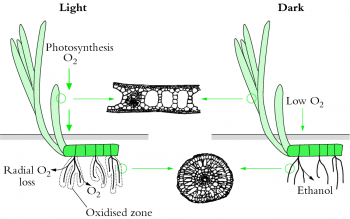
Figure 18.8 O2 is transported to rhizomes and roots of seagrasses during periods of light when photosynthesis releases O2 into aerenchyma. Note the formation of an oxidised zone around roots and radial O2 loss into surrounding anoxic sediments. Both leaves and roots contain airspaces, configured, however, very differently through which O2 can diffuse. By night, almost all O2 transport ceases because seawater surrounding the leaves becomes the only source of O2 and alcoholic fermentation commences in roots. (Courtesy W.C. Dennison)
Microbial degradation of organic material in sediments results in rapid consumption of O2 and other electron acceptors. The rate of O2 diffusion is often so slow that O2 levels in soft nearshore sediments become depleted by respiration and reducing conditions are established. Therefore, while nutrients are relatively abundant in soft sediments, seagrasses must contend with the chronically anoxic nature of nutrient-laden sediments. Seagrasses have several morphological and physio-logical adaptations to anoxia. Plants form extensive networks of internal gas spaces (lacunae), similar to the aerenchyma of terrestrial plants, acting as conduits for diffusive and/or advective transport of O2 from leaves to roots (Figure 18.8). These lacunae are interrupted by a series of single-cell-thick diaphragms containing small pores able to let gases but not water pass. Thus the entire internal gas spaces cannot be flooded. Gas flowing from leaves to roots contains ap-proximately 35% O2, supporting aerobic metabolism in roots embedded in highly reducing sediments. Radial O2 loss into surrounding sediments (Section 18.1.1) oxidises sediments as well as roots, thereby improving the redox status and lowering toxicity of surrounding sediments. Transported O2 is derived from photosynthesis, hence transport virtually ceases within 15 minutes of darkness.
Seagrasses in darkness rely on anaerobic metabolism to generate ATP. As for terrestrial plants, anaerobic pathways yield ATP inefficiently but are able to sustain energy requirements for maintenance of anaerobic cells. One short-term metabolic response to anoxia by seagrasses is the reversible conversion of glutamate and glutamine into alanine and g-aminobutyric acid (GABA), producing ATP but reducing the capacity for nitrogen assimilation. Longer term survival of anaerobic con-ditions is achieved through ethanol production by alcoholic fermentation (Section 18.1.1(c) and Figure 18.8). Seagrass roots shift to alcoholic fermentation after 2–3 h of darkness, losing ethanol by diffusion into surrounding sediments. These adaptive mechanisms operate at different time scales, providing seagrasses with an integrated response to chronically anoxic sediments and ensuring their survival.
Universally slow diffusion of gases through water (Section 18.1.1) affects O2 and CO2 exchange in leaves of aquatic plants. O2 is only available to aerobic respiration as a dissolved gas, carried to leaf surfaces by mass flow of seawater then diffusing mainly through stomata.
On the contrary, inorganic carbon is present in water as dissolved CO2 gas and bicarbonate ions (HCO3–). Freshwater plants in fast-moving water with low pH or high natural carbonate levels can derive enough CO2 to photosynthesise but the relatively high pH of seawater (about 8.2) and high salinity mean that about 90% of inorganic carbon in seawater is present as bicarbonate ions. CO2 concentration in seawater is therefore well below that required to achieve maximum rates of fixation by the dark reaction so mechanisms have evolved that exploit bicarbonate as an inorganic carbon source. Plants using both carbon sources have much lower CO2 com-pensation points and higher half-saturations (Km) for CO2 fixation than expected from simple diffusive entry of CO2. Active import of bicarbonate by leaves appears to be energised by a protonmotive force and is sometimes stimulated by cations (e.g. in Zostera). Once bicarbonate enters leaves, carbonic anhydrase in the periplasmic space converts it rapidly to CO2, providing a substrate for Rubisco. Such CO2-concentrating mechanisms allow plants to achieve photosynthetic rates much greater than might be expected in a carbon-poor environment and underpin the high growth rates observed in many submerged aquatic macrophytes.
Diffusion of bicarbonate ions through boundary layers immediately adjacent to seagrass leaves and hence to sites of assimilation can be a rate-limiting process for seagrass photo-synthesis. Diffusion rates are governed by (1) boundary layer thickness, which is largely a function of water turbulence around the leaf and (2) the bicarbonate concentration gradient from surrounding seawater to the site of photosynthesis. The process of active uptake of bicarbonate into leaves described above reduces bicarbonate concentrations within leaves and enhances diffusion from bulk water to sites of assimilation.
Seagrasses have further adaptations to acquire carbon for growth. Lacunae in seagrasses are enriched in CO2 and provide leaves with an effective mechanism for CO2 recycling. In fact, CO2 is so effectively recycled that photosynthesis in seagrasses fixes carbon with similar efficiency to terrestrial plants with C4 photosynthesis (Section 2.1; Feature essay 2.1). However, these efficiencies are achieved in seagrasses solely through morphological adaptations (lacunae) — CO2 is fixed in seagrasses by the action of Rubisco in the C3 pathway.
Highly efficient CO2 recycling can be demonstrated through estimates of natural carbon isotope discrimination based on δ13C values (Chapter 2): less negative δ13C values indicate less discrimination against the heavier 13C isotope hence more effective CO2 recycling. Seagrasses have δ13C values ranging from –3.6 to –23.8, in contrast to marine algae (–8.8 to –35), C4 terrestrial plants (–9 to –18) and C3 terrestrial plants (–23 to –34). Relatively high values in sea-grasses are evidence that they have the most efficient CO2 recycling of any plants in response to the strictures imposed by an underwater habitat. These mechanisms of extracting carbon from a scarce source against high diffusive resistance have, along with efficient nutrient acquisition, allowed seagrasses to occupy the sea floor with little competition from other macrophytes.
 [25]
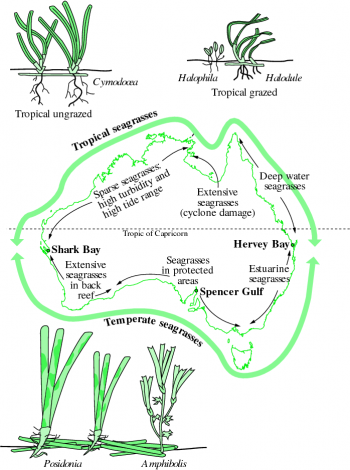
Figure 1 Distribution of seagrasses along the Australian coastline, distinguishing temperate form tropical (grazed and ungrazed) species. More specific ecosystems are identified such as the estuarine seagrasses of south-eastern Australia. Relative sized of the main genera are depicted, ranging from the small-statured, grazed species to the tall temperate seagrass genera of southern Australia. (Courtesy W.C. Dennison)
Australia has a high diversity of seagrasses in its coastal waters, with 38 species out of a worldwide total of 66 species (Larkum et al. l989). Most intertidal and subtidal habitats contain at least one seagrass species. Broadly speaking, sea-grasses can be categorised as tropical (grazed and ungrazed) and temperate (Figure 1).
Large herbivores such as dugongs (Dugong dugong) and green sea turtles (Chelonia mysas) graze on some tropical seagrass meadows heavily, feeding on leaves and/or rhizomes. Repeated grazing promotes seagrass communities dominated by small, fast-growing genera with high reproductive potential for rapid recolonisation (e.g. Halophila, Halodule). Such seagrass communities are common in the tropics; herbivores are only excluded from intertidal areas, turbid water or areas without access to deep water. In those tropical waters without herbivores, larger, slow-growing genera dominate (e.g. Enhalus, Thalassia, Cymodocea, Syringodium).
Australia’s tropical waters fall into three major zones: the northwest coast, Gulf of Carpenteria and Great Barrier Reef. The northwest coast has large tides and turbid waters, and thus seagrass communities are sparse and generally restricted to intertidal pools or lagoons. The Gulf of Carpenteria has extensive seagrass beds, particularly on the western side, which are regularly affected by cyclones. The Great Barrier Reef has extensive deepwater seagrass beds dominated by Halophila spp. growing between reefs. There are also scattered intertidal and shallow subtidal seagrasses along the coast or on reef flats. Extensive seagrass meadows are also found in Shark Bay on the west coast and Hervey Bay, Queensland; both bays are transitional between tropical and temperate waters.
Temperate seagrasses in Australia are rarely affected by grazing. Large, robust and relatively slow-growing genera occur around southern, temperate Australia, most notably in the genera Posidonia and Amphibolis (Figure 1). These genera, as well as another common temperate seagrass, Zostera, support large epiphyte communities that contribute to productivity of southern seagrass communities. Detritus to support epiphytes comes from slow decomposition of very fibrous leaves typical of Posidonia, Amphibolis and Zostera. Temperate regions extend across the southwest, south and southeast coasts of Australia. The southwest coast, extending from Shark Bay to the Great Australian Bight, has a series of offshore limestone reefs which provide protected waters ideal for seagrass meadows. This region is especially species rich and is considered a centre for relatively recent speciation in some genera. Several species of Posidonia and two endemic species of Amphibolis have centres of diversity in this southwest region. Seagrasses along the south coast of mainland Australia and Tasmania are restricted to bays and waters protected by headlands from Southern Ocean storms. For example, Spencer Gulf in South Australia is a vast protected embayment and contains extensive seagrass meadows. Southeast Australia has a series of estuaries with seagrasses growing in the saline waters vulnerable to human impacts.
Seagrasses have low rates of photosynthesis per unit of leaf material but have dense leaf canopies, making them highly productive ecosystems. Seagrass meadows generate biomass about three times faster than an average crop system, placing them alongside tropical and temperate forests as the most productive ecosystems known (Whittaker 1975). High productivity is achieved in seagrass meadows through mechanisms such as those described in Section 18.2.2 — for example CO2 recycling, nutrient capture from suspended detritus particles and reduced self-shading in dense canopies as a result of water turbulence. Seagrass meadows and fast-growing forests have as much as 20 m2 of leaf surface to each square metre of seabed or earth, contrasting with agricultural crops where leaf area indices fall in the range 1–10 m2 m–2.
Rapid leaf turnover and propagation of new individuals both contribute to high productivity of seagrass communities, particularly the fastest-growing, small-statured seagrass species. Individual plants produce a new leaf about every 7 d, followed by elongation of the leaf at a rate of 2–5 cm d–1. Hence productivity of seagrass meadows, converted to daily carbon increment, reaches 4 g carbon m–2 d–1. By turning over leaves rapidly, seagrasses avoid excessive epiphyte loads that would otherwise restrict light harvesting. As old leaves decay, inorganic nutrients are efficiently reabsorbed to sustain new growth. Reduced carbon from detritus and organic matter excreted from photosynthesising leaves and anaerobic roots stimulate recycling by providing substrates for microbes in sediments.
Reproductive capacity, identified as a feature of the success of seagrasses, is achieved through a suite of vegetative and sexual mechanisms. Asexual (vegetative) reproduction gives rise to new clonal individuals through rhizome growth, akin to that in many wetland species. Once new shoots (ramets) initiated at nodes on a rhizome become photosynthetically autonomous, the rhizome decays leaving a new individual to extend the colony.
 [26]
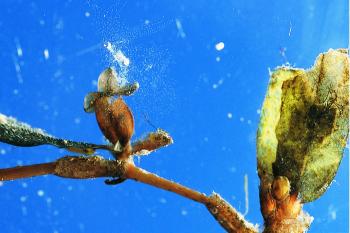
Figure 2. Pollen release under water from male flowers of Halophila capricornia, showing the pollen assemblage that rises from self-association of individual pollen grains. (Photograph courtesy Seagrass Ecology Group, Northern Fisheries Centre, Queensland Department of Primary Industries)
However, genetic analysis shows that seagrass colonies are not entirely clonal, suggesting that a degree of sexual re-production occurs. Indeed very small flowers can be found with some difficulty on seagrasses, often dioecious (separate male and female flowers) and therefore heavily outcrossing. Pollen is a threadlike structure about 2 mm long (Figure 2) which adheres to a water-insoluble matrix on the receptive female stigma to achieve fertilisation. The mechanisms by which this thread of pollen reaches a flower constitute exquisite adaptations to the marine environment. Three modes of transport have been reported.
First is surface water pollination which occurs within a few hours during the year’s lowest tide. Buoyant pollen is released, floats to the water surface and forms an interconnected raft which attaches to any female stigma at the surface. The second mechanism of fertilisation entails pollen threads associating at the surface of the sediment in a strand up to a metre long; if this strand encounters a stigma, fertilisation can take place. A third mechanism (hydrophilous pollination) involves release of pollen into the water surrounding seagrass plants and occasional, random fertilisation when pollen drifts onto flowers. The chances of hydrophilous pollination are therefore low.
Sexual reproduction combines with dispersal of seagrass seeds to produce genetic diversity. Seeds are carried in water currents, float through buoyancy conferred by attached bubbles and pass through the gut of grazing animals. Seeds can then germinate in a new colony or lie dormant, providing a seed bank for later recruitment. In this way, seagrasses have devel-oped a robust reproductive strategy ensuring that new individuals with some degree of genetic diversity are perpetually being added to a seagrass community.
Larkum, A.W.D., McComb, A.J. and Shepherd S.A. (eds) (1989). Biology of the Seagrasses. A Treatise on the Biology of Seagrasses with Special Reference to the Australian Region, Elsevier: Amsterdam
Whittaker, R.H. (1975). Communities and Ecosystems, 2nd edn, Macmillan: New York
ap Rees, T., Jenkin, L.E.T., Smith, A.M. and Wilson, P.M. (1987). ‘The metabolism of flood tolerant plants’, in Plant Life in Aquatic and Amphibious Habitats, British Ecological Society Symposium, ed. R.M.M. Crawford, 227–238, Blackwell: Oxford.
Armstrong, W., Brändle, R. and Jackson, M.B. (1995). ‘Mechanisms of flood tolerance in plants’, Acta Botanica Neerlandica,
43, 307–358.
Kuo, J., Phillips, R.C., Walker, D.I. and Kirkman, H. (eds) (1996). Seagrass Biology, Proceedings of an International Workshop, Sciences UWA, University of Western Australia: Perth.
Links:
[1] http://plantsinaction.science.uq.edu.au/edition1//?q=figure_view/866
[2] http://plantsinaction.science.uq.edu.au/edition1//?q=figure_view/868
[3] http://plantsinaction.science.uq.edu.au/edition1//?q=figure_view/869
[4] http://plantsinaction.science.uq.edu.au/edition1//?q=figure_view/870
[5] http://plantsinaction.science.uq.edu.au/edition1//?q=figure_view/871
[6] http://plantsinaction.science.uq.edu.au/edition1//?q=figure_view/875
[7] http://plantsinaction.science.uq.edu.au/edition1//?q=figure_view/874
[8] http://plantsinaction.science.uq.edu.au/edition1//?q=figure_view/876
[9] http://plantsinaction.science.uq.edu.au/edition1//?q=figure_view/877
[10] http://plantsinaction.science.uq.edu.au/edition1//?q=figure_view/878
[11] http://plantsinaction.science.uq.edu.au/edition1//?q=figure_view/879
[12] http://plantsinaction.science.uq.edu.au/edition1//?q=figure_view/880
[13] http://plantsinaction.science.uq.edu.au/edition1//?q=figure_view/881
[14] http://plantsinaction.science.uq.edu.au/edition1//?q=figure_view/882
[15] http://plantsinaction.science.uq.edu.au/edition1//?q=figure_view/883
[16] http://plantsinaction.science.uq.edu.au/edition1//?q=figure_view/884
[17] http://plantsinaction.science.uq.edu.au/edition1//?q=figure_view/886
[18] http://plantsinaction.science.uq.edu.au/edition1//?q=figure_view/887
[19] http://plantsinaction.science.uq.edu.au/edition1//?q=figure_view/888
[20] http://plantsinaction.science.uq.edu.au/edition1//?q=figure_view/889
[21] http://plantsinaction.science.uq.edu.au/edition1//?q=figure_view/890
[22] http://plantsinaction.science.uq.edu.au/edition1//?q=figure_view/891
[23] http://plantsinaction.science.uq.edu.au/edition1//?q=figure_view/892
[24] http://plantsinaction.science.uq.edu.au/edition1//?q=figure_view/893
[25] http://plantsinaction.science.uq.edu.au/edition1//?q=figure_view/895
[26] http://plantsinaction.science.uq.edu.au/edition1//?q=figure_view/896