
In the 1970s, several research groups attempted to introduce foreign DNA into plant genomes (Kleinhofs and Behki 1977). For example, seeds of a thiamine-requiring mutant of Arabidopsis thaliana were incubated in a solution of bacterial DNA. Plants were recovered which could grow without thiamine and it was thought that the bacterial DNA had somehow entered the plant cell and enabled the mutation to be corrected. At this time, there were no reliable methods for detecting foreign genes within plant genomes so it was difficult to prove whether the bacterial DNA had been stably incorporated. Analysis of the ‘corrected’ lines indicated the likely presence of bacterial DNA but contamination with wild-type seed could not be ruled out. Direct transformation of intact plants with naked DNA was largely forgotten for several years.
Today, however, the approach of these early workers does not seem so outlandish. We now have a greater understanding of what is required to express foreign genes in plants, coupled with several procedures to deliver foreign DNA into plant cells and methods for proving that foreign DNA has been integrated into the host genome. Gene transfer experiments are a routine tool for answering questions relating to most aspects of plant development. In addition, improvement of most major crop species by addition or deletion of specific genes is the subject of worldwide research.
Central to transferring DNA into plants is the ability to recognise individuals, whether at the cellular or whole-plant level, which have incorporated the foreign DNA (i.e. genetically transformed) against the many individuals which remain untransformed. Usually only a small percentage of cells or plants are successfully transformed in any one experiment. In the early 1980s, a new approach was modified from microbial molecular genetics to enable selection and recovery of transgenic plants. This was the introduction of antibiotic resistance genes which allow transformed cells to grow in the presence of levels of antibiotic which are toxic to wild-type parental cells. The first marker used in this way was a gene encoding neomycin phosphotransferase (NPTII) which, when fused to a promoter allowing expression in plant cells, conferred resistance to kanamycin. Alternatives include other antibiotic resistance genes such as hygromycin phosphotransferase, and genes encoding resistance to herbicides such as glyphosate or phosphinothricin.
Of course, selectable markers are only one aspect of creating stable transgenic plants. We also require systems for efficient DNA delivery and integration into the plant genome. Such methods generally fall into two categories: Agrobacterium-based transformation and physical uptake of foreign DNA.
 [1]
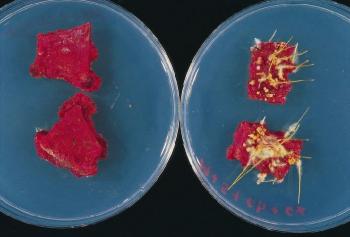
Figure 10.36 Consequences of Agrobacterium infection. Cultured beetroot (Beta vulgaris) infected by A. rhizogenes showing differentiation of transformed roots containing Ri T-DNA after two weeks of tissue culture (right). Non-innoculated control tissues (left) do not produce roots. No hormones are supplied in the medium, but the T-DNA contains genes which alter hormone status in the tissue, and this leads to root organogenesis (see Section9.2).
(Photograph courtesy J.D. Hamill)
In nature, certain soil bacteria cause disease in plants by inserting discrete pieces of DNA into the nuclear genome of plant cells. Agrobacterium tumefaciens infects a wide range of dicotyledonous plants via wounds and causes growth of un-differentiated callus or gall tissue. Its cousin, A. rhizogenes, causes outgrowths of fine roots (Figure 10.36). These species are the aetiological agents of crown gall disease and hairy root disease respectively, and can cause substantial losses in cultivated plants particularly in horticulture where infested soil remains a possible source of infection for many years.
During infection, DNA is transferred (hence the abbreviation T-DNA) from large plasmids in A. tumefaciens or A. rhizogenes into the plant genome where it is stably incorporated into plant chromosomes. The plasmid in A. tumefaciens is referred to as the Ti plasmid (‘tumour inducing’) and A. rhizogenes carries the Ri plasmid (‘root inducing’). Although the T-DNA genes in Ti plasmid and Ri plasmid differ, in both cases their collective expression in plant cells leads to a perturbation in the balance or perception of plant hormones by transformed plant cells. Galls or hairy roots can be cultured in vitro without the normal requirement for addition of plant hormones. T-DNA genes are eukaryotic in structure, each with its own promoter, allowing expression in plant cells. Three genes, IAAM, IAAH and IPT, cause transformed plant cells to over-produce auxin and cytokinin which leads to growth of an undifferentiated clump of cells — a gall. In A. rhizogenes, additional T-DNA genes collectively known as the Rol genes (root loci) may be involved in other aspects of auxin metabolism or perception, which may augment the characteristic pro-liferation of roots from transgenic cells (Costantino et al. 1995).
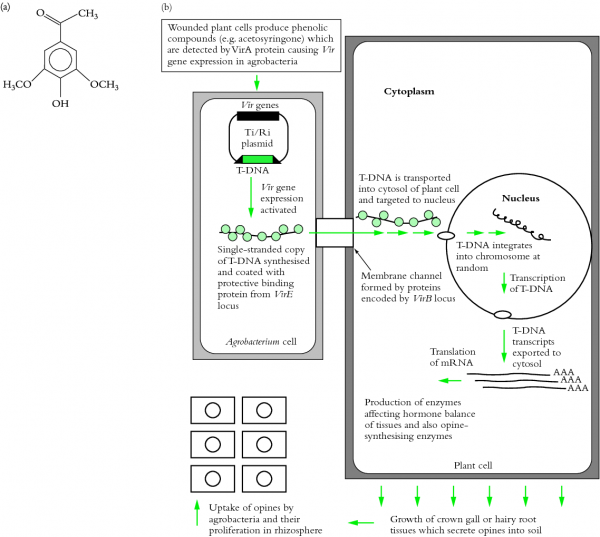
T-DNA is delineated by short border sequences of about 25 nucleotides. The right T-DNA border appears essential for transfer of T-DNA into the plant genome. DNA is nicked at this point and copied into a single-stranded form. It is then complexed with protective DNA-binding proteins and trans-ferred from the Agrobacterium cell to the plant nuclear genome (Figure 10.37; Zupan and Zambryski 1995). Integration into chromosomes appears to occur at random, though trans-criptionally active areas are targeted preferentially. Thus T-DNA insertion can destroy the integrity of active genes, or at least disrupt their expression. Normally this is not a problem for the transformed plant cells as, being diploid or polyploid, the other allele(s) of the mutated gene remains functional. Random integration into active genes can, however, be put to good use to help identify plant genes on the basis of altered phenotype.
Many of the genes required for DNA transfer reside on a section of the Ti or Ri plasmid known as the virulence (Vir) region. Vir genes are prokaryotic in structure and so function in bacterial cells, unlike those in T-DNA which have eukaryotic features, as noted above. Wounded plant cells produce phenolic compounds such as acetosyringone (Figure 10.37) which are detected by the protein product of one of the Vir genes, VirA, which then leads to the expression of other Vir genes. Together, the Vir proteins result in T-DNA transfer into the plant cell nucleus, probably in a manner akin to conjugative plasmid transfer between bacteria (Zupan and Zambryski 1995). Classical experiments in the 1920s by a pioneer in this field, A.J. Riker, showed that tumour formation occurred most effectively if plant tissues were incubated at 22ºC but above 28ºC there was a complete absence of tumour devel-opment. We now know that this probably relates to T-DNA transfer which has a temperature optimum around 20ºC (Fullner and Nester 1996).
 [2]
Figure 10.37 Transfer of DNA from Agrobacterium to plant depends on a complex series of interactions between host and pathogen. The process is usually initiated by compounds such as acetosyringone which are produced by wounded plant cells. T-DNA genes are expressed after incorporation into the host genome. These genes code for plant hormone biosynthetic enzymes and other genes for synthesis of unusual amino acids called opines which only the bacteria can make use of. Replacing the pathogenic T-DNA genes with genes for desirable economic traits is the basis for Agrobacterium-mediated transformation. (a) Structure of acetosyringesome (3,5-dimethoxy-4-hydroxyaceophenone). (b) Schematic representation of Agrobacterium interaction and T-DNA transformation of plants (see Zupan and Zambryski 1995 for further details).
Although wild-type T-DNA and Vir genes are located on the same plasmid, the protein products of the Vir genes act in trans. This means that the T-DNA may be on a different plasmid from the Vir genes in the agrobacterial cell, and still be efficiently transferred into the plant genome, provided the Vir genes are intact and functional. This has led to specialised ‘binary’ cloning vectors becoming the most commonly used Agrobacterium-based transformation systems.
 [3]
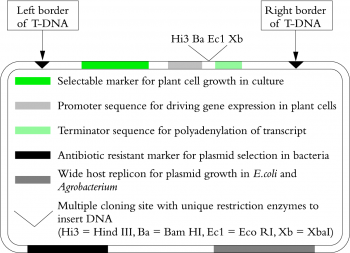
Figure 10.38 Binary expression vectors are the most common strategy for generating plasmids containing foreign genes of interest and expressing them in plant cells. This diagram depicts the essential features incorporated into the T-DNA region and elsewhere on the plasmid. The coding sequence of the gene of interest is inserted using restriction enzyme sites between the promoter and terminator sequences. Note that the Vir genes, which are essential for infection and DNA transfer, are absent from this plasmid and are instead carried on a second plasmid within the same Agrobacterium strain, hence the term 'binary' vector.
In the 1980s, disarmed (i.e. non-pathogenic) A. tumefaciens strains were created which had the T-DNA genes deleted from their Ti plasmid so could no longer induce gall symptoms, but still retained the Vir genes and other regions essential for gene transfer into a plant host. Recombinant vectors are actually constructed in E. coli, and typically contain T-DNA border sequences, selectable marker genes and unique restriction enzyme sites to enable the coding sequence of any foreign gene to be ligated downstream of the chosen eukaryotic promoter (Figure 10.38). This ensures that the foreign gene is expressed in the plant genome. After inoculation with A. tumefaciens, cells are often manipulated in tissue culture using a high cytokinin to auxin ratio to induce shoot organogenesis with a minimum of callus formation. This assists recovery of transgenic plants lacking the genetic abnormalities which can accumulate during extended callus phases.
To date, most dicotyledonous plants of major commercial importance, as well as many species of experimental value, have been transformed using Agrobacterium-based transformation in conjunction with organogenesis in tissue culture. In addition, it has become possible to transform monocotyledonous grain crops such as rice, maize and barley with disarmed A. tume-faciens, even though it is not a pathogen on cereals (Hiei et al. 1994; Ishida et al. 1996; Tingay et al. 1997).
Remarkable but simple transformation of Arabidopsis by Agrobacterium has been reported which does not require a tissue culture step. The procedure involves dipping inflorescences of intact plants in a bacterial suspension and forcing the bacteria into plant tissues by brief vacuum infiltration. The plants continue to grow and set seed, and a proportion of the next generation of seedlings are found to contain the inserted DNA (Bechtold et al. 1993).
Direct insertion of naked DNA into plant cells is an alternative transformation strategy for all species but is especially useful for plants which are less susceptible to Agrobacterium such as cereals and sugar cane. DNA can be from any source and again integrates into the nuclear genome largely at random. Early experiments on direct gene transfer made extensive use of plant protoplasts, with DNA uptake facilitated by treatment with polyethylene glycol or by brief exposure to an electric current (electroporation). The latter causes pores to form transiently in the plasma membrane and so allows DNA molecules to enter the cytoplasm. Protoplast culture and regeneration is now feasible for many of the world’s crops, but procedures remain relatively slow and technically demanding. Instead, DNA can be introduced into intact cells via punctures in the cell wall often in organogenic or embryogenic tissue cultures. One simple method involves vortexing cells briefly in a solution of DNA containing silicon carbide fibres. These fibres have a hardness approaching that of diamond, are less than 1 µm in diameter and puncture cells without destroying them, allowing direct entry of DNA. Stably transformed maize plants have been produced in this way (Frame et al. 1994).
A more popular alternative is microprojectile bombardment, often known as the ‘biolistic’ or ‘gene gun’ technique, where DNA-coated gold or tungsten particles, 1–3 µm in diameter, are literally blasted into intact tissues. The DNA diffuses off the particles and integrates into plant chromosomal DNA. Originally a gunpowder charge was used, but subsequent refinements have led to the acceleration force being provided by compressed helium or electric discharge (Songstadd et al. 1995; Christou 1996). This is less damaging to plant cells — and less dangerous for the operators! Many crop plants, including cereals and sugar cane, have now been transformed by microprojectile bombardment. As with Agrobacterium-based procedures, selection for antibiotic or herbicide resistance enables recovery of the relatively small percentage of cells which are transformed from the majority which are not.
 [4]
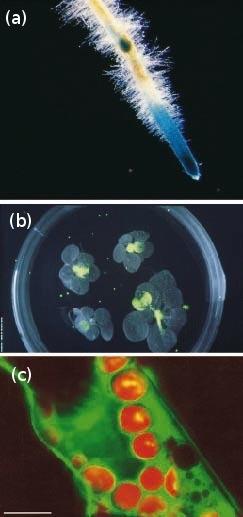
Figure 10.39 A brief history of reporter genes commonly used in plant transformation studies. All these systems generate a visible signal. (a) the GUS system is based on expression of the uidA gene which encodes a β-glucorindase enzyme. Tissues are infiltrated with chromogenic substrate, such as 'X-gluc' (see text), which gives a blue colour in expressing cells. Disadvantages are relatively low sensitivity and the fact that the test tissues are kill by the assay procedure. Here the GUS gene is being driven by a constitutive promoter, CaMV35S, in tobacco roots. Note that expression is not uniform across all cell types, with greatest colour in root tips and at a site of lateral root initiation (arrowed).
(b) Luciferase system. Action of either firefly or bacterial luciferase genes on luciferin substrate generates a light-emitting product, which is detected using a high-sensitivity liquid nitrogen cooled video cameera. Major advantages are improved sensitivity and a non-fatal assay procedure. Here the luciferase gene is driven by a meristem- and young leaf-specific promoter in tissue-cultured tobacco plants. The small randomly distributed flecks of light are single cosmic rays (photons), indicating just how sensitive the camera is.
(c) GFP system. Green fluroescent protein from the jellyfish Aequorea victoria spontaneously emits light wherever it is expressed in cells. No substrate is required. Here, a CaMV35S-driven GFP gene in Arabidopsis hypocotyl leads to most expression in the nucleoplasm and cytoplasm, with almost none of the cytoplasmic organelles. The background signal in plastids is autofluroescence of chlorophyll. Subsequent modification of the gene with an endoplasmic reticulum signal gave transgenic plants with altered expression patterns and much improved visiblity. Scale bar = 1 µ m.
((a) Photograph courtesy J.D. Hamill; (b) photograph courtesy S. Mudge and R.G. Buirch; (c) based on Haseloff et al. 1997, reproduced with permisiion of National Academy of Sciences, USA).
A small number of genes are used widely to optimise trans-formation procedures and to reveal spatial and temporal patterns of expression of foreign genes in transgenic plants. These genes are effective markers because their protein products are readily detectable in transgenic tissues but are absent from non-transgenic tissues. Initially, antibiotic resistance genes them-selves acted as markers via suitable enzyme assays. How-ever, these have largely been superseded by more sophisticated markers whose protein products can be located histochemically by simple staining techniques. The uidA gene from E. coli encodes the enzyme b-glucuronidase, usually referred to as the GUS gene or enzyme, which hydrolyses substrates such as methyl umbeliferyl glucuronide (MUG) to produce methyl umbeliferone (MU). When illuminated at 360 nm, MU fluoresces strongly at 455 nm, allowing levels of active GUS protein to be measured (Jefferson et al. 1987). Alternatively, GUS can be visualised by staining with the chromogenic substrate 5-bromo-4-chloro-3-indolyl-b-D-glucuronide, also known as ‘X-gluc’. Hydrolysis results in an insoluble indigo blue dye which marks cells expressing the gene (more accurately, those containing the GUS protein) (Figure 10.39a). GUS activity is generally regarded as a good indication of the strength or tissue-specificity of expression of the promoter to which the GUS gene is fused, although this is not universally so (Taylor 1997).
Other reporter systems include genes encoding luciferase, from the firefly Photinus pyralis or the luminescent bacterium Vibrio. The protein product is detected in transgenic plants after addition of luciferin substrate which, in the presence of O2 and ATP, results in emission of green-yellow light. A liquid-nitrogen-cooled luminometer with a sensitivity capable of detecting individual photons allows quantification of emitted light and results in spectacular pictures (Figure 10.39b).
Most reporter genes have the disadvantage that a chemical substrate must be infiltrated into the tissues and often this is toxic to plant cells. In addition, non-uniform distribution of substrate may distort the apparent location of reporter gene expression. One alternative is a protein with inherent detection properties, such as green fluorescent protein (GFP) from the jellyfish Aequorea victoria. GFP fluorescence is non-toxic and does not require addition of substrates or cofactors (Figure 10.39c). Non-invasive detection allows monitoring of GFP gene expression in the same transgenic plant throughout its life cycle. Modification of the DNA sequence of the native jellyfish gene has resulted in GFP genes which function even more effectively in plants, enabling detection in intact plants containing GFP at only about 0.1% of total leaf protein (Haseloff et al. 1997; Leffel et al. 1997).
Following transformation, we need to establish whether foreign genes remain intact in the host genome, and that they are expressed at desired levels in target tissues, and in response only to expected chemical or environmental stimuli. The foreign gene’s local environment within the genome can affect its expression. We therefore often find great variation in levels of protein or in phenotypic effects between different individuals even when transformed with the same gene. This is usually referred to as ‘position effect’. Transgene inactivation, sometimes due to methylation of DNA, can also complicate assessment of foreign gene expression. In co-suppression, the incoming gene may lead to inactivation or reduction in expression of homologous endogenous genes (Finnegan and McElroy 1994; Matkze and Matkze 1995). Transformants with desired levels of gene expression can be selected from parallel screening of several transformed lines. Those which contain only one copy of the foreign gene generally show reproducible patterns of expression. In these, the transgene will segregate in a simple Mendelian manner (1:2:1 for homozygous transgenic:hemizygous (1 copy):homozygous non-transgenic).
The largely random nature of T-DNA and naked DNA integration into higher plant genomes is usually regarded as being due to illegitimate recombination. Lower plants and fungi, on the other hand, will often integrate foreign DNA by homologous recombination if the incoming DNA is flanked by specific host DNA sequences. Similar targeted integration into pre-selected sites in higher plant genomes could reduce position effect variability of transgene expression. Homologous recombination does occur in plants, but at a frequency several orders of magnitude lower than illegitimate recombination. This may be because plants have efficient somatic DNA repair mechanisms which help them survive in natural environ-ments where they are exposed to ultraviolet and other DNA-damaging agents. The challenges now are to improve rates of homologous recombination, and to devise methods to distinguish transformants in which homologous recombination has occurred from the large number with random insertion. Homologous recombination may then be harnessed for targeted delivery of foreign genes into precise locations within plant genomes.
One area where intentional reduction of endogenous gene activity has found many applications, in both fundamental and applied research, is the use of ‘antisense’ technology and related methods (Bourque 1995). Although the exact mechanism of antisense action remains unclear, transcription of genes in an antisense orientation often reduces expression of com-plementary (sense) host genes. In general, antisense sequences require high homology with endogenous genes for effective suppression of expression, and are usually driven by a strong promoter (e.g. CaMV35S) to provide sufficient antisense RNA to ‘mop up’ endogenous sense transcripts. Endogenous mRNA levels are usually reduced when antisense sequences are present. The simplest explanation is that antisense mRNA forms a double-stranded RNA molecule with the endogenous RNA sense strand, so preventing it from functioning in translation, with the double-stranded RNA being rapidly degraded. In summary, gene sequences from any source can now be inserted into plant nuclear genomes. Techniques usually lead to random gene integration into transcriptionally active parts of the genome. Antisense expression can diminish, or almost eliminate, expression of endogenous genes. In future, it may be possible to use targeted instead of random insertion, which should lead to more predictable levels of transgene expression and should also allow deliberate disruption of specific genes to study effects on plant growth and development. In the next section, we examine expression of novel genes in plants and altered expression of resident genes. Only 15–20 years ago such experiments were in the realms of the imagination.
 [5]
Figure 10.40
A genetically engineered food: canned tomato puree containing a modified gene for cell wall softening. The labelling of the can is typical of what is required for such products.
(Photograph courtesy J.D. Hamill)
As tools for physiological studies or as potentially valuable new crop varieties, the creation of transgenic plants is one of the fastest growing pursuits in plant science. Examples of the former include introduction of gene sequences into mutants, with the aim of restoring phenotypes to wild type, so con-firming the identification of genes which have been isolated. Similarly, downregulating or upregulating expression of functional genes often allows us to make links between gene and specific aspects of the phenotype.
New traits in crop plants include herbicide resistance, virus resistance, pest resistance, tolerance to environmental stresses and physiological modification to improve postharvest shelf life. Field trials of genetically engineered plants are increasing in countries around the world. Some crops containing foreign genes have been approved for human consumption and are now marketed in various countries (Figure 10.40). Tomatoes are in commercial production in the USA and Europe which have a normal flavour and colour during ripening but the fruit flesh remains firm after ripening compared with control fruit. This is the consequence of a gene coding for a cell wall degrading enzyme, polygalacturonase, which is normally expressed during ripening but here is downregulated by an antisense transgene (see Section 11.7). Such fruit is capable of ripening fully on the parent plant before mechanical harvest and transport to market. Most normal tomatoes are harvested as hard green fruit, well before natural ripening, and so have not accumulated as much sugar or flavour. In addition, they soften rapidly after harvest, which makes them prone to mechanical damage.
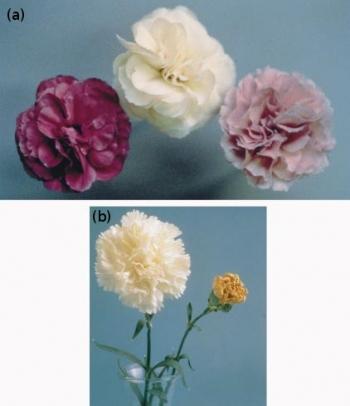
Genetic modification of ornamental plants has also received much attention because of their worldwide popularity. The most common targets are species such as carnation and rose, and the most valuable traits are novel flower colours and increased vase life for cut flowers. Two examples generated by an Australian biotechnology company, Florigene, are illustrated in Figure 10.41. The first is a series of blue-mauve carnations, known commercially by names such as ‘MoondustTM’ and ‘MoonshadowTM’. These colours were never possible before in this species, and are due to insertion of novel genes for part of the flavonoid biosynthesis pathway. The second is a slow-senescing ‘long life’ carnation which contains a gene downregulating ethylene biosynthesis.
 [6]
Figure 10.41 Genetically engineered flowers produced by Florigene, an Australian-based biotechnology company. (a) Novel flower colours are highly prized by horticultural industries, especially in species such as carnation, the third most valuable cut-flower species worldwide. 'MoonshadowTM' (left) and 'MoondustTM' (right) carnations contain additional genes for part of the flavonoid biosynthesis pathways and lead to production of delphinidin which gives different shades of blue-mauve petals. The white non-transgenic control is in the centre. (b) So-called 'long-life' carnations have an ACC oxidase gene (see Section 9.2.1) inserted in an antisense direction, which suppresses ethylene biosynthesis and leads to greatly extended postharvest petal life (left) compared with non-transgenic control flowers (right). The flowers here were picked 9 d before the photograph was taken. Similar delayed senescence can also be achieved by supressing ASS synthase expression or by enhancing cytokinin biosynthesis through expression of an ipt transgene.
(Photograph courtesy Florigene Limited, Melbourne, © 1995, 1996)
The use of genetically engineered crops for food, fibre, energy sources or other human needs such as ornamental species is an emotive issue raising both environmental and ethical concerns. Balanced against such concerns, we need to consider the pressures on the world’s environment from increasing use of fossil fuels, and consumption of forests and other non-renewable resources. There is an ever faster expanding human population which is predicted to reach eight to ten billion by the middle of the twenty-first century. Just to feed this population at current nutritional standards demands continuing improvements in agricultural efficiency and productivity. On environmental and economic grounds, intensive farming practices may not be sustainable in many major but fragile agricultural and forestry ecosystems around the globe. One task of plant scientists is to generate genetically engineered crops with improved yield and quality. Another challenge is to advise on their proper evaluation and implementation in modern cultivation. Here we examine a few examples illustrating the potential of these technologies.
Modern intensive agriculture relies heavily on monoculture. This approach has led to production of large quantities of relatively cheap crops due to efficiencies of scale and increased mechanisation. However, large expanses of land occupied by one crop are vulnerable to attack by pests and pathogens which, once established, can cause rapid devastation. To counter this, plant breeders constantly need to develop new varieties of crops containing genes, often from wild germplasm, which can increase tolerance against particular pests. Insertion of foreign resistance genes (i.e. from unrelated or distantly related species) by genetic engineering is an alternative approach which augments traditional breeding. Diverse research approaches have led to a range of novel measures for protecting crop plants against pests and pathogens.
Plant viruses cause huge losses in plant productivity, possibly as much as 10% on a global scale, especially in developing regions of the world where there is often limited capacity to control virus-transmitting insects. The genome of many viruses has been characterised, allowing precise identification of the amino acid sequences of coat proteins required for virus proliferation. Expression of these gene sequences, driven by a strong promoter such as CaMV35S, in plants has provided resistance to viral infection under field conditions. The presence of viral coat protein in the plant cytoplasm appears to interfere with the uncoating and subsequent replication of nucleic acids from incoming viral particles. Transgenic crops resistant to a range of economically important viruses such as alfalfa, cucumber, soybean, tobacco and tomato mosaic viruses, po-tato leafroll and potato virus X and Y, rice stripe and papaya ringspot have been trialled or released for agricultural use (Dale 1995). In China, of the 20 million hectares of tobacco in cultivation, an estimated 5% were transgenic for cucumber mosaic virus resistance in 1994, and transgenic plants are predicted to account for more than half of the crop by early in the twenty-first century. These plants require less insecticide treatment (virus is spread by insects — probably aphids) and can produce 5–7% more leaf than non-transgenic controls (Dale 1995). Some crops are susceptible to numerous viruses so DNA sequences encoding multiple coat protein genes can now be designed to confer resistance against more than one type of virus. For example, squash (Curcurbita pepo) is sensitive to several RNA viruses including cucumber mosaic virus, zucchini yellow mosaic virus and watermelon mosaic virus 2. Introduction of genes for the three corresponding coat proteins into the same plant resulted in high levels of resistance to all these viruses even under severe disease pressure (Fuchs et al. 1997).
Other promising virus resistance strategies include interfering with expression of genes normally required for virus replication in plants, use of defective viral RNA which interferes with production of infective viral particles, and engineering plants to produce mammalian antibodies against viruses. We do not yet know the effectiveness and durability of each approach under natural conditions. Because viral genomes can adapt rapidly under strong selection pressure, sustained resistance will probably require a suite of com-plementary approaches.
There are approximately 10000 recognised insect pests of agricultural crops worldwide, with many belonging to the Orders Lepidoptera and Coleoptera. Pest infestations, par-ticularly with larvae, cause large crop losses in many parts of the world. Approximately 10 billion US dollars are spent each year spraying crops in a chemical war against insect damage. Development of resistance against insecticides is a widespread and recurring problem. Added to that are environmental concerns and health issues resulting from use of many toxic and persistent agricultural chemicals. Fortunately, nature has provided some extremely potent toxins which are effective against a wide range of insect types but which are non-toxic to mammals. Many plants synthesise inhibitors throughout the plant following insect attack on leaf tissue. These are known as systemic responses. The toxin blocks the action of proteinases in larval guts, which prevents acquisition of sufficient essential amino acids, and leads to reduced fitness and increased rates of mortality — susceptible larvae starve to death as they feed. However, over evolutionary time, pest species have often become specialised on particular host plants. Their larvae are usually not susceptible to specific proteinase inhibitors from that species, though they may be susceptible to equivalent inhibitors from other plants. This allows defence strategies of one plant species to be used successfully to protect an unrelated species. For example, a gene encoding a trypsin inhibitor protein (CpTI) from a legume (cowpea, Vigna unguiculata) was expressed in leaf tissue of tobacco to about 1% of total soluble leaf protein. These plants were largely resistant to tobacco budworm (Heliothis virescens), a serious tobacco pest (Hilder et al. 1987). Importantly, there was no penalty in terms of growth and productivity in plants expressing the CpTI gene. More widespread use of proteinase inhibitor genes may become a major strategy for controlling insect pests on crop plants (Ryan 1990; Duan et al. 1996).
A second very potent natural insecticide which is effective against Lepidoptera and Coleoptera pests is the crystal toxin protein from the bacterium Bacillus thuringiensis (Bt). The protein (in reality a very large family of related proteins, each with slightly different activities) has been extracted from sporulating bacteria grown in fermenters and used as an insecticidal spray for decades. Due to its rapid degradation and lack of toxicity to mammals, it is widely used as a ‘safe’ insecticide, even having approval from some organic farming organisations. Moreover, the specificity of each protein for particular pests is ecologically attractive as the risks to beneficial insects are low. If a susceptible insect larva consumes leaf tissue containing as little as 1 mg of Bt protein, partial degradation in the alkaline conditions of the larval gut leads ultimately to fatal release of protein fragments of 65–70 kDa through inhibition of activity of midgut epithelial cells. Since the first isolation of a Bt gene in 1985, approximately 100 alternative sequences have been detected which represent other members of this gene family. Bt transgenic cotton, maize and soybeans are already in, or close to, commercial production. Bt genes have also been introduced into tobacco, potato, tomato and canola. The intention is to reduce some of the colossal costs of chemical sprays for insect control in these crops where losses in the USA alone exceed $1 billion every year. Techniques such as codon usage modification and the use of strong promoter sequences can substantially increase gene expression levels. For example, alteration of the Bt gene DNA sequence from a G+C content of <40% (bacterial gene) to 65% (typical plant gene) was possible without significantly altering the amino acid sequence. Cotton plants containing such modified sequences fused to the CaMV35S promoter generated several hundred nanograms of Bt protein per milligram of total protein and were highly resistant to cotton bollworm (Pectinophora gossypiella) (Perlak et al. 1991). Bt cotton is now licensed directly to growers in the USA and Australia. A similar approach has led to Bt maize being released to the US market (Estruch et al. 1997).
Incorporation of natural toxins into crop plants still carries risks of inducing resistance in insect populations. Already, heritable resistance against Bt protein has been found, and relates to an alteration in binding affinity of the insect’s midgut membrane which is specific for each type of toxin. Multiple strategies, such as multiple Bt toxin genes or combined Bt toxin and proteinase inhibitor genes or other insecticidal proteins, may be a more robust solution as probability of survival of double-resistant individuals will be very low indeed. In addition, refinement of gene expression control via inducible or devel-opmentally regulated promoters will restrict protein presence to times and sites of insect larvae attack. Growth of susceptible varieties alongside the resistant crop can provide refugia for wild-type insects thus preventing the rapid predominance of resistance genes in the insect population gene pool. Without such strategies, resistance to transgene products will undoubtedly occur, very much akin to resistance to present chemical applications.
Fungal and bacterial pathogens cause enormous damage to crops and also to foods in storage. Control by chemical spraying is effective but, as with insect pests, is expensive, not completely effective and is undesirable from an environmental and human health perspective. Plants have evolved their own range of mechanisms in the battle against pathogens. One of these is the hypersensitive response (HR) whereby a group of cells rapidly undergo death and lysis in the vicinity of an invading pathogen following its contact with the plant. The selective destruction of a small number of plant cells usually causes death of the pathogen so protecting the remainder of the plant from invasion. Plant pathologists call this an incompatible interaction. Pathogens, in turn, have developed an ability not to trigger the HR in susceptible plants, and this is known as a compatible interaction. The ‘gene for gene’ hypothesis concisely describes this ongoing battle between plants and pathogens whereby a plant resistance gene is matched by the development of a new pathogen gene which overcomes the resistance (see Case study 10.1). We are now beginning to understand the molecular basis for the HR and may in future be able to trigger the HR in crop plants in response to particular strains of pathogens (Staskawicz et al. 1995).
Other approaches also show promise. For example, expression of a CaMV35S-driven tomato chitinase gene in Brassica napus (canola) significantly increased field resistance to several fungal pathogens. Probably this was due to breakdown of the chitin-rich cell walls of the invading fungal hyphae (Grison et al. 1996). Isolation of pathogenesis-related (PR) proteins in plants may also lead to the development of resistant crops. For example, PR1 is a protein induced at high levels during development of systemic acquired resistance (SAR) in tobacco. Although we do not yet understand how this protein functions, its constitutive expression in transgenic tobacco confers resistance to two important fungal pathogens, Phytophthora parasitica and Peronospora tabacina (Alexander et al. 1993). In the future, coexpression of several PR proteins may provide resistance or tolerance to a wide spectrum of fungal pathogens.
An alternative approach involves genes encoding production of phytoalexins, low molecular weight antimicrobial com-pounds, present in plants such as peanut or grapevine. For example, expression of stilbene synthase from grape in transgenic tobacco resulted in production of reservatrol and conferred increased resistance to Botrytis cinerea (Hein et al. 1993). Secondary metabolites, including many natural toxins such as phytoalexins, are a diverse group of compounds derived mostly from essential primary metabolites. Often their synthesis requires concerted action of numerous enzymes. Transfer of complex secondary metabolic pathways between species is an exciting future possibility.
Herbicides are applied widely to clear land of weeds before or after sowing of crops which otherwise consume essential nutrients and can contaminate crops. This is especially important for mechanically harvested grains such as wheat or barley where presence of weed seeds is undesirable. Treatment of cereals with the synthetic auxin 2,4-dichlorophenoxyacetic acid (2,4-D) has been a standard practice for many years for selective killing of dicotyledonous weeds in cereal fields. This works effectively because monocotyledons have inherently higher levels of resistance to 2,4-D than do dicotyledons. Selectively protecting dicotyledonous crops such as cotton has been achieved by expressing a bacterial gene for 2,4-D degradation in transgenic plants. This can minimise risks of dicotyledonous crops being damaged accidentally by drift of herbicide spray from neighbouring fields (Lyon et al. 1993).
Alternatively, resistance against wide-spectrum herbicides has been introduced into crops such as canola, soybean and maize (Dale 1995). Typically, the transgenes code for enzymes conferring insensitivity to the herbicide glyphosate (the active compound in the widely used herbicides Roundup® and Zero®) or are capable of detoxifying phosphinothricin (the active ingredient of BASTA®). No significant yield reductions were observed in glyphosate-resistant soybeans over three consecutive years after treatment with the herbicide at various stages of plant maturity (Delannay et al. 1995). Likewise, transgenic glufosinate-resistant rice varieties were scarcely affected by herbicide doses which were fatal to weeds and non-transgenic lines (Oard et al. 1996).
Herbicide resistance tends to provoke reactions from many environmentalists concerned that these transgenic plants will inevitably lead to increased chemical spraying. There may be potential conflicts of interest if the company selling the herbicide also has commercial rights to the herbicide-resistant seed varieties. This is a valid concern, but most modern herbicides such as glyphosate are not persistent in the environ-ment, are not volatile and appear to have minimal toxicity to animal life. Therefore, judicious use to control weeds may benefit agricultural production and the environment by reducing ploughing and tilling of land which results in huge losses of topsoil due to erosion in many parts of the world — especially in some of Australia’s fragile agricultural eco-systems. A greater concern is that herbicide resistance (Section 20.1), like resistance to insects and microbial and viral pathogens, may ‘escape’ into genomes of related or native flora to produce new weeds which then are even more difficult to control.
Introduction of manipulated genes into transgenic plants offers new tools to explore physiological effects of increasing, decreasing or ectopically expressing genes affecting growth and metabolism. Agrobacterium transformation can generate transgenic plants in which genes are deliberately disrupted by tagging with randomly inserted T-DNA. Progeny of self-pollinated tagged plants will be 25% homozygous for the tagged gene (based on 3:1 segregation) and will show an altered phenotype if the original T-DNA was inserted into an allele of a gene of importance (Feldmann 1991). Using cloned T-DNA sequences as a probe, the T-DNA and the disrupted gene can be ‘fished’ out of a pool of genomic DNA which is extracted from the tagged mutant. This method may eventually become a cheap and effective means of adding genes to crop plants.
Antisense technology is widely used to assess the con-sequences of reducing expression of specific genes, and has also revealed the biological role of genes isolated by library screening procedures. For example, a cDNA sequence known to be expressed normally during tomato fruit ripening was expressed in an antisense orientation. This delayed ripening because of an inhibitory effect on ethylene production and the gene was subsequently found to encode ACC oxidase, a key enzyme in ethylene biosynthesis (Gray et al. 1994, and see Section 9.1 and Chapter 11). Antisense expression of an equivalent ACC oxidase gene in cantaloupe melon drastically reduced ethylene production and resulted in a blockage of fruit ripening. Addition of ethylene to fruit after harvesting released this block and allowed ripening to resume (Ayub et al. 1996). Antisense expression of a gene encoding chalcone synthase, an important enzyme in anthocyanin synthesis, had consequences for pigment production and fertility in flowers of Petunia hybrida. Here, a modified CaMV35S promoter was constructed containing a sequence ensuring expression in tapetal cells of the developing anther, which led both to a lack of pigment in the anthers of transgenic flowers and to a lack of functional pollen. This revealed a hitherto unproven role for the anthocyanin pathway in pollen development (van der Meer et al. 1992).
Commercially desirable outcomes might include fruit with a combination of improved ripening and packaging/storage characteristics, or plants with altered floral colours or fertility. The latter is useful in breeding programs and hybrid seed production. The capacity to downregulate other components of development, such as floral primordia identity or even the decision to form floral primordia, seems likely also given breakthroughs in identifying and isolating some genes which play key roles in floral primordia formation (Coupland 1995). Control of flowering may be enormously valuable in plants utilised for their vegetative parts, such as timber from tree species, where flower and seed development represents a perennial investment of a substantial proportion of nutritive resources. Another benefit of genes that block fertility, especially via male sterility or inhibition of flowering, is prevention of gene escape into related species. This is often a key stipulation before transgenic plants can be released and cultivated as crops in open environments.
Antisense experiments have also revealed the capacity of plants to cope with reduced availability of gene products of prime physiological and biochemical importance. For example, expression of antisense sequences from the ribulose-1,5-bisphosphate carboxylase/oxygenase (Rubisco) small subunit gene in transgenic tobacco resulted in much reduced quantities of this pivotal photosynthetic enzyme. In one study, antisense plants, not surprisingly, had a reduced photosynthetic capacity and slower growth than in non-transformed controls. However, plants with as little as 20% of wild-type levels of Rubisco eventually attained the same height and formed the same number of leaves as their wild-type counterparts. More-over, total chlorophyll levels and patterns of change during development were also similar in antisense and wild-type plant (Jiang and Rodermel 1995).
Exploring the effects of altering hormonal metabolism in transgenic plants is one area where traditional plant physiol-ogy experiments have been able to predict the outcome of experiments conducted more recently by plant molecular biologists. Expression of bacterial genes from Agrobacterium and Pseudomonas species which alter auxin and cytokinin levels has resulted in changes to growth and development which, to a large extent, are in agreement with previous experiments where these hormones have been applied to plants. Thus, overexpression of auxin biosynthesis genes can lead to leaf epinasty, increased apical dominance (see also Case study 9.1), increased adventitious root formation, reduced xylogenesis and, if levels are very high, increased leaf chlorosis. Increased cytokinin often leads to decreased apical dominance, decreased internodal length, reduced capacity for root growth, increased xylogenesis and retarded senescence (Hamill 1993). Decreasing ethylene production by antisense technology is associated with reduced rates of fruit ripening, as noted above, and also reduced senescence of leaves and flowers. A similar effect has also been seen when a gene encoding a dominant mutant ethylene receptor protein (etr1-1), isolated from Arabidopsis, was expressed in tomato and petunia and rendered plants insensitive to ethylene. Unlike the wild type, flowers of the transgenic petunia remained fresh for several days after pollination, even when treated with 1 ppm ethylene. In tomato plants containing the etr1-1 gene, flower parts failed to abscise after fertilisation, unlike wild-type plants, and their fruit was delayed in ripening and senescence. A similar ethylene receptor mutant of tomato, never ripe (nr), also has a delayed ripening phenotype (Wilkinson et al. 1997).
The outcome of the latter experiments on the ethylene receptor gene from Arabidopsis exemplifies the close link be-tween fundamental knowledge of plant molecular biology and physiology, and applications in biotechnology, agriculture and commerce. The ability of the mutant Arabidopsis gene etr1-1 to function in distantly related species such as tomato and petunia suggests that hormone recognition in higher plants has been highly conserved through evolution. The ability to control ethylene sensitivity may readily translate into commercial production of flowers and vegetables with extended vase or shelf life. The avoidance of ethylene-blocking chemicals such as Ag+, used extensively in the cut-flower industry, but which is a heavy-metal pollutant when released into the environ-ment, is a further benefit. Countries such as Australia and New Zealand which are geographically distant from major export markets stand to gain much from an ability to control ethylene production or response in vivo.
The ability to introduce genes from any source into plants opens up the possibility of using established farming methods to produce totally new products. In some parts of the world, such as Western Europe, intensive farming has led to local excesses of traditional farm produce. Biosynthesis of novel, valuable products, such as pharmaceuticals, in existing crop species may become an attractive alternative use for some agricultural land.
Antibody synthesis is one exciting example of using plants as novel ‘production factories’. Tests show that functional antibody molecules are generated in plants following transformation with appropriate gene constructs. Complete antibodies consisting of mature light and heavy chains have been synthesised at about 1% of total soluble protein of leaf tissue of tobacco. Functional single domain antibodies and antigen-binding antibody fragments have also been synthesised in transgenic plants. Even more impressive are experiments showing the feasibility of producing secretory immunoglobulin A antibodies in plants. This required generation of four separate transformed lines of tobacco, each containing a separate gene for a component of the antibody. When the lines were crossed using conventional plant breeding techniques, the progeny containing all four genes produced secretory antibody directed against the bacterium Streptococcus mutans (Ma et al. 1995). These plants have the potential to produce antibodies cheaply, which could be applied to mucosal surfaces to prevent infection. Active antibodies have been produced in leaves at about 5% of total soluble protein, and could even be extracted from dried material stored at room temperature (Fiedler et al. 1997). Further research is likely to lead to cheap therapeutic antibodies, produced on a large scale and in developing parts of the world using indigenous crops.
Vaccine production is a related potential immunological use of transgenic plants. Especially in developing regions of the world, lack of refrigeration and infrastructure to deliver medical services results in widespread occurrence of diseases which are preventable by vaccination. If vaccines could be produced locally and delivered orally by eating transgenic plants, many more people could be treated. A first attempt at this strategy involved expressing a gene encoding a surface antigen protein from the hepatitis B virus in transgenic tobacco. When purified and injected into mice, the protein caused the pro-duction of anti-hepatitis B antibodies, demonstrating that B-cell and T-cell epitopes of the antigen had been produced in the plants. In other experiments, a gene from E. coli which codes for production of an enterotoxin was expressed in transgenic potatoes. Mice, after feeding on the (raw) potatoes, produced anti-enterotoxin antibodies, including mucosal antibodies which are secreted into the digestive system where they protect against bacterial infections (Haq et al. 1995). The next stage is to attempt to incorporate the gene into an appropriate staple tropical crop such as banana which can be grown locally and consumed raw (Arntzen 1997).
Another approach to production of vaccines in plants was to express an epitope from the capsid protein of mink enter-itis virus (MEV) on the surface of an infectious cowpea mosaic plant virus to produce a chimaeric virus particle (CVP). Infection of cowpea plants led to rapid multiplication of the CVP and facilitated the preparation of large quantities simply by extracting the infected plants. A single subcutaneous injection of only 1 mg of CVP into mink conferred protection against the disease caused by MEV (Dalsgaard et al. 1997). The same epitope occurs also in viruses which cause disease in cats and dogs, so the same CVPs may be able to protect domestic animals. These experiments represent a tentative but exciting beginning toward harnessing plants to take advantage of rapid advances in immunogenetics.
Plants may instead be engineered to produce industrial pro-ducts. For example, the polyester compound poly-hydroxybutyrate (PHB) is synthesised in many bacteria where it serves as a carbon storage compound. It can also be converted into a biodegradable thermoplastic. Genes encoding two enzymes needed to convert acetoacetyl coenzyme A to PHB were isolated from bacteria and, when expressed in Arabidopsis, some plants accumulated PHB. Because the bacterial proteins were not targeted to subcellular organelles, PHB granules accumulated in the nucleus, vacuoles and cytoplasm. These plants were stunted and had reduced fecundity. In subsequent transformation experiments, the bacterial proteins were targeted to chloroplasts where the supply of the precursor acetyl-CoA is more abundant and where the PHB can be stored with much reduced toxicity to the plant cell. These plants exhibited a 100-fold increase in PHB levels with no negative effects on growth or seed production (Nawrath et al. 1994).
New traits in plants to assist livestock industries include seed-targeted expression of a phytase gene from the fungus Aspergillus nitens. Phytate is the main source of phosphorus in seeds but is utilised inefficiently by monogastric animals such as pigs and poultry. This necessitates either inorganic phosphorus supplements or the addition of phytase enzyme to seed fodder to assist phytate breakdown in the animal’s gut. A secondary benefit of the latter is reduced excretion of phos-phate in the pig and poultry manure. Phosphate pollution can lead to environmental problems such as eutrophication of surface waters — a problem seen in a number of major rivers in Australia. In mature seeds of transgenic tobacco containing the A. nitens gene, up to 1% of soluble protein consisted of phytase enzyme. Poultry diets supplemented with transgenic seeds resulted in improved growth rates, comparable to
diets supplemented with fungal phytase or inorganic
phosphorus (Pen et al. 1993).
In the wool industry, of major economic importance in Australia and New Zealand, sulphur-rich protein availability affects both quality and quantity of wool, because wool proteins have a high proportion of sulphur-containing amino acids. Fodder such as lucerne is not deficient in sulphur-rich proteins but a significant proportion of sulphur can be lost through conversion to sulphide by rumen bacteria. Leaf protein, rich in sulphur but resistant to breakdown in the rumen, could instead be digested in the small intestine and absorbed by the animal. One approach is to make use of the gene for a seed storage albumin protein (SSA) cloned from sunflower, which contains 23% methionine plus cysteine and is thus very sulphur rich. The SSA gene was fused to an endoplasmic reticulum retention signal and the CaMV35S promoter then transferred to subterranean clover, a pasture legume. This ensured high levels of expression in leaves and that the resultant protein was diverted away from the vacuole to the endoplasmic reticulum where its stability is greater. The resultant transgenic plants contained about 1% total extractable leaf protein as SSA (Rafiqul et al. 1996). This is at the lower end of what would be predicted to improve wool growth in sheep, and ideally a further four-fold increase in SSA production is needed.
Genetic engineering technologies were barely being contemplated as recently as the mid-1980s and rate of progress is sometimes outstripping debate on how to manage and capture the maximum benefits. For example, mutation and natural selection are remarkably efficient at enabling resistant strains of pests, pathogen and weeds to develop in response to strong selective pressure. Strategies involving controlled and selective expression of more than one resistance trait in the same organism, in conjunction with careful crop rotation and good agronomic practices, will be needed to minimise the chances of engineered resistance breaking down in the field. Of great concern is the potential spread of engineered genes from crop species to wild relatives, or the crops themselves becoming environmental weeds. A crop plant grown in a region with no wild relatives would pose little threat to local native flora and fauna. For example, in Australia and New Zealand there would be little threat of genes escaping from crops such as potato, tomato or wheat as these species originated in other continents. However, genetically engineered varieties of native plants such as eucalypts grown in plantations would potentially be capable of transferring pollen into wild relatives in native forests of Australia. Release of such plants would require safeguards such as male sterility. As noted previously, transgenes for such traits are already available (Xu et al. 1995).
In addition to these issues, eating or using products of genetic engineering has raised widespread concern in the public mind and in the media. A challenge for plant scientists is to provide accurate and impartial information to the public in a comprehensible form. A recurring debate has been on the need for clear labelling of products that contain genetically modified components (Figure 10.40). Another issue is the need for publications of all relevant research findings that relate to any health risks or environmental damage that might result from genetically engineered plants. Several preliminary studies have examined fitness and fecundity of plants containing foreign genes, to estimate to estimate the distance that pollen from such plants could travel and the probability of fertilising wild types of related species. Another step is the evaluation of nutritional quality and potential toxicity of foods containing proteins encoding traits such as herbicide or insect resistance (Hammond et al. 1996; Padgette et al. 1996). Genetic engineering, properly legislated and managed, has the capacity to support environmentally and economically sustainable crop production.
The examples described above demonstrate that fundamental research in plant development, cell biology and molecular genetics can lead to diverse applications of this knowledge for practical purposes. Plants represent not only a most efficient source of renewable organic resources, but are now also vehicles for synthesising completely new organic products which may become key for survival of human societies in the forthcoming century.
Links:
[1] http://plantsinaction.science.uq.edu.au/edition1//?q=figure_view/483
[2] http://plantsinaction.science.uq.edu.au/edition1//?q=figure_view/484
[3] http://plantsinaction.science.uq.edu.au/edition1//?q=figure_view/485
[4] http://plantsinaction.science.uq.edu.au/edition1//?q=figure_view/489
[5] http://plantsinaction.science.uq.edu.au/edition1//?q=figure_view/504
[6] http://plantsinaction.science.uq.edu.au/edition1//?q=figure_view/505