
Timely reproduction is the essence of success for plants as individuals, populations or species. Plant life cycles are attuned to cyclic seasonal environments and in the next chapter we examine the physical factors responsible. Having considered the basic blueprint of axial growth from apical meristems, we now turn to the reproductive options available, with their consequences for survival, multiplication and genetic adapt-ability. The Australasian continent provides some of the most diverse climates on earth, from cool moist temperate of New Zealand’s South Island and Tasmania to harsh hot deserts of central Australia and wet tropics of North Queensland and the Northern Territory. Climatic extremes pose enormous hazards for many stages of plant life cycles, so appropriate reproductive strategies and adaptations are vital.
Annual plants complete their life cycle within one year, some-times much less. Many weeds multiply rapidly, including the model plant Arabidopsis, which can go from seed to seed within six weeks. Some desert annuals achieve similarly impressive speeds, but for different reasons — making opportunistic use of infrequent water supplies before drought returns. In contrast, perennials take a number of years to progress from seed germination through to plant maturity, flowering, seed and fruit formation, and finally senescence and death. Biennials have an intermediate life cycle with vegetative growth in the first year, and reproduction followed by death in the second. In temperate climates, annual cycles are attuned to seasonal changes, with a necessary period of rest or dormancy (see Section 8.1) during the cold winter. In many tropical climates where there is less yearly temperature or daylength change, a dormant period may relate to other climatic factors, especially rainfall.
Typical annual plants survive through winter as dormant seeds and then germinate when temperatures increase in spring. Flowering and seed formation are achieved within the favourable growing periods of spring, summer and autumn, with seed dispersal in autumn and plant death during the cold winter. In contrast, perennial plants need to be adapted to exist through adverse seasonal climes, such as temperate winter and tropical dry season. Instead of the whole plant dying in autumn, metabolism slows down, as in frost-resistant leaves of evergreen trees, or leaves are shed, as in deciduous trees, or above-ground plant parts die leaving underground storage organs to resume growth in spring, as in herbaceous perennials. As with annual species, seed frequently germinates in spring, but flowering may not commence for a number of years. This phenomenon is called juvenility. Once the juvenile period is over, flowering and seed production are generally synchronised with the amenable seasons, as with annuals. In the tropical dry season, many perennial plants also undergo a period of environmentally induced dormancy until rains commence and growth can continue. Subtropical climates are favourable enough for many tropical species, but often have more pronounced seasons of temperature, rainfall and daylength than the true tropics. The limiting factor is often winter cold, which although usually non-freezing can still be fatal to unadapted tropical plants.
The timing of onset of flowering is crucial to plant survival. For example, premature break of dormancy and early flower opening may risk exposed new soft tissues to frost damage, or essential pollinating insects may be absent or inactive. In many species, the environmental factors that influence timing of dormancy and flowering are similar, and resumption of growth in spring frequently coincides with flowering.
 [1]
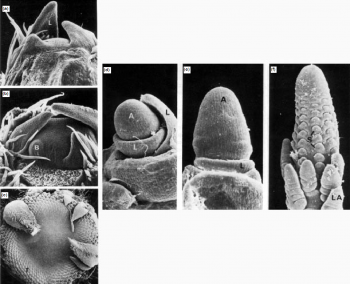
Figure 7.14 Scanning electron micrographs show changes in shoot apex geometry on transition from vegetative to floral state. (a)-(c) Sunflower (Helianthus annuus) initially increases in diameter, followed by appearance of bract (B) then floret (F) primordia; L = leaf. (d)-(f) Maize (Zea mays) shows increasing apex (A) height, then appearance of floral branches (lateral exes, LA) and spikelets (S).
(Based on Moncur 1981)
An increase in dimensions, either height or diameter or both, of the shoot apical meristem usually marks the transition to the floral state (Figure 7.14). Subsequent development of the four whorls of floral organs occurs in the order sepals, petals, stamens and pistil. Most temperate perennials initiate floral buds in summer or autumn, often overlapping with the previous phase of fruit development. Floral buds then lie dormant over winter, and dormancy is broken by the extended cold period allowing rapid resumption of growth and flowering when permissive temperatures commence in spring, often nine months after initiation, and up to 12 months in the case of male pecan flowers. However, a long floral bud dormancy is not universal: female kiwifruit and pecan flowers initiate after the dormant winter period only two months prior to anthesis.
In most temperate fruits, floral initiation and early flower development in late summer and autumn are followed by a period of winter dormancy. The term dormancy embraces a wide range of mechanisms that all relate to cessation of growth. Three classes of dormancy have been identified: endodormancy, paradormancy and ecodormancy (Lang et al. 1987). These are discussed in detail in Section 8.1. Normally, floral and vegetative buds of deciduous woody perennials will not burst until they have experienced a period of low temperature.
A major achievement of horticultural research is the mani-pulation of chilling requirement allowing for yield improve-ment across an extended climatic range. Low-chill peach, nectarine and apple cultivars can produce two crops per year under tropical conditions, for example in Indonesia, provided trees are defoliated after harvest. This procedure modifies bud endodormancy, resulting in budburst a few weeks later. Low-chill peaches can also be managed for out of season greenhouse production in temperate climates. Trees are trained to a trellis, pruned and treated with paclobutrazol (an inhibitor of gibberellin biosynthesis) to reduce vegetative vigour. Hand defoliation induces early flowering and fruiting, but the timing of treatment is important. Premature defoliation results in an unacceptably high incidence of abnormal and sterile flowers.
Budburst is a complex set of physiological processes which follows the fulfilment of the chilling requirement. The first phase is typically a lack of growth (ecodormancy) imposed simply by the low temperature of early spring, as most deciduous species require a certain amount of warmth, measured as a ‘heat sum’, before budburst can proceed. Much effort has been put into models to enable prediction of budburst in spring, and these are based on accumulated ‘chill’ and/or ‘heat’ units (Section 8.1).
Survival of freezing temperatures by overwintering flower buds can be a problem in areas that experience extremely cold winters. The ability to supercool is an adaptation for freezing avoidance, and flower buds of deciduous fruit trees achieve this by avoiding ice nucleation in the sensitive primordia (Andrews and Proebsting 1986). Tissue dehydration occurs via migration of water from primordia and vascular traces into the flower bud scales. The high sucrose content of the primordia reduces the ice nucleation risk even further.
In areas which experience low temperatures during spring flowering, damage to delicate floral organs can result in reduced fertility. Dormant flower buds are generally more resistant to low-temperature damage, but flowers gradually lose this tolerance with increasing differentiation. In most plants, open flowers are the most sensitive stage, and cold can cause partial infertility or complete abortion of the generative tissue. Supercooling in open flowers operates in a similar manner to that described above for dormant winter buds. Subtropical and tropical species, although rarely exposed to frosts, may also suffer floral defects due to cold but non-freezing temperatures at these same stages. Rare frosts on Florida citrus or Brazilian coffee dramatically affect the world market for these commodities.
Irregular bearing is an unpredictable feature of many tree crops which causes an overall reduction in yield. Typically, a heavy crop one year is followed by a low yield the next. For this reason it is often known as alternate or biennial bearing. A heavy apple crop can reduce subsequent flower numbers, but also decreases cell numbers in the cortical tissue of these developing flowers. The consequence may be low numbers of smaller fruit in the following year’s crop, and hence a very poor yield, referred to as an ‘off’ year.
Two theories on control of irregular bearing relate to endogenous plant hormone status and carbohydrate status. Floral initiation may be inhibited by the presence of seeded fruits on the tree, but not by seedless fruits. The inhibitory influence of fruit is possibly linked to gibberellins, a class of plant hormone (Section 9.1), produced by seeds. Gibberellins are floral inhibitors in many woody perennials including apple, stone fruit and mango if applied to shoots before floral initiation. Alternatively, continued presence of fruit will deplete carbo-hydrate reserves, perhaps below a threshold required for normal floral initiation. In some mandarin cultivars, massive crop loads can be fatal to the tree, presumably due to resource exhaustion, and in coffee can lead to branch dieback. Irregular bearing is a severe cultural problem that, once entrained as an on–off rhythm, is often difficult to overcome, although early harvest is an intervention which can restore a normal bearing pattern.
We can think of vegetative options for reproduction as a trade-off where a plant forfeits long-term advantages of genetic variability generated via the sexual process and invests in short-term gains inherent in a particular genotype–environment combination. Thus, sexual reproduction may allow a plant to acquire and sustain genetic variability for adaptation to a particular environment, which is then exploited by large numbers of clonal individuals. Many primary coloniser species use vegetative reproduction, for example Hieracium and Taraxacum, both members of the Asteraceae, where maternally produced (apomictic) seeds grow into plants genetically identical to the mother.
 [2]
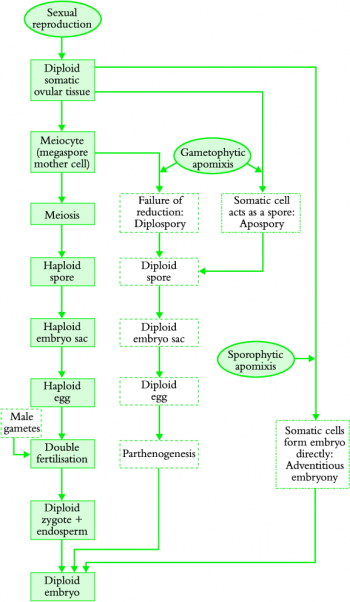
Figure 7.15 Apomixix pathways in angiosperm ovules. Three possible routes are diplospory, apospory and adventive embryony. All lead to diploid embryos with genotypes identical to the parent plant.
(Based on Koltunow et al. 1995)
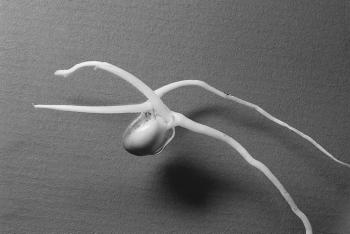
Adventive embryony is one of three types of apomixis leading to genetically identical seeds without fertilisation (Figure 7.15). In this process, somatic embryos develop from maternal ovarian tissue (e.g. nucellus) instead of from the egg cell of the embryo sac, so resultant plants are genetically identical to their mother. Adventive embryos are also called maternal or nucellar embryos. More than one adventive embryo often develops leading to polyembryonic seeds (Figure 7.16).
 [3]
Figure 7.16 Germinating seed of polyembryonic Poncirus trifoliata (a relative of Citrus used as a rootstock) showing multiple roots, each arising from a separate embryo.
(Photograph courtesy J.A. Plummer)
In some genera, such as Citrus, fertilisation of the sexual (zygotic) embryo is an essential prerequisite to development of adventive embryos, so the sexual embryo may be present among the maternal embryos within the mature seed. More commonly, however, the sexual embryo does not compete successfully with the maternal embryos. This natural pheno-m-enon is used commercially in clonal multiplication of rootstocks of some genotypes of citrus and mango.
 [4]
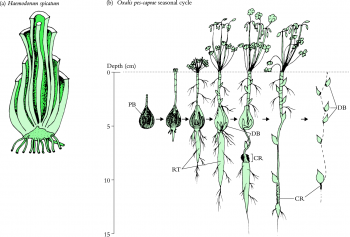
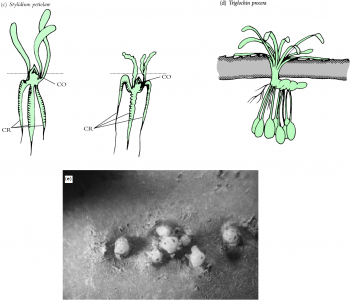
Figure 7.17 pt 1 Many different parts of plants - stems, leaves, roots - have become adapted as vegetative propagules, often incorporating storage tisues. (a) Haemodorum spicatum bulb showing swollen leaf basis. (b) Oxalis pes-caprae life cycle showing daughter bulbs (DB) pulled underground by contractile roots (CR); note also parent bulb (PB) and root tuber (RT). (c) Stylidium petiolare corm (CO) pulled underground by contractile roots (CR). (d) Triglochin procera, a swamp species with root tubers buried in mud below water layer (stippled). (e) Potato (Solanum tuberosum) stem tuber surface showing multiple shoot meristem buds.
((a)-(d) Based on Pate and Dixon 1982; (e) photograph courtesy C.G.N Turnbull)
 [5]
Figure 7.17 pt 2
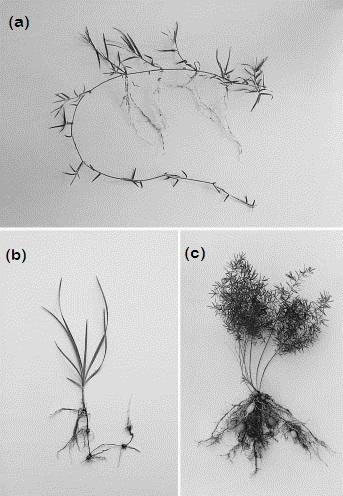
There is also a wide range of vegetative reproduction mechanisms that do not involve floral structures. Examples of some of these are shown in Figure 7.17. Several species considered as weeds employ very effective vegetative repro-duction strategies (Figure 7.18), which illustrates the ability of plants to clone themselves repeatedly.
 [6]
Figure 7.18 Many 'weed species' make use of vegetative reproduction. Often the vegetative propagules are a greater problem than any seed produced. (a) Couch grass (Cynodon dactylon) has long slender rhizomes, rooting at nodes. (b) Nutgrass (Cyperus rotundus) is particularly hard to eradicate because of its combination of vertical and horizontal rhizomes and small bulbs. (c) Protasparagus aethiopicus showing a large number of root tubers.
(Photographs courtesy C.G.N Turnbull)
A runner is an aerial side shoot from a leaf axil of a rosette plant such as strawberry. Runners produce leaf clusters and adventitious roots at their tips, thus forming new plants, which can be exploited in commercial clonal multiplication. Runners are typically long structures which thrust daughter plants away from the mother, and attain independence when the runner stem rots and the connection is severed.
A bulb is a shortened stem with thick fleshy leaf scales (Figure 7.17a), and like all leaves these scales have buds in their axils. Some of the axillary buds form new bulbs by developing their own fleshy leaf scales, and these daughter bulbs eventually separate from the mother plant (Figure 7.17b). The fleshy leaf scales are storage organs which fuel early growth and flowering in spring after winter dormancy. Photosynthesis by current-season leaves is essential to replenish reserves depleted in spring, and also to develop daughter bulbs. This method of vegetative propagation is characteristic of many ornamentals, such as amaryllis, daffodil and hyacinth, and the fleshy scales are sometimes edible, as in the onion family. Daughter bulbs may take some years to flower if they contain insufficient reserves to support flower and seed formation. In warm climates, temperate bulbs are often stored refrigerated for several weeks, otherwise inadequate winter chilling may result in poor flowering.
Corms are thick fleshy shortened stems, with a storage function analogous to the leaf scales of a bulb. Flowers form from buds in the axils of highly reduced scale leaves. After flowering, the base of the flower stem forms a new corm. Some corms form contractile roots (Figure 7.17c), an unusual example of plant tissue shrinking, which pull the corms down into the soil, affording better protection from severe winter weather. Many ornamental species have corms, including crocus and gladiolus, and an edible example is water chestnut.
Rhizomes are horizontally growing underground stems, some-times mistaken for fleshy roots, which are often swollen with stored reserves. Leaves are reduced to scales and rhizomes generally contain no chlorophyll, but buds do form in the leaf axils, allowing underground stem branching. Examples include Iris, ginger, banana and some lawn and turf grasses, especially couches, for example Cynodon dactylon in Australia (Figure 7.18a) or Agropyron repens in Europe.
Offshoots are known by a number of different names including offsets, suckers, crown divisions, ratoons and slips. Typically a lateral shoot forms on the stem, develops roots and then separates from the mother plant. Pineapple is a plant which produces offshoots, as do some palms. Sugar cane is clonally multiplied from short stem pieces which produce offshoots.
Stem tubers are swollen underground stems, with reduced scale leaves and axillary buds (Figure 7.17e). They are distinct from rhizomes because their terminal shoot apex stops growing and development is entirely radial and lateral, whereas rhizomes also continue to grow apically. After developing adventitious roots, either the whole tuber or individual buds generate a new plant. Potato is a starch-accumulating tuberous plant. Tubers generally do not contain chlorophyll unless exposed to light. The underground ‘nuts’ of nutgrass (actually a sedge, Cyperus rotundus) are small stem tubers that in combination with this species’ network of wiry rhizomes make it a tenacious, spreading weed (Figure 7.18b).
Tuberous roots superficially resemble stem tubers, but morpho-logically are quite distinct. As the name suggests they are fleshy swollen roots (Figure 7.17d) and store reserves such as starch. They are somewhat unusual in that they readily form shoot buds which develop into new plants. Sweet potato, yam and cassava are major root tuber staple foods in many tropical areas and ornamental dahlias are propagated commercially by root tubers. Some species such as Protasparagus aethiopicus were originally cultivated for their ornamental foliage and berries, but have escaped into native vegetation where their survival is assisted by root tubers (Figure 7.18c).
A root sucker is an adventitious shoot which develops on a plant’s root system, then emerges above ground and becomes a new plant. Many members of the Rosaceae family reproduce by this means, including raspberry and gooseberry. An important Australian native example is the genus Acacia, with several root-suckering species, such as A. melanoxylon (blackwood) and A. decurrens.
Advantages of vegetative propagation include exploitation of conditions unsuited to reliable sexual reproduction. Vegetative reproduction is usually seasonal and often is combined with production of a dormant structure incorporating storage reserves for early spring growth. Most plants which reproduce vegetatively can also reproduce sexually, and allocation of resources to each strategy allows the best of both worlds: maintenance of genetic variability and clonal multiplication. Many natural vegetative reproductive structures are con-veniently exploited for commercial propagation of economic species.
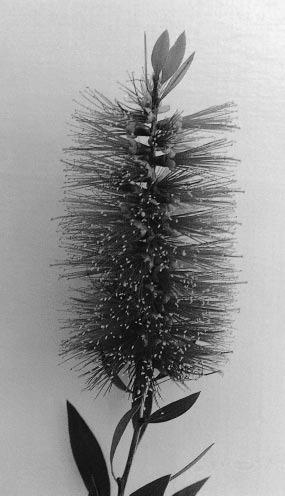
Angiosperm flowers are the most advanced and structurally intricate in the Plant Kingdom. Their multiple components each have one or more specialised functions, most importantly the female and male generative organs, the pistil (gynoecium) and the anthers (androecium) respectively (Sedgley and Griffin 1989). Other floral organs also contribute to the success of the reproductive process. The sepals (calyx) protect the flower in bud, and in some species contribute to the floral display and even photosynthesis. The petals (corolla) are usually the main component of the floral display, which in animal-pollinated flowers provide visual and olfactory attraction. Nectaries secrete a sugar reward for many pollen vectors. In several large Australasian genera such as Eucalyptus, Acacia and Callistemon and others in the Proteaceae, the styles and stamens double up as showy visual attractants (Figure 7.19), which compensate for reduced perianth surface area. The latter may well be an adaptation to the water-limited environments in which these plants dominate.
 [7]
Figure 7.19 Callistemon (bottlebrush) inflorescences comprise large numbers of flowers with brightly coloured stamens and pistils, but usually much reduced perianth parts.
(Photograph courtesy C.G.N Turnbull)
 [8]
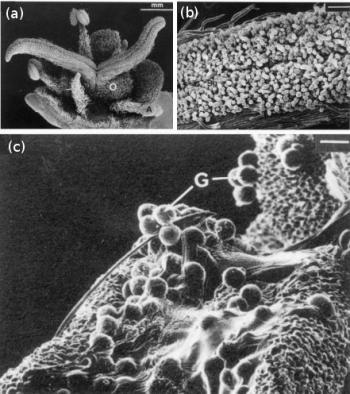
Figure 7.20 Scanning electron micrographs of receptive flowers. (a) Hermaphrodite flower of rambutan (Nephelium lappeceum; A = anther), with (b) close-up of stigma papillae. (c) Pollen grains (G) adhering to secretions on stigma surface of durian (Durio zibethinus). Scale bar in (a) = 1mm; in (b) = 100 (b) = 100µm; in (c) = 100 µm.
The pistil is an integrated organ comprising stigma, style and ovary (Knox 1984). The stigma is covered with unicellular or multicellular papillae, which are modified epidermal cells (Figure 7.20a, b). The surface of the stigma may be wet or dry, meaning copious or sparse secretion respectively. These secretions contain lipids, carbohydrates, proteins and water and this is the site of pollen recognition, hydration and germination (Figure 7.20c). Pre-pollination secretion occurs in all species, and in a minority there is additional secretion in response to pollination (Sedgley and Scholefield 1980). Style structures vary but most conform to one of three patterns. Open styles with a central canal filled with mucilage are characteristic of many monocotyledons, and of some dicotyledons such as Citrus. Closed styles with solid transmitting tissue and no canal predominate in dicotyledons and some monocotyledons such as grasses. Semi-closed styles are an intermediate condition found in avocado and some eucalypts. Transmitting tissue is composed of longitudinal files of elongated cells which produce an extracellular secretion through which the pollen tubes grow.
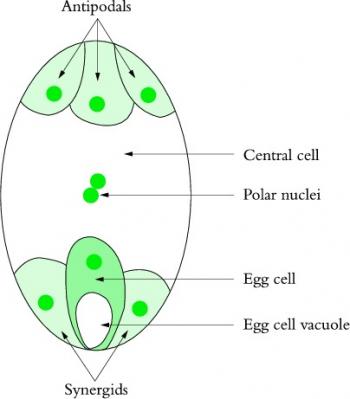
The ovary contains one or more ovules with integuments which form the micropyle and surround the nucellus and embryo sac. After meiosis, the haploid egg cell, along with two synergid cells, a central cell containing two polar nuclei and three antipodal cells, is produced by mitosis during embryo sac formation. A normal mature embryo sac therefore contains seven cells and eight haploid nuclei (Figure 7.21). Overall, secretory cells of the stigma, style and ovary provide an extra-cellular medium for pollen tube attraction, growth and nutrition.
 [9]
Figure 7.21 Diagram of angiosperm embryo sac at maturity, showing seven cells and eight nuclei.
(Based on Reiser and Fisher 1993)
Double fertilisation is unique to angiosperms, and refers to the fact that both the sperm nuclei fertilise nuclei within the embryo sac. After germinating on the stigma, the pollen tube grows between the transmitting tissue cells of the style and on reaching the ovary, continues through the micropyle and nucellus, entering the embryo sac via one of the synergids.
A pore forms in the pollen tube wall, through which a small amount of cytoplasm is released along with the two sperm nuclei. One migrates to the egg cell, and fuses with the egg nucleus to form the diploid zygote which develops into the embryo. The other migrates to the central cell and there fuses with the two polar nuclei to form the triploid endosperm which acts as a food source for the developing embryo.
 [10]
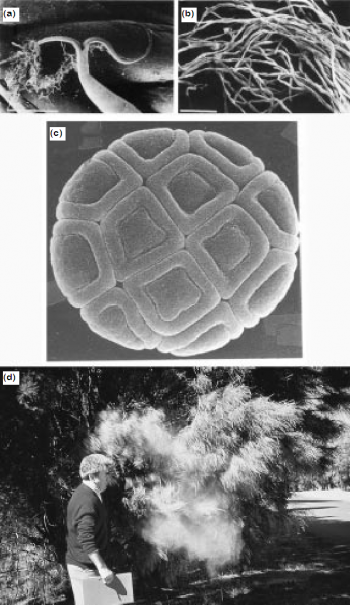
Figure 7.22 Pollen dispersal can take many forms. (a), (b) Sub-aquatic pollination of seagrass (Zostera maritima), a marine angiosperm. (a)'Search vehicle' raft of filamentous pollen trapped on stigma surface. Scale bar = 1mm. (b) Close up of filamentous pollen. Scale bar = 100µm. (c) Polyads are multiple, genetically identical pollen grain dispersal units arising from repeated mitosis of microspores. Acacia mearnsii showing 16-grain structure (four are on the other side of the polyad. (d) Massive numbers of dry pollen grains are released from maile flowers of wind-pollinated Casuarina.
((a),(b) Based on Cox et al. 1992; (c) based on Muncur et al. 1991; (d) photograph courtesy M.W. Moncur)
Pollen is produced within the anther, with pollen grains varying in size from 3.5 up to 300 µm in diameter, and even up to 3 mm long in filamentous pollen of aquatic angiosperms such as Zostera (Figure 7.22a, b). In general, small grains are wind dispersed (Figure 7.22d) and large grains are animal dispersed, and their shape may be spherical, elongated, oval, triangular or tetrahedral. At maturity, pollen grains are dehydrated propagules. Most pollen occurs as single grains, but some is aggregated into composite structures such as the polyads of Acacia with 4, 8, 16, 32 or 64 genetically identical grains (Figure 7.22c) and the pollinia of orchids consisting of hundreds or thousands of grains. Highly sculptured pollen surfaces are characteristic of animal dispersal, whereas wind-dispersed species have smoother grains. The pollen surface can be sticky which causes grains to clump, and in some species viscin threads hold the grains together. These kinds of pollen are generally animal dispersed, whereas grains with a dry surface are mostly wind dispersed.
Cell number varies at anther dehiscence. Two-thirds of angiosperms release bicellular pollen grains, with a vegetative cell which controls tube growth and metabolism and a generative cell which divides after pollen germination into two sperm cells. The other third release tricellular pollen grains with a vegetative cell and two sperm cells, as the generative cell divides before pollen dispersal and germination.
The pollen coat contains lipids, proteins, carbohydrates and pigments. In insect-pollinated species it may be brightly coloured. Its functions are pollinator attraction, adhesion to pollinator bodies and to other grains, and recognition of a compatible stigma. Pollen wall exine patterning is characteristic of the species. It consists of sporopollenin, a highly resistant polymerised coloured carotenoid, and has micropores which contain a material called pollenkitt. The remarkable durability of the exine has allowed semi-fossilised pollen coats to survive in many ancient sediments, and palaeobotanists can identify the source plant types from the pollen shape and sculpturing. This enables reconstruction of vegetation histories over millions of years, often at sites where few other plant remains persist. Exine is absent in some species, whereas the pollen wall intine is unpatterned and is present in all pollen types. Intine consists of polysaccharides and contains tubules filled with proteins and enzymes. Over the germination aperture(s), which vary in number with species, the exine is thin, absent or present as a cap, whereas the intine is thicker and more complex in structure.
Pollen in the anther is surrounded by the tapetum. The tapetum provides nutrition for the developing microspores, contributes to pollen wall formation and deposits proteins and pollen coat substances into the exine pores. We will see later how these molecules can influence reproductive outcomes (Section 7.2.4). The tapetum degenerates late in pollen development, prior to anther dehiscence.
Pollination is simply the transfer of pollen from the anther to the stigma of the same or another flower. It is no guarantee that a seed or fruit will result, although the term is often used loosely also to encompass subsequent pollen germination and fertilisation. Pollination generally employs an external agent or vector. The two major types of pollen vector are wind and animals, and the most common animal vectors are insects, including bees, butterflies, moths, flies and beetles. In addition, many Australian plants are pollinated by birds or mammals. Examples include honeyeaters in the case of Eucalyptus caesia, honey possums pollinating some banksias and bats pollinating Syzygium, banana and plantain. There are also plants, such as coconut and chestnut, which depend upon both wind and insects for pollination.
Wind-pollinated flowers, as in gymnosperms and grasses, tend to have inconspicuous or absent petals, and large anthers and stigmas for maximum pollen shed and interception. In contrast, most animal-pollinated flowers have large showy petals, often scented for attraction of vectors, and a flower shape which promotes or sometimes restricts ease of access. In the Asteraceae, the inflorescence is a flat capitulum which is both showy and accessible. Large flowers or inflorescences provide a visual cue, as does flower colour. For example, bees cannot see red, whereas birds can, so bird-pollinated flowers are often red. Some insects can also see flower markings such as ultraviolet nectar guides which indicate the position of the floral rewards, the pollen and nectar. Nectar is a sugar solution produced in specialised structures called nectaries, and functions specifically as an energy source reward to pollen vectors. Most animal-pollinated plants develop floral nectaries, but some, such as acacias, have extrafloral nectaries on the petiole or at the base of the leaf lamina. Nectar consists of sugars, mainly sucrose, fructose and glucose, but also organic acids, volatile oils, polysaccharides, proteins, enzymes, alkaloids and amino acids. Nectar varies in composition: for example, Prunus avium (cherry) nectar contains 12% sugar, whereas that of Brassica rapa (oilseed rape, canola) contains 51%. Time of day is also important, with Citrus sinensis (orange) nectar containing 20% sugar in the morning and 30% in the afternoon. Water availability, photosynthetic activity, weather conditions such as wind and humidity, age of the flower and prior insect visits all may influence nectar secretion. The other floral reward is pollen, a significant protein source for many invertebrate vectors. In addition to being protein rich, pollen also contains lipid and starch. Pollen colour, odour, ease of collection and protein compositon all feature in attraction of animal vectors.
In many crops the commercial advantages of cross-pollination by insects are increased yield via both larger fruit and greater fruit number. Sometimes crops are earlier and more uniform, and fruit quality can be improved. Cultivation inevitably disrupts the ecology of an area, and this has consequences for natural insect populations, often because nesting and foraging habitats have been destroyed. Likewise, agricultural chemicals, particularly insecticides, have deleterious effects on beneficial insect populations, even when used sparingly. Synchronous monocultures may have more flowers than local insect popu-lations can work efficiently. Consequently, there is a need to introduce pollen vectors, generally honeybees, into the cultivation system for most insect-pollinated crops.
Pollinator varieties, also termed pollenisers, are often inter-planted with commercial cultivars for yield improvement. An effective polleniser needs to produce large numbers of flowers with viable pollen and be compatible with the commercial cultivar. Anthesis of both cultivars must coincide. Ideally, both polleniser and recipient should be useful commercial varieties, with crops harvested simultaneously. Orchard layouts also influence efficiency of cross-pollination: a 1:1 ratio of cultivars, either within rows or as alternating rows, is often recom-mended. An alternative to interplanting is to graft a branch of the polleniser into the commercial tree. Crops requiring pollinator cultivars and insects include almond, apple and kiwifruit. Macadamia does produce a crop in single-cultivar (i.e. self-pollinated) plantings but benefits greatly from cross-pollination. Wind-pollinated crops requiring pollinator cultivars include walnut, hazel and pistachio.
Honeybees as pollen vectors have many advantages, principally their social behaviour which allows artificial hiving and hence facilitates placement of suitable numbers of insects. Large amounts of protein (pollen) and sugar (nectar) are required to feed the young in a colony, so worker honeybees are frenetic foragers, and therefore effective pollinators, and can travel 10 km from their hive. Pollen readily adheres to the honeybee’s hairy body, and its eyes are sensitive to colours from yellow through blue to ultraviolet. Its sensory powers also include shape recognition and a good olfactory system, and it can communicate the location of a good food source to other hive members. Honeybees have some disadvantages. They often keep to one cultivar or species, and frequently forage along rows, especially if the foliage of adjacent plants touches. They also show species preferences, for example citrus over mango and in some cases weeds over the crop.
The number of bees needed for maximal pollination varies from one per thousand flowers for apple up to 250 per thousand flowers for sunflower oil crops, and from one hive per hectare for peach and grapefruit up to 10 to 12 hives per hectare for cucumber and rockmelon (Crane and Walker 1984). Hives usually need to be conditioned to a new crop to prevent visits to previous food sources, and this is often achieved by transporting the hives a long distance from the previous crop. Hives are placed in the crop at full bloom, and the colony may be fed sugar syrup containing flowers of the target crop. In addition, it is possible to increase the pro-portion of pollen gatherers by removing the pollen store from the hive or by providing extra brood. Pollination can be further enhanced by fitting hives with pollen inserts of the pollinator variety.
Many Australian bees are pollen vectors for native genera, but none is currently used for commercial pollen transfer. Many are solitary rather than social, and so cannot be readily hived. One exception is the tropical genus Trigona, which is social and has been hived successfully. It pollinates mango and Macadamia, which produces the macadamia nut, the only Australian native food crop traded internationally to any large extent. Trigona bees in the future may be adopted for certain crops, and they have an added advantage of being stingless.
 [11]
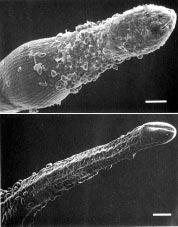
Figure 7.23 The pollen presenter in flowers of many members of the Proteaceae is an adaptation of the style that facilitates cross-pollination and reduces self-pollination. Presenter structure varies widely even within a single genus such as Banksia, and is used as a taxonomic character. (a) Bulbous presenter of Banksia scabrella with pollen grains visible, well away from stigmatic groove at tip. Scale bar = 100 µm. (b) Elongated presenter with ridged surface and pollen adhering at base in Banksia hookeriana. Scale bar = 200 µm.
(Based on Sedgley et al. 1993)
In most species, pollen is either removed directly from anthers by foraging fauna or is dislodged by wind or water. Some plants, however, have specialised flowers which facilitate pollen removal by improving its accessibility to vectors. These pollen presentation mechanisms often involve hairs which hold the pollen grains. The hairs develop from the corolla in Astroloma (Epacridaceae), from the receptacle in quandong (Santalaceae) or from the style in Verticordia (Myrtaceae). Sometimes adhesive material is secreted from anther glands (e.g. Thryptomene and some eucalypts), which causes pollen to clump together and ensures transfer of large numbers of pollen grains onto the vector’s body.
Pollen presentation is most sophisticated in a southern hemisphere family, the Proteaceae. The terminal portion of the style is adapted to cause pollen to be deposited onto a specialised area which is often swollen or ridged (Figure 7.23) to aid adhesion. Even within a single genus such as Banksia, pollen presenter structure varies enormously in length, shape and surface, and can be used as a taxonomic character. More importantly perhaps, pollen presentation in the Proteaceae is part of an outbreeding mechanism (see below). Flowers are protandrous: anthers dehisce before the stigma is receptive, and indeed before the flower opens. The pollen presenter sits adjacent to the anthers inside the bud so pollen is deposited directly onto the presenter, from where it can be collected by insect, bird or mammal foragers. A further specialisation is the reduction of the stigma’s receptive surface to a small area located inside a groove well away from the presenter structure. This distance greatly reduces the probability of self-pollination within a single flower, even when not all the pollen is removed by foragers before the stigma matures. Pollen transferred from other flowers will germinate provided it is placed inside or near this groove.
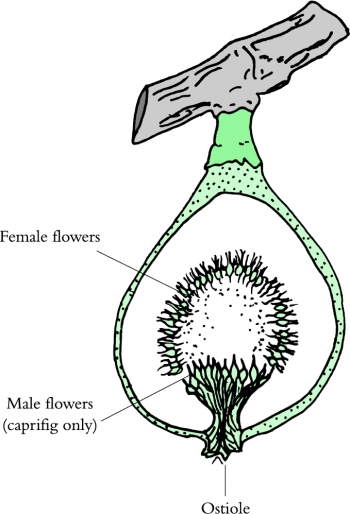
Figs (Ficus spp.) have an intriguing pollination mechanism involving a symbiotic relationship between the plant and its pollinator, a wasp called Blastophaga. The fig relies upon the wasp for seed production, and the wasp undergoes most or all of its life cycle within the fig inflorescence or syconium. The reproductive cycles of fig and wasp are synchronised. Fig syconia consist of numerous individual flowers borne on the inner surface of a curved receptacle with a single opening, the ostiole (Figure 7.24). Female and male unisexual flowers are produced, and the female flowers mature before the males. The cycle starts when a female wasp carrying her fertilised eggs and fig pollen enters a female stage syconium. Within the syconium, the female wasp lays her eggs and pollinates the female flowers. There are two types of female flower within the syconium, short styled and long styled. The wasp penetrates the short-styled flowers with its ovipositor and lays an egg in the ovary. These short-styled flowers become galls as the developing wasp larvae feed on the ovary tissue. The style of the long-styled flower is longer than the ovipositor, and these flowers are pollinated by the female wasp with pollen collected from a male stage syconium. The syconia and its seed then develop slowly as the wasp larvae grow. When the wasps, both female and male, have emerged from their galls within the syconium, the male flowers of the syconium are mature. The wasps mate within the syconium, and the males then die, having spent their whole life in this enclosure. Fertilised females collect pollen from the male flowers, leave the male stage syconium and carry the pollen to a female stage syconium, entering via the ostiole. The life cycle is thus completed.
 [12]
Figure 7.24 Fig syconium system, showing internal femal flowers, and in caprifig only, male flowers. Pollinating agent is the wasp Blastophagus which enters and exits through the ostiole.
(Based on Ferguson et al. 1990; reproduced with permission of Timer Press Inc.)
This sequence is characteristic of most fig species, although fresh fig cultivars of Ficus carica grown in Australia, the USA and Europe are parthenocarpic and do not need wasp pollination (Ferguson et al. 1990). The major drying fig cultivar, Smyrna, on the other hand is dependent on Blastophaga psenes, and must be carefully managed for optimum yield. Smyrna trees are female and have no male or short-styled flowers, and so cannot sustain the life cycle of the wasp pollinator. They need a pollinator cultivar, the caprifig, which has non-commercial syconia with male flowers and both long- and short-styled female flowers. It supports the life cycle of the wasp, and growers pollinate the Smyrna by hanging male-stage syconia of caprifig in the canopy of the Smyrna trees. This method is termed caprification.
A more elusive example of matching of correct pollinator is provided by the oil palm (Elaeis guinensis) and Elaeidobus weevils. Oil palm is native to West Africa, but is now cultivated throughout the tropics, particularly in Southeast Asia. For many years, yields in Asia were much lower than in Africa, and not until 1979 was the dependence on weevil pollination discovered. Introduction of Elaeidobus has now solved the low-yield problem.
For some commercial crops it is cost effective to assist pollination manually to improve yields. Hand pollination is the most direct intervention, and is employed for Annona spp. (cherimoya and types known in Australia as custard apple) and vanilla orchids (Vanilla planifotus). Vanilla orchids were cultivated by the Aztecs, and may have been hand pollinated for centuries. Vanilla is now produced in many tropical countries, such as Madagascar, Java and Polynesia, and in all cases hand pollination is essential for set of the vanilla pod.
In crops such as tomato, mechanical vibrators are sometimes used to assist pollination, and pollen sprays are increasingly used on kiwifruit in New Zealand. Placing male flower bouquets of the pollinator variety in female date trees is an ancient method depicted in Egyptian tombs and is still used today.
The extent of genetic variation in a population often relates to its breeding system. Plants are either self- or cross-pollinated, or a mixture of the two mechanisms may operate in a single plant or species. Self-pollination, also known as autogamy, is the transfer of pollen from anther to stigma of the same flower or another flower on the same plant by a pollinating agent. In extreme examples self-pollination is automatic, when the anthers contact the stigma of the same flower either in the open flower or in the unopened bud. Mechanisms include homogamy, which is simultaneous maturation of the male and female organs, and cleistogamy, in which pollen is shed and the stigma is receptive before anthesis. Cleistogamy operates in peas and coffee, and assists plant breeders to generate true-breeding (homozygous) plant lines through simple repeated selfing. Cross-pollination, also known as allogamy, involves the transfer of pollen from an anther on one plant to a stigma of a flower on another plant. Plants with high levels of cross-pollination show greater genetic variation than those which are self-pollinated, as there is more opportunity for gene recombination and gene flow within a population.
Plants have evolved a wide range of outbreeding mechanisms which place restrictions on self-fertilisation and have the overall effect of increasing cross-fertilisation and hence genetic diversity. This maintains a high level of heterozygosity within a popu-lation and avoids a phenomenon called inbreeding depression, which relates to accumulation of alleles which are deleterious as homozygotes. The main outbreeding mechanisms are spatial or temporal separation of sexes, sexual incompatibility and male or female sterility.
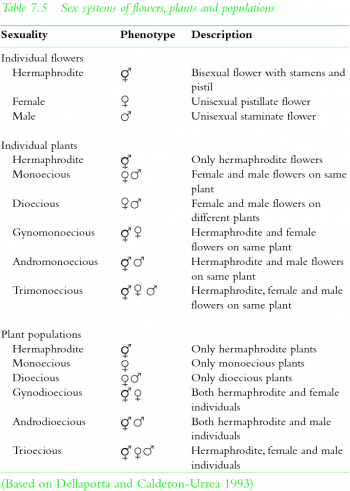
Unlike the typical hermaphrodite ‘perfect’ flower, in about 10% of species not all flowers or individual plants are sexually identical (Irish and Nelson 1989). The most common type of spatial separation is monoecy, with female and male repro-ductive organs borne on unisexual flowers within the same plant. It is characteristic of maize and the family Cucurbitaceae. There are many variations on this theme, including andromonoecy with male and hermaphrodite flowers on the same plant, gynomonoecy with female and hermaphrodite flowers on the same plant, and androgynomonoecy (trimonoecy) with female, male and hermaphrodite flowers on the same plant (Table 7.5). The effect on pollination probabilities is to enhance, but rarely to guarantee, outbreeding.
 [13]
Table 7.5 Sex systems of flowers, plants and populations.
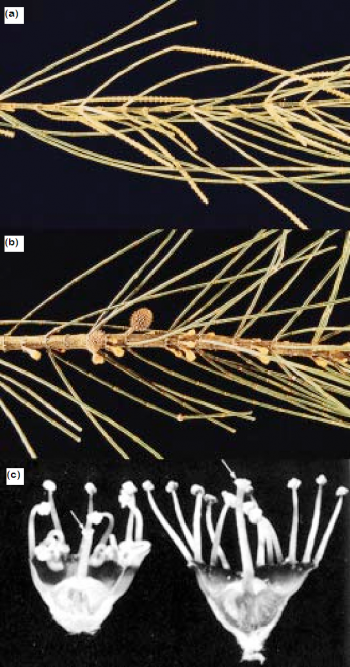
Species producing unisexual flowers on different plants are termed dioecious. Plants with female flowers are gynoecious, and male-bearing ones are androecious. Clearly, these single-sex plants do not have the capacity to self-fertilise, so they are obligate outbreeders. This is not the case with some of the variants, including androdioecy with male and hermaphrodite flowers on different plants, gynodioecy with female and hermaphrodite flowers on different plants, and androgynodioecy (trioecy) with female, male and hermaphrodite flowers on different plants (Table 7.5). Pistachio (Pistacia vera), kiwifruit (Actnidia chinensis) and Casuarina (Figure 7.25a, b) are dioecious as are most pawpaw (Carica papaya) genotypes.
 [14]
Figure 7.25 Outbreeding systems in plants. Single-sex (dioecious) plants, such as Casuarina, are obligate outbreeders. (a) Male plant with staminate flowers. (b) Female plant with pistillate flowers (c) Outbreeding can be promoted by sexes maturing at different times. Here, Leptospermum myrsinoides anthers (one-day-old flower, functionally male, left) mature before the stigma (arrowed) elongates and becomes receptive (five days old, functionally female, right).
((a), (b) Photographs courtesy M.W. Moncur; (c) based on O'Brien and Calder 1993)
Sex expression in plants is both genetically and developmentally determined. Heteromorphic sex chromosomes are recognised in asparagus and hop, but in many plants sex development is influenced by plant hormones. This may relate to expression of alternate sets of sex genes rather than presence or absence of female and male chromosomes. Applied auxins or ethylene promote femaleness, as in cucumber, pine, papaya and date. Gibberellins tend to promote maleness in cucumber, mulberry and oil palm, and cytokinins will induce hermaphrodites in male grapes. There are, however, many exceptions. Auxins promote male cone buds in some gymnosperms such as Pseudotsuga, and ethylene promotes maleness in Chinese chestnut. Gibberellins are present in higher concentrations in female than in male inflorescences of carob and date palm, and applied gibberellins promote femaleness in maize and Chinese chestnut. Some of this apparent confusion may relate to mismatch between physiological hormone levels and usually very high concentrations of applied plant growth regulators, and to differences in the forms active in sex expression. In cucumber, ethylene may be the primary hormone determining overall plant sex expression (Yin and Quinn 1995), but we cannot yet explain the subtle mechanisms that control patterns of male and female flowers within individual monoecious plants. In this species there are strong positional effects with exclusively male flowers on basal nodes, but a relatively high proportion of females further up the stem and on lateral branches. Environmental factors affect this pattern: low light intensity or low nutritional status often favours maleness, whereas femaleness is promoted by high light intensity and good nutrition. Temperature and photoperiod can also be influential, with short days and low temperatures enhancing femaleness in cucumber. Some Australian plants show variable sex expression, and in Leptospermum pistil abortion can occur at any stage of floral development.
In this mechanism, termed dichogamy, the female and male organs of the flower mature at different times, thus reducing the probability of fertilisation of a pistil with pollen from the anther of the same flower. In protogynous flowers, for example fig and avocado (Persea americana), the female matures before the male, whereas in protandrous species, for example the Australian genera Banksia and Leptospermum (Figure 7.25c), the opposite occurs. In monoecious lychee (Litchi chinensis), spatial and temporal separation are combined, with a male–female–male sequence within each inflorescence. Dichogamy is most effective at preventing selfing within a single flower, but in most plants, especially trees with many thousands of flowers opening over a period of several weeks, there is a continuum of male and female function and consequently many chances of selfing.
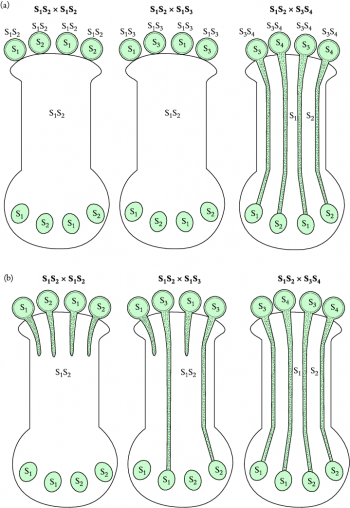
Many plants have evolved sophisticated genetic mechanisms which prevent mating by self or related individuals by disrupting molecular interactions during pistil–pollen recognition. This is self-incompatibility, of which there are three major types: gametophytic, homomorphic sporophytic and heteromorphic sporophytic. In all cases, prevention of self-fertilisation is due to expressed alleles common to both parents. Gametophytic incompatibility refers to pollen–pistil interactions genetically controlled by the haploid (hence gametophytic) genome of the pollen grain and the diploid genome of the pistil tissue (Figure 7.26). This version occurs in Prunus, Lycopersicon and Nicotiana and is attributed to one or more multiallelic S loci. In sporophytic homomorphic incompatibility, S-genes are again involved but the pollen–pistil interaction is genetically controlled by the diploid (hence sporophytic) genome of the parent plant in which the pollen developed, and the diploid genotype of the pistil tissue, as in the genus Brassica. The pollen parent effect probably relates to deposition of tapetum (i.e. parental) proteins into the pollen coat. These proteins are recognised by the female parent at the stigma surface. Sporophytic heteromorphic incompatibility is found in Averrhoa(carambola, starfruit), Primula and Linum (flax). In Primula, heteromorphic refers to the two floral forms called pin and thrum. In the former, the style is long so that the pistil has the appearance of a pin but the stamen filaments of the pin flower are short. In the latter, the style is short and the stamen filaments are long, giving the flower the appearance of a thrum, a fringe of threads. The mechanism is controlled by a single locus with two alleles, S and s, with S dominant to s. The pin plant is homozygous recessive ss, whereas the thrum plant is heterozygous Ss. Sporophytic pollen control maintains the population as ss or Ss, because SS progeny do not survive.
 [15]
Figure 7.26 Self-incompatibility (SI) systems prevent mating of individuals carrying like S-alleles. (a) Sporophytic SI system, dependent on diploid genotype of pllen parent; (b) gametophytic SI system, dependent on haploid genotype of pollen itself.
(Based on Sedgley and Griffin 1989; reproduced with permission of Academic Press)
 [16]
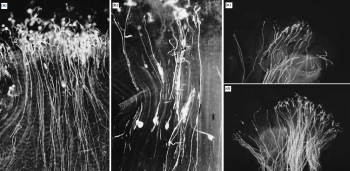
Figure 7.27 Fluorescence micrographs of pollen tube development following: (a) self-compatible pollination of Eucalyptus spathulata showing healthy pollen tubes (x100); (b) interspecific pollination of E. spathulata x E. albida showing incompatibility reactions - thickened pollen tubes and swollen tube tips (x200); (c) self-incompatible pollination in apricot (Prunus armeniaca cv. Sundrop). Typical of gametophytic self-incompatibility, some pollen tubes have penetrated into the style but none will reach the ovary; (d) compatible intraspecific pollination of P. armeniaca cv. Sundrop x cv. Cluthagold, showing many pollen tubes growing down the style towards the ovary (x50).
((a), (b) Photographs courtesy M. Ellis; (c), (d) photographs courtesy P.T. Austin and J.A. Plummer)
Gametophytic and sporophytic self-incompatibility (GSI and SSI) systems differ in a number of ways. As already stated, the principal difference is that GSI is governed by the haploid genotype of the pollen, as opposed to the diploid genotype of the pollen parent in SSI. Thus SSI prevents sibling mating as well as self-mating and is a more exclusive system. In addition, GSI alleles act independently, whereas dominance relationships in pollen and pistil are common in SSI. The pollen of most plants with GSI is binucleate on release from the anther and germinates well in vitro, whereas that of plants with SSI tends to be trinucleate and is more difficult to grow in vitro. In GSI, pollen tubes are generally inhibited in the upper third of the style, whereas in SSI they are inhibited on the stigma. Pollen tube inhibition is controlled by S-glycoprotein which is the product of the S-gene. Callose is deposited in the stigma papillae adjacent to inhibited SSI pollen grains, but this is not part of the GSI mechanism (Figure 7.27c, d). At present, detailed genetic and molecular studies of self-incompatibility have been restricted mainly to Brassica, Nicotiana and Prunus. Many other species do not conform exactly, and a generic model will require wider-ranging research.
Even in the absence of the hurdles of SSI and GSI, there are further potential barriers to fertilisation, collectively known as late-acting self-incompatibility. This can occur at various locations in the ovary and at different stages of the life cycle. For example, pollen tube inhibition occurs at the placenta in some eucalypts, or at the nucellus in Acacia retinodes. Embryo sac inhibition is seen in chestnut and cocoa, and in the latter species is reportedly controlled both gametophytically and sporophytically. In other instances, the mechanisms operate post-zygotically, with early embryo abortion following selfing reported in Rhododendron, Pinus, Liquidambar, Pseudotsuga, Olea, Picea and Persea. Possibly this is an early expression of inbreeding depression, caused by accumulation of deleterious alleles following selfing. At present, however, there is little direct evidence to support this or any alternative theory. Particularly in the tropics, many of these woody species have not been extensively bred in cultivation and are probably highly heterozygous. In addition, there are many examples of plants which yield poorly following selfing where post-zygotic embryo abortion is implicated, but the controlling mechanism has not been elucidated. These include Erythrina, Eucalyptus, Camellia, Vaccinium, Ziziphus, Carya, Anacardium and Hevea.
 [17]
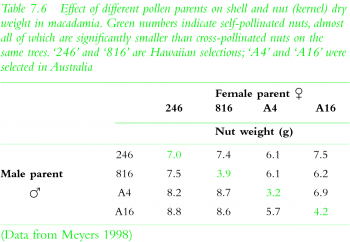
Table 7.6
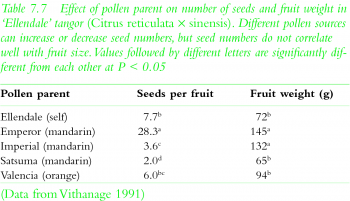
One intriguing element of partial self-incompatibility is that seeds with different male parents can exist on a single plant, even within a single inflorescence. Many studies have compared growth and survival rates of self fruits and cross-fruits (Denney 1992), and in most cases cross-pollinated fruits are larger (known as the xenia effect) and tend to show less premature fruit abscission. This occurs in many nut crops (macadamia, pecan, hazelnut, almond) where the economically important product is the seed itself, but is also in fruits such as lychee. This may relate partly to increased vigour of hetero-zygous individuals (heterosis). However, usually the seed and the fruit tissues are larger, yet the latter are derived entirely from maternal tissue, and therefore fruit growth must be stimulated indirectly as a result of the seed’s genotype. The commercial implications are diverse, with nut growers wanting maximum seed yield (Table 7.6) with minimised shell and fruit, whereas best-quality fruit are seedless or small seeded. Inappropriate genotype mixtures in citrus orchards can lead to very seedy although larger fruit (Table 7.7).
 [18]
Table 7.7
The ability to manipulate expression of incompatibility has become a vital tool in plant breeding, allowing hybridisation of otherwise incompatible parents. Pre-anthesis bud pollination is effective for species such as Brassica, as expression of S-glycoprotein (the product of the S-gene) is minimal until the flower is ready to open. Polyploidy can also be used, as self-incompatible diploid plants may become self-compatible when tetraploid, as in Leucaena. Low temperature in the range of 10–25°C is effective in almond, cherry and apple because the selfing optimum is lower than the crossing optimum, whereas temperatures above 32°C reduce S-glycoprotein activity in apple and pear. Old and end of season flowers have weaker self-incompatibility than young early flowers. Alternatively, removal of the stigma and top part of the style followed by pollen application to the cut surface can be effective, for example in cherry, because of removing the sites where the incompatibility reactions normally occur. Gamma irradiation of the style operates in much the same way. Finally, mentor pollen (that is, dead compatible pollen mixed with live incompatible pollen; see Feature essay 7.1) may allow self seed to be produced in otherwise self-incompatible genotypes of apple, pear, citrus and cherry.
Interspecific hybridisation can be of enormous benefit to plant breeders attempting to generate new genotypes. Although often hard to predict, success is frequently achieved in genera such as Citrus and Prunus, but rarely in others including Populus or between subgenera of Eucalyptus. Interspecific incompatibility may relate to taxonomic distance between species, as in Eucalyptus (Figure 7.27a, b), or to simple physical differences such as style length, which prevents pollen tubes of short-styled species reaching the ovary of long-styled species in Rhododendron, Prunus and Eucalyptus (Gore et al. 1990). In some cases it is related to self-incompatibility, for example the cross between the self-incompatible almond and the self-compatible peach is incompatible, whereas the reverse cross is compatible. We deduce that recognition is involved in interspecific incompatibility, because mentor pollen can assist interspecific fertility in apple and poplar. Live interspecific pollen plus dead compatible pollen or live interspecific pollen plus compatible pollen wall proteins are effective. Similarly, recognition by the stigma has been demonstrated by removal of stigma secretion with solvents which aids interspecific fertility in Eucalyptus and Populus. However, not all cases of interspecific sterility are related to pistil–pollen incompatibility, because some may be due to species incongruity. This is the failure of seed production due to non-relatedness, and thus to non-recognition at one or more stages of the pollination and seed development processes. At some stage of taxonomic divergence, interspecific sterility is attributable to incongruity rather than to interspecific incompatibility.
In commercial crops, self-incompatibility can drastically reduce yields, particularly in plantings consisting of limited numbers of genotypes. Selection for self-fertility genes in a self-incompatible population is a common aim of plant breeding programs. This may occur through natural hybridisation with a self-compatible relative, as in the cross between almond (Prunus dulcis) and P. webbii. A similar outcome can be achieved by controlled hybridisation with a self-compatible relative, for example crossing peach (P. persica) with almond (P. dulcis). Alternatively, mutation breeding has generated self-fertile genotypes of apple, cherry and almond. Although the mechanism is not clear, polyploidy can also be effective: tetraploid blueberries are self-compatible, unlike their diploid progenitors.
Most botanists agree that ancestral flowering plants were hermaphrodite, and the subsequent evolution of dioecy required male or female sterility. Triploidy is an alternative mechanism which promotes both, as it invariably results in faulty meiosis and hence sterile gametes. For plant breeders, male sterility is extremely valuable in preventing self-fertilisation of otherwise self-compatible individuals.
 [19]
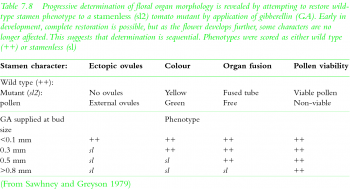
Table 7.8
Pollen production can fail due to mutation of one or more genes of which there are three major classes. Genic male sterility, also known as chromosomal or Mendelian sterility, operates via chromosomal genes with Mendelian inheritance. Cytoplasmic male sterility is also known as maternal, mito-chondrial or plastid sterility because it operates via the genomes of cytoplasmic organelles which are inherited only through the female parent. Gene–cytoplasmic male sterility is a com-bination of the two. The most obvious change is modification of structural differentiation of the stamen resulting in absent or highly reduced anthers, as in male sterile cultivars of cucumber and tomato. Faulty differentiation of the anther can result in feminisation, as in sl (stamenless) mutant tomatoes (Table 7.8),or functional male sterility can result simply from the failure of pollen release from the anther, as in tomato, eggplant and grape. Breakdown in microsporogenesis at meiosis can result in loss of contact with the tapetum, as in tomato and squash, and abnormal tapetal development in onion and carrot can lead to abortion of the microgametophyte at the post-meiotic stage.
Female sterility is less well understood, but it can also manifest in a number of ways. Female flower abscission occurs in walnut, and absent, incomplete or retarded development of the embryo sac has been observed in plum and lychee. In mango and pistachio, the embryo sac can degenerate. Adverse environmental conditions can cause female sterility, such as spring frost effects on apple flowers, or incomplete style development due to cold weather during mango flower development.
Plants have evolved many ways to restrict inbreeding and promote outbreeding. Indeed, a single genus or species may exhibit multiple mechanisms, the relative importance of which may vary with habitat, environment and genotype. For example, walnut (Juglans regia) and lychee are both monoecious and dichogamous. Within the Prunus genus, almond (P. dulcis) is self-incompatible whereas peach (P. persica) is self-compatible. Understanding the ecological and agronomic implications of these diverse mechanisms can assist species conservation in the wild and exploitation in cultivation.
R.B. Knox
 [20]
Figure 1 Professor Bruce Knox, Professor of Botany, University of Melbourne
In 1969, while at the Australian National University in Canberra, I spent a sabbatical period at the Institute of Plant Development, University of Wisconsin, Madison, USA, with Dr Jack Heslop-Harrison and discovered that pollen grain walls are loaded with a range of extracellular hydrolytic enzymes. Certain enzymes occur in cavities of the patterned exine wall, while others are incorporated into the smooth inner intine wall layer, which forms the surface at the germinal apertures. When pollen is moistened for germination, these proteins diffuse rapidly from their wall sites into the sur-rounding medium. The outflow of pollen proteins is considered part of a general ‘dialogue’ between pollen and stigma. The question arose as to the possible function of these proteins. Could they play a role in pollen transfer to the stigma by wind or water currents or by animal pollinators? Could they have a defence function, preventing attack by microorganisms? Could they act as recognition molecules permitting pollen germination and tube growth on the stigma surface? Or could they be involved in degrading the stigma surface to permit pollen tube penetration?
These questions were finally answered by a series of experiments done at the Australian National University in the early 1970s. Our first experiments were carried out on poplar trees as part of a tree breeding program developed by Professor Lindsay Pryor and involved transfer of desired characteristics from one species (white poplar) to another (black poplar) by cross-pollination. Unfortunately, the cross between the two species did not set seed. So we used the ‘mentor’ pollen technique developed by Dr Reinhold Stettler at the University of Washington, Seattle, USA, for other species, to see if we could obtain hybrid seed. This method is based on the work of earlier plant breeders, such as Michurin in Soviet Russia, who had successfully obtained hybrids from crosses between species by mixing the species’ own pollen which sets seed readily (black poplar) with the pollen of the other species (white poplar) and applying it to stigmas. The problem with this method is that large numbers of the progeny would be selfs, with only a few hybrid seeds resulting. Stettler showed that mentor pollen killed by high doses of gamma radiation could be used, so that the resulting progeny were all hybrid. When this was tested on the black X white poplar system, we obtained many hundreds of hybrids, which formed the basis for a breeding program and which has been highly successful in providing fast-growing but high-quality timber in subtropical regions of Australia. The hybrids also provided the answer to our question, because we were able to intervene in the pollination process and determine if pollen proteins could replace mentor pollen in the interaction and successfully generate hybrid seeds.
We were able to show that diffusible molecules from mentor pollen (black poplar) would enable white poplar pollen to set hybrid seed on black poplar stigmas. These molecules included a range of proteins and glycoproteins which were obtained by extracting living pollen grains for 5 min. Extract was painted on the stigma, followed by dusting with the white poplar pollen. Although seed set was much lower than after self-pollination, all seeds were again hybrids. We checked the specificity of the response, including self diffusate (black poplar) followed by self-pollination (black poplar, which gave expected high seed set) and white poplar diffusate with white poplar pollen (no seed set). Our inter-pretation is that the mentor diffusate altered the recognition response of the stigma to white poplar pollen, so that successful seed setting occurred.
In a large genus such as Populus, the existence in the breeding system of barriers to reproduction between species is known as interspecific incompatibility. Pollen from the incompatible species (white poplar) is perfectly viable but is unable to set seed on the other species (black poplar). All intraspecific pollinations are compatible, leading to high rates of seed set. However, many families of flowering plants also show intraspecific self-incompatibility, in which pollen from an individual plant, even though perfectly viable, is unable to set seed on its own stigmas, but can set seed on the stigmas of most other individuals of the species (see Section 7.2.4). It seemed worthwhile to carry out similar pollinations with a plant showing such an intraspecific incompatibility system, with the goal of increasing numbers of self seeds.
Dr Barbara Howlett and I extended the experiments to self-recognition in the daisy Cosmos bipinnatus (family Asteraceae). In this case, pollen is inhibited on the stigma surface following self-pollination. This is a rapid process, taking just 40 min for the entire fertilisation events from pollen touchdown to gamete fusion. The mentor technique gave good results: gamma-irradiated mentor pollen mixed with viable self pollen gave 27% of the seed set expected from a compatible mating. Self-matings had a low rate of seed set, with gamma-irradiated self pollen mixed with viable self pollen giving seed sets of up to 4%. When aqueous extracts of compatible mentor pollen followed by viable self pollen were applied, seed sets of 12–15% were achieved. In these experiments, the pollen diffusate had been partially purified, so that the recognition responses are more likely to be caused by proteins or glycoproteins, but the key elicitor protein remained to be identified.
Today, cloning of genes encoding diffusible proteins from allergenic types of pollen has provided some clues. Many proteins have proved to be enzymes associated with the degradation or synthesis of plant cell walls, others are expressed during a period of stress such as pathogen attack. In ragweed, a close relative of Cosmos, small proteins, each made up of only 45 amino acids, have a region with eight cysteine residues, which form four pairs of disulphide bonds and give these proteins a series of distinctive loops, making them ideal for performing roles in recognition and specificity. These proteins resemble toxins from snake venom and recognition factors in fungi, which can trigger the host defence response and so limit their plant range. This tells us that, at the pollen grain surface, there is a range of molecules that possess defence or recognition capacities, making them the likely arbiters of recognition and specificity in pollen–stigma interactions. The future may reveal more of the relationships between recognition of spores and pollen.
Links:
[1] http://plantsinaction.science.uq.edu.au/edition1//?q=figure_view/240
[2] http://plantsinaction.science.uq.edu.au/edition1//?q=figure_view/251
[3] http://plantsinaction.science.uq.edu.au/edition1//?q=figure_view/242
[4] http://plantsinaction.science.uq.edu.au/edition1//?q=figure_view/243
[5] http://plantsinaction.science.uq.edu.au/edition1//?q=figure_view/245
[6] http://plantsinaction.science.uq.edu.au/edition1//?q=figure_view/246
[7] http://plantsinaction.science.uq.edu.au/edition1//?q=figure_view/247
[8] http://plantsinaction.science.uq.edu.au/edition1//?q=figure_view/984
[9] http://plantsinaction.science.uq.edu.au/edition1//?q=figure_view/249
[10] http://plantsinaction.science.uq.edu.au/edition1//?q=figure_view/250
[11] http://plantsinaction.science.uq.edu.au/edition1//?q=figure_view/983
[12] http://plantsinaction.science.uq.edu.au/edition1//?q=figure_view/252
[13] http://plantsinaction.science.uq.edu.au/edition1//?q=figure_view/253
[14] http://plantsinaction.science.uq.edu.au/edition1//?q=figure_view/254
[15] http://plantsinaction.science.uq.edu.au/edition1//?q=figure_view/255
[16] http://plantsinaction.science.uq.edu.au/edition1//?q=figure_view/256
[17] http://plantsinaction.science.uq.edu.au/edition1//?q=figure_view/260
[18] http://plantsinaction.science.uq.edu.au/edition1//?q=figure_view/259
[19] http://plantsinaction.science.uq.edu.au/edition1//?q=figure_view/262
[20] http://plantsinaction.science.uq.edu.au/edition1//?q=figure_view/257