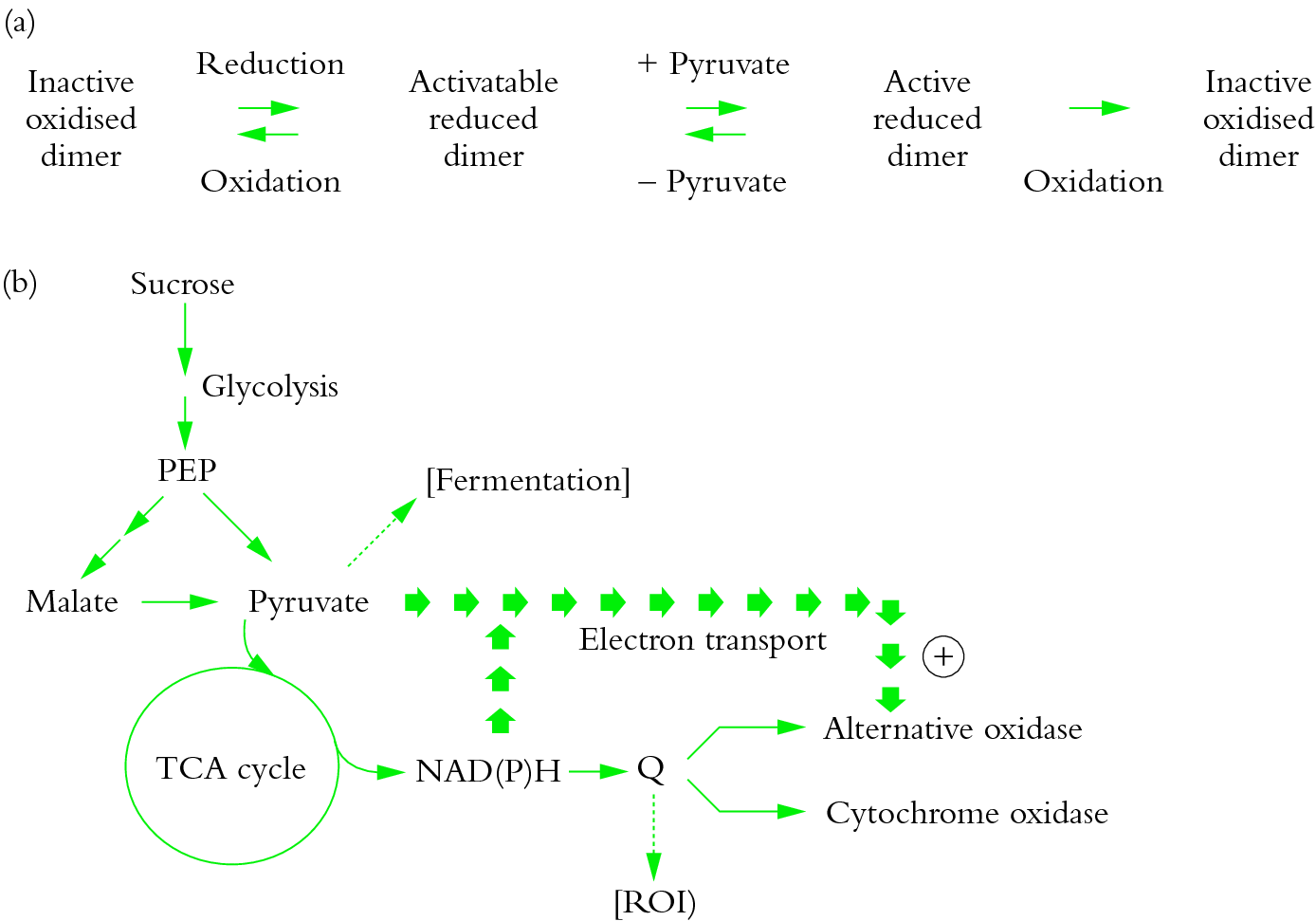
Figure 2.27 Regulation of alternative oxidase. (a) The alternative oxidase exists as a dimer linked together by disulphide bonds. Reduction of these bonds is required to allow activation of the oxidase; this activation occurs by a direct interaction between pyruvate and the oxidase. Oxidation inactivates the oxidase even when pyruvate is present. (b) Putative feed-forward regulation of the alternative oxidase to prevent fermentation from accumulated pyruvate and formation of reactive oxygen intermediates (ROI) frona over-reduced ubiquinone (Q). In vivo, reduction of the oxidase is apparently achieved via NAD(P)H which will accumulate when carbon flux through the TCA cycle is high and/ or the cytochrome chain is inhibited. Small solid arrows indicate activation pathways; dashed arrows indicate potentially deleterious side reactions. (Original drawing courtesy David Day)