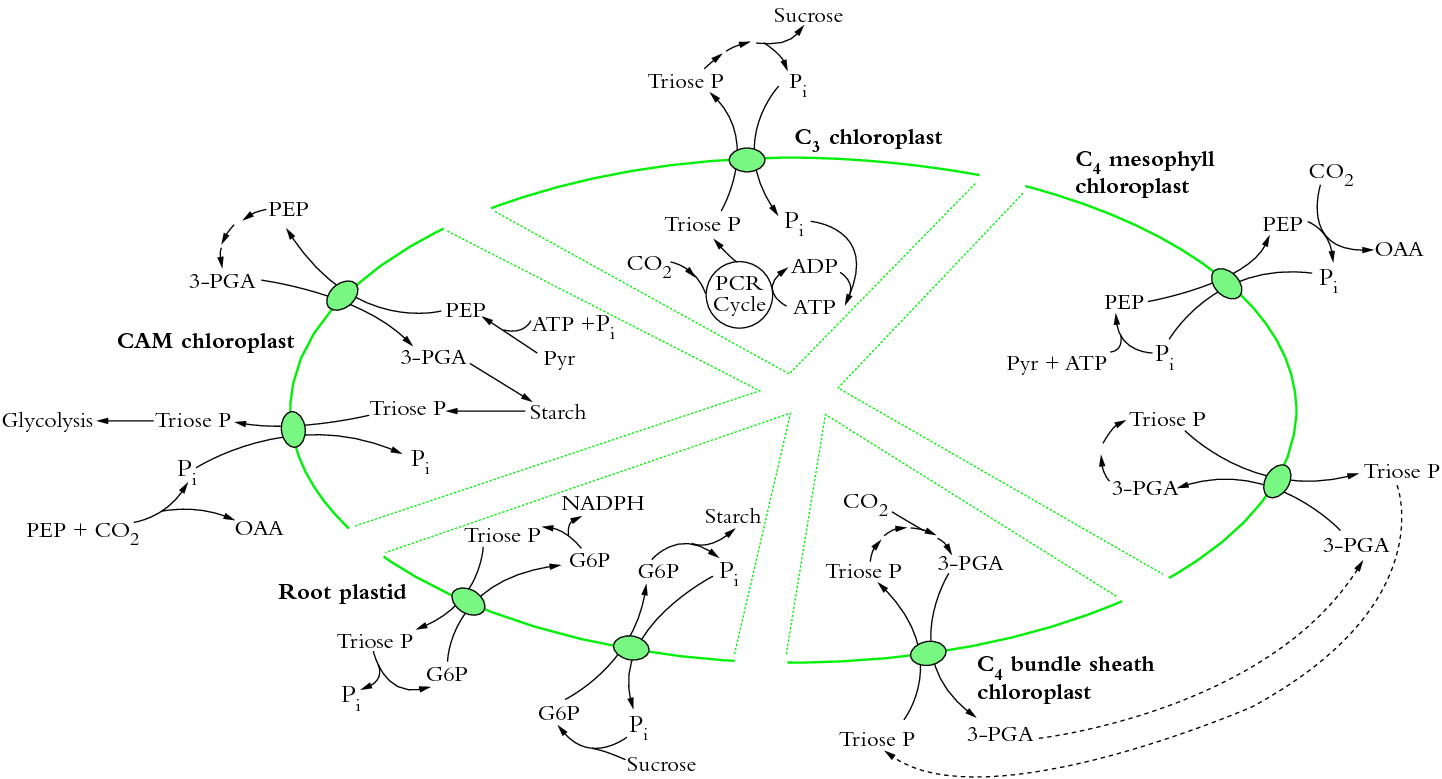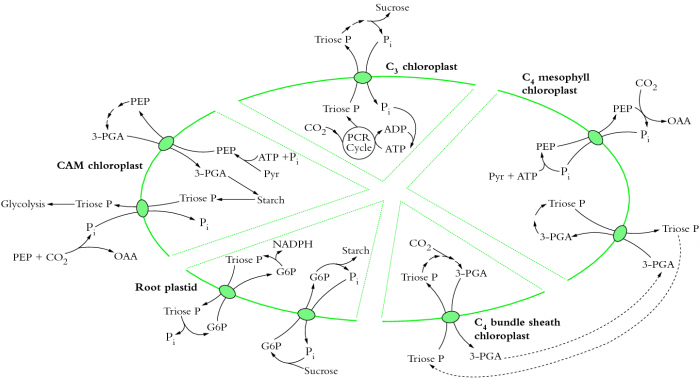
Figure 2.8 Phosphate translocators in plastids from different types of plants and tissues. In C3 chloroplasts, the main function of the phosphate translocator is in exporting triose phosphate (triose P) to the cytosol where it is used mainly for sucrose synthesis. During the day, triose phosphate is produced by the photosynthetic carbon reduction (PCR) cycle.
Chloroplasts from the leaves of C4 plants contain two forms of the phosphate translocator, one in the bundle sheath and the other in the mesophyll cells. The mesophyll translocator mediates phosphoenolpyruvate (PEP) export for use in CO2 fixation. In bundle sheath chloroplasts of certain C4 plants, 3-phosphoglycerate (3-PGA) is exported for reduction to triose phosphate in mesophyll cell chloroplasts.
The phosphate translocator in chloroplasts from plants with crassulacean acid metabolism (CAM) mediates PEP export in the daytime and triose P export at night. In contrast, the phosphate translocator in root plastids mediates the exchange of glucose-6-phosphate (G6P) and triose P. This exchange is important for the operation of the oxidative pentose phosphate pathway. G6P exchange for inorganic phosphate (Pi) is important in carbon import for starch synthesis. OAA = oxaloacetate. (Original drawing courtesy Ian Woodrow)