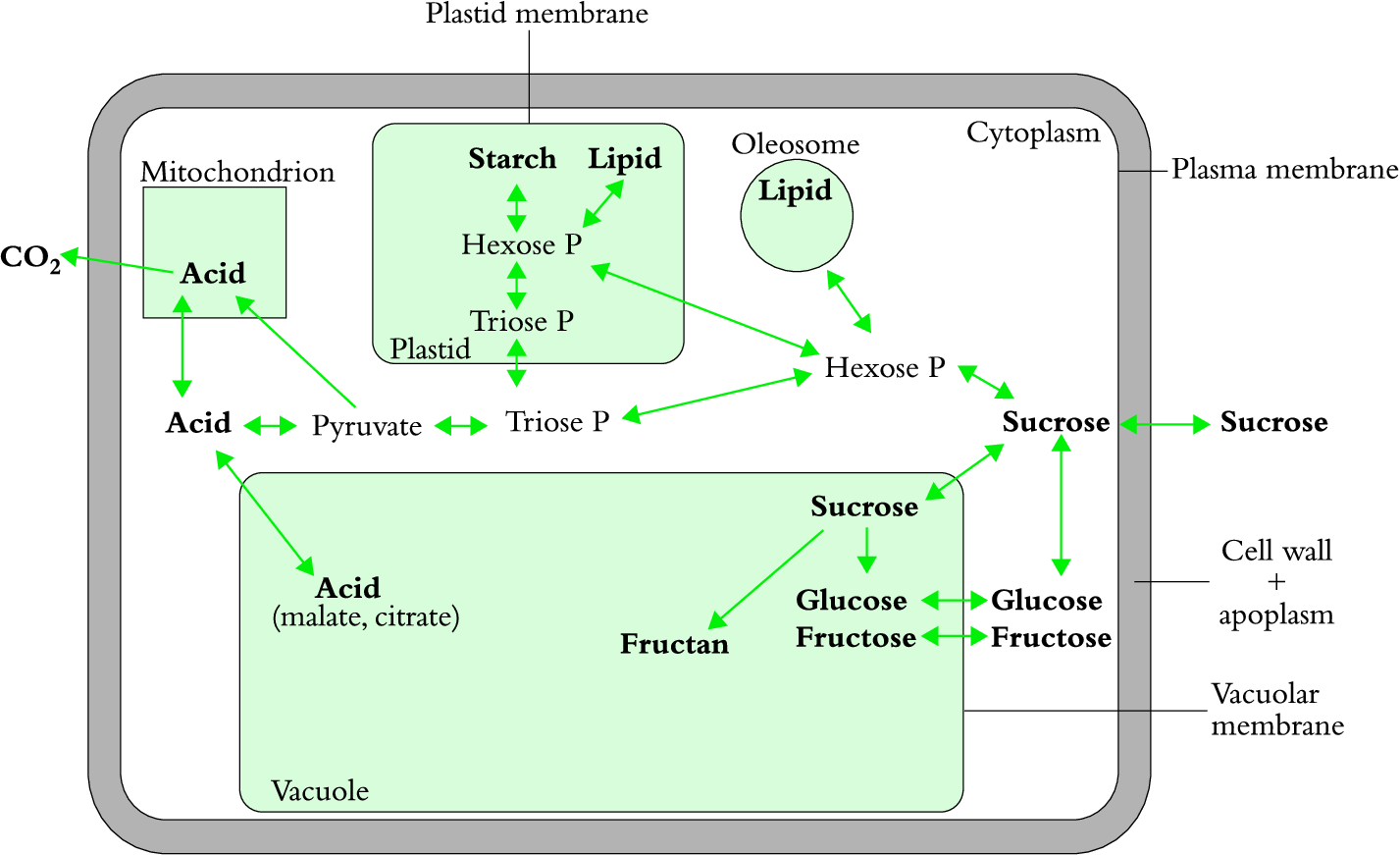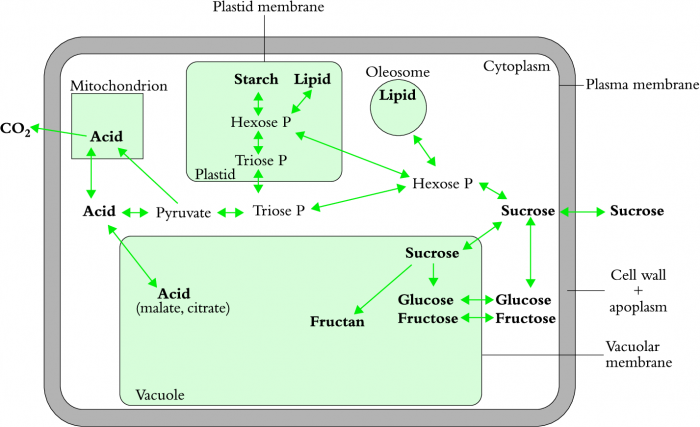
Figure 11.9 Carbohydrate economy in developing fruits is drived by import and recycling of photoassimilates between different metabolic compartments. Sucrose or less commondly other forms of translocated carbon (Table 11.1) arrive via phloem conduits and are loaded into cytoplasmic compartments. As shown schematically, carbohydrate can then be partitioned to vacuolar storage or converted to other sugars and, in the form of hexose phosphate, transferred to plastids where it is used to synthesise starch. Each step is reversible, and as happens during ripening, starch in plastids is transformed back ito sugars that subsequently accumulate in cacuoles as indicated. Other specialised organelles (oleosomes) store lipids while mitochondria draw upon imported and locally fixed carbon for ATP generation.
(Original diagram courtesy R.L. Bieleski)