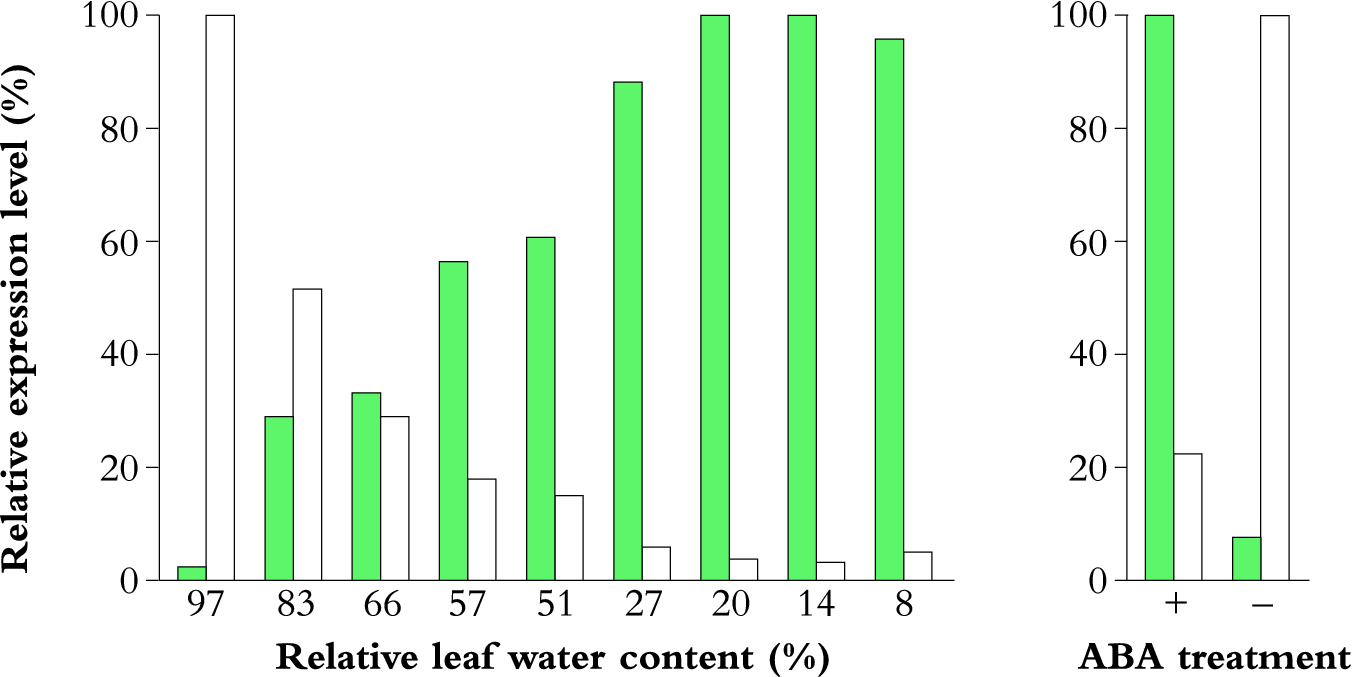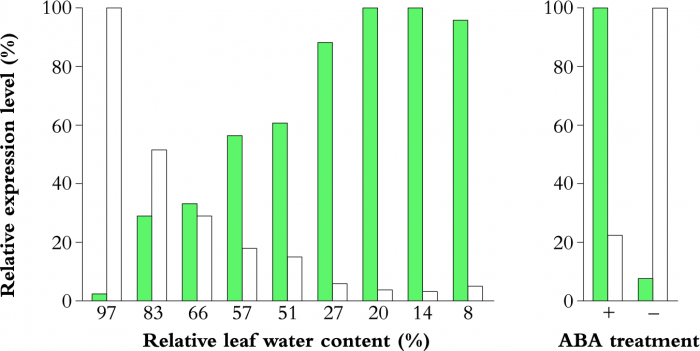
Figure 10.34 Resurrection plants such as the grass Sporobolus stapfianus, are species with remarkable adaptations to enable survival through extended and severe droughts. Although leaves of droughted plants become almost totally desiccated, recover of full leaf function takes a matter of hours following resupply of water. Underlying changes in patterns of gene expression enable this survival strategy, and have some analogies with processes during seed maturation. Here, mRNA abundance is plotted for two genes, one upregulated and one downregulated in response to dehydration. Dehydrins (green bars) are hydrophilic proteins which probably protect cellular components from damage under conditions of low water status. Chlorophyll a/b binding protein (Cab) is a core component of photosynthetic function. Expression of Cab (white bars) declines rapidly during dehydration, and indicates the shutting down of photosynthesis. Both these genes are also responsive to ABA supplied to fully hydrated plants, so this hormone probably plays a key role in mediating the stress response. However, there are other dehydration-induced genes which are not affected by ABA.