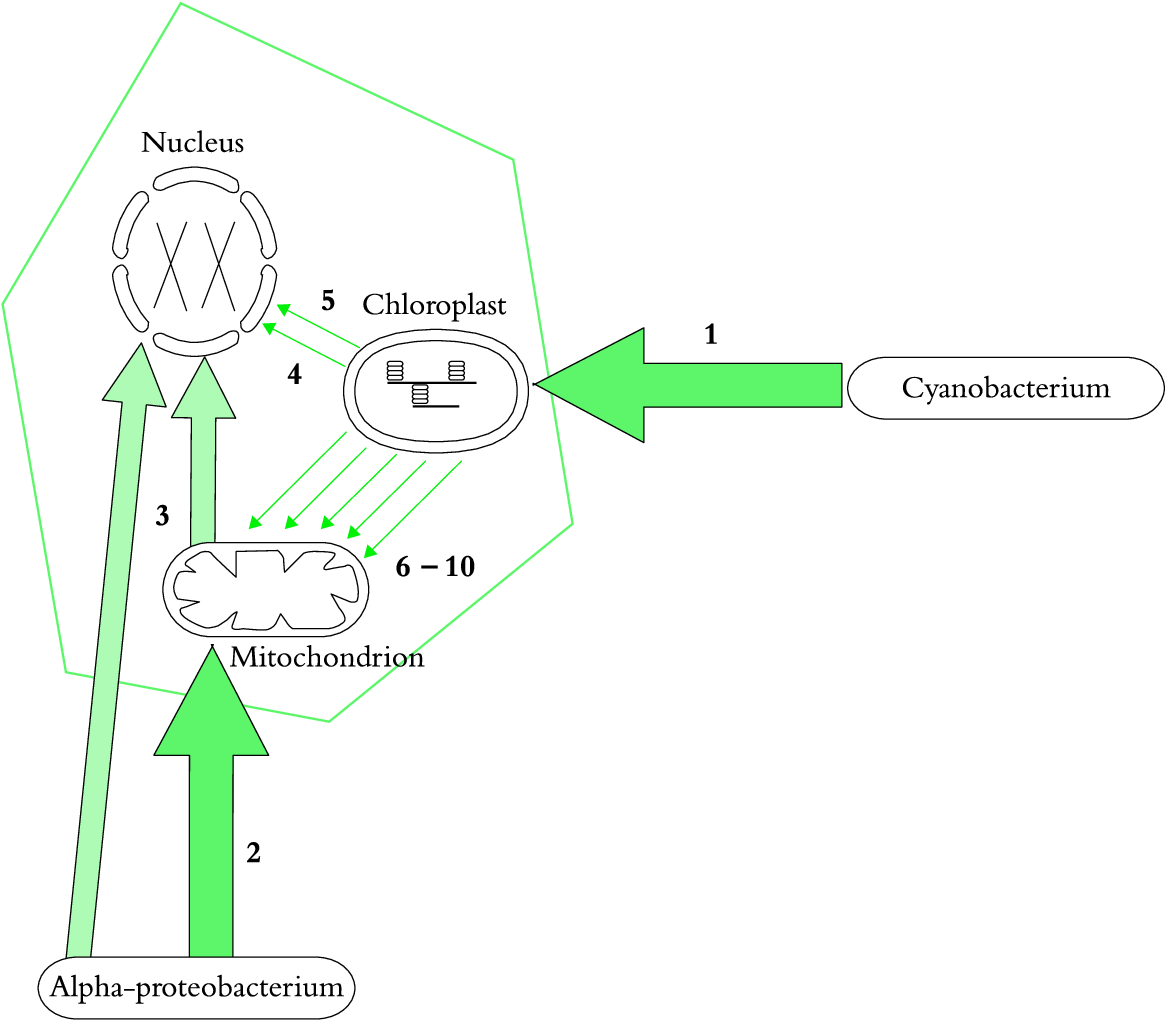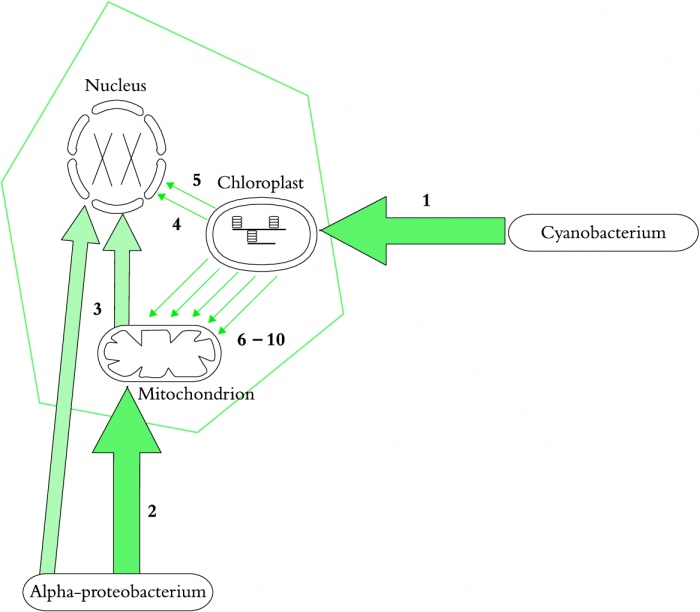
Figure 10.28 During evolution of bacteria and plants, some common genes such as those for the photosynthetic enzyme Rubisco large (rbcL) and small (rbcS) subunits have been transferred between genomes and between organisms. The thick arrows denote the endosymbiotic origin of chlorplasts (1) and mitochondria (2). Based on DNA sequence similarities, we deduce that gene transfer subsequently occurred from chlroplast to nucleus (4, representing the transfer of the rbcS gene in ancestral green algae). It has also been possible to genetically engineer tobacco with an rbcL gene inserted into its nuclear genome (5). Similar paths of transfer are known for mitochondrial genes, but originating from proteobacterium groups. A second form of rbcL occurs in anaerobic proteobacteria and has been transferred into nuclear genomes of dinoflagellates (3), a group of algae involved in coral reefs and responsible for toxic 'red tides'. Perhaps unexpected is the finding that modern plant mitochondria contain remnant non-functional rbcL genes, suggesting at least five instances of organelle transfer (6-10).