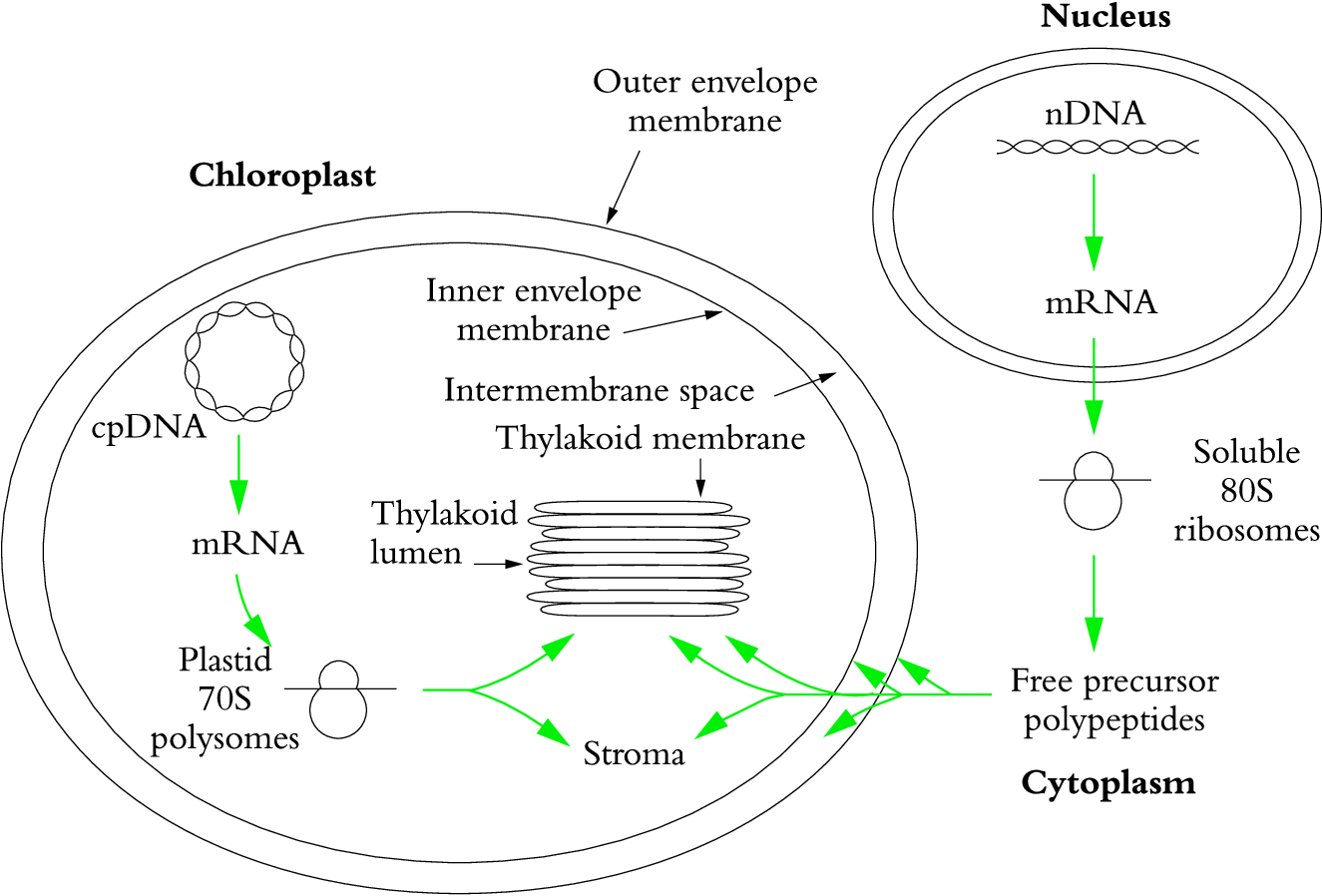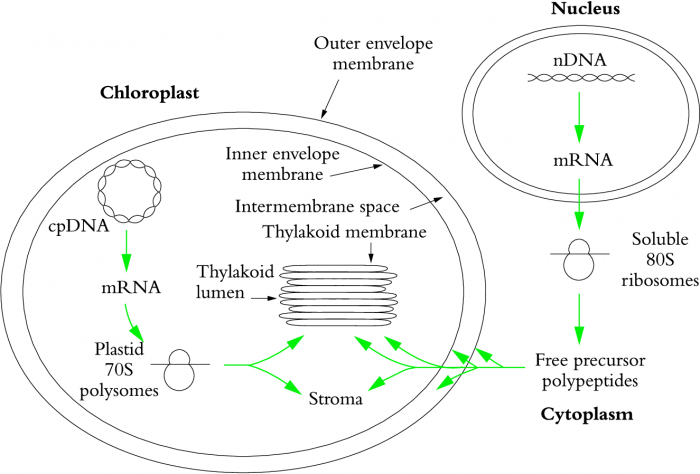
Figure 10.27 Two genomes interact to generate a whole range of chlorplast proteinse. Nuclear-encoded genes are translated on 80S cytoplasmic ribosomes, whereas chlorplast genes are expressed using 70S plastid ribosomes. Nuclear-encoded proteins are targeted to specific locations in the chlorplast by special 'transit' peptides at the N-terminal end of the protein. In some instances, such as the major photosynthetic enzyme Rubisco (ribulose-1,5-biphosphate carboxylase/ oxygenase), one polypeptide is encoded by a nuclear gene (the small submit) and the other by a chloroplast gene (the large submit). Final assembly of the functional protein occurs within the chloroplast.
(Based on Keegstra 1989, reproduced with permission of Cell Press)