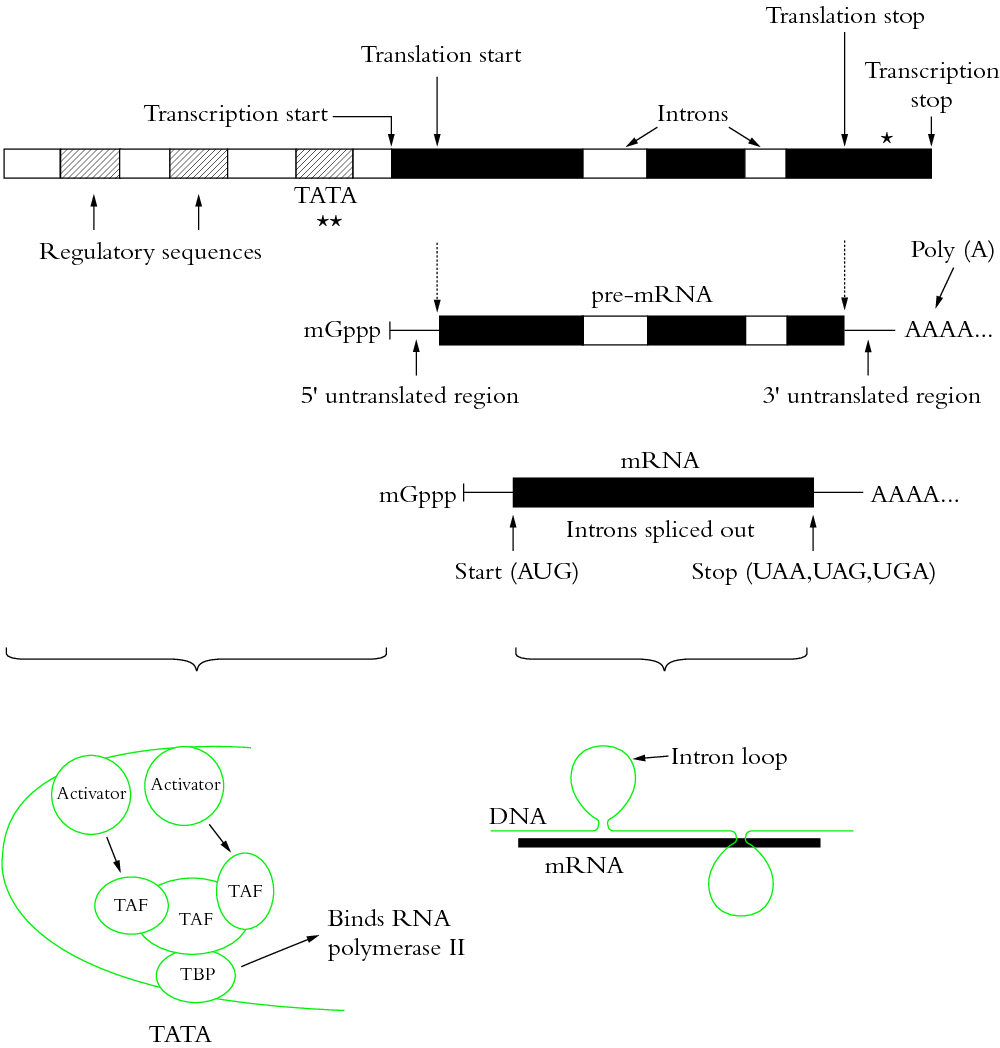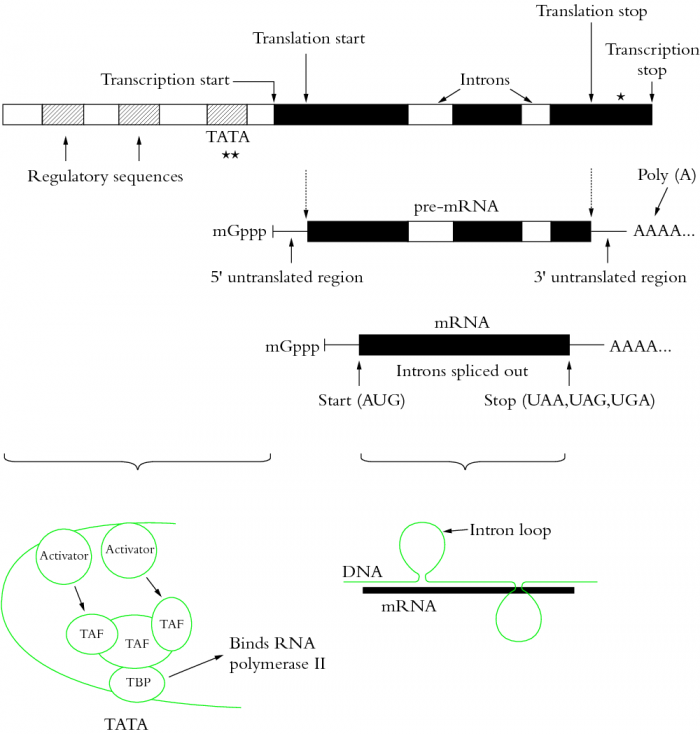
Figure 10.25 Structure and transcription of a typical plant nuclear gene. Genes contain more than just the DNA sequences that code polypeptide chains. Those that are transcribed into mRNA consist of three main components – promoter, protein coding and terminator. Coding sequences (exons) are usually interrupted by non-coding segments called introns. Promoters contain two main regions. The first is the 'TATA box' (marked **), about 30 bases upstream of the start codon. The second region, further upstream, contains one or more sequences (diagonal hatching; often known as cis regulatory elements) to which regulatory proteins (known as transcription or trans acting factors) bind. Transcription factors enhance or repress transcription depending on how they affect RNA polymerase binding. After transcription, pre-mRNA molecules are processed into mature mRNA, which includes splicing out introns, addition of a polyA (chain of adenosyl residues) tail to the 3' end, and capping at the 5' end. There are also untranslated regions at both the 3' and 5' ends of mature mRNA. Intron splicing can be seen in electron micrographs, represented diagrammatically here, of the interaction of mature mRNA with its complementary DNA, which shows introns as loops but exons hybridised to the mRNA. TBP = TATA-binding protein; TAF = TBP-associated factor.