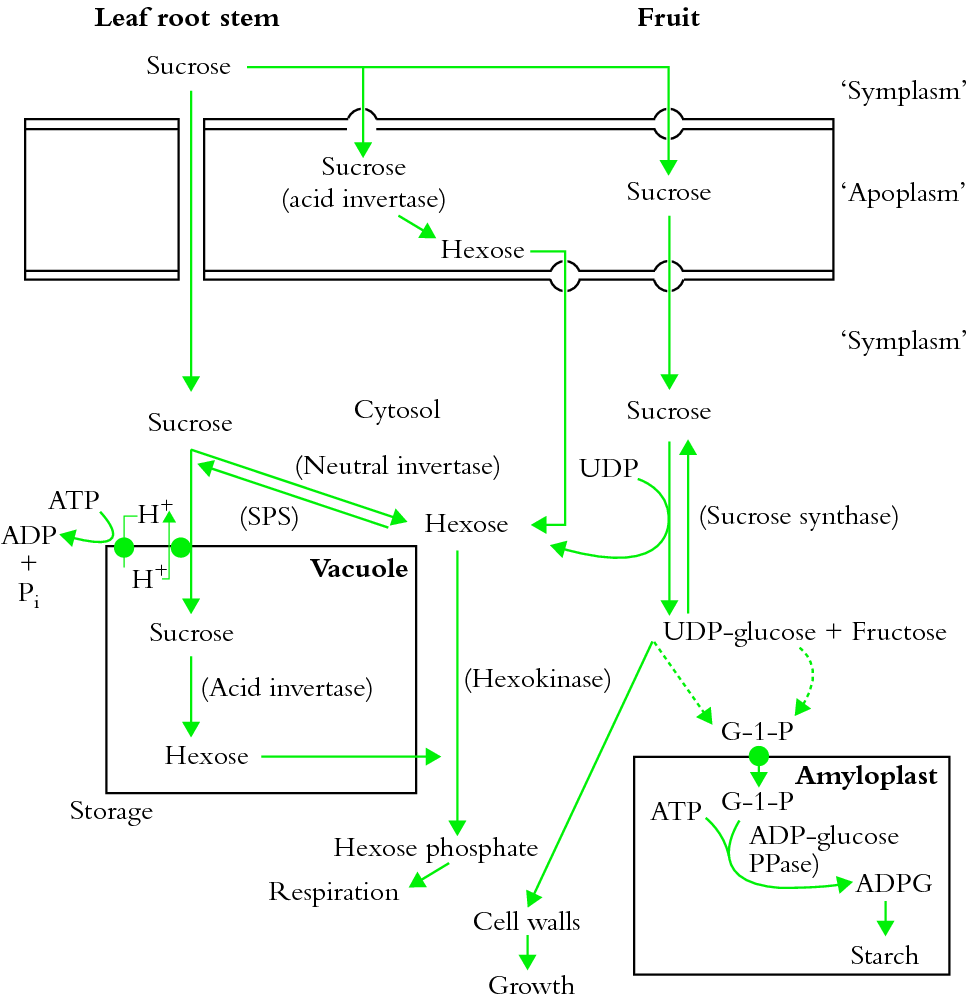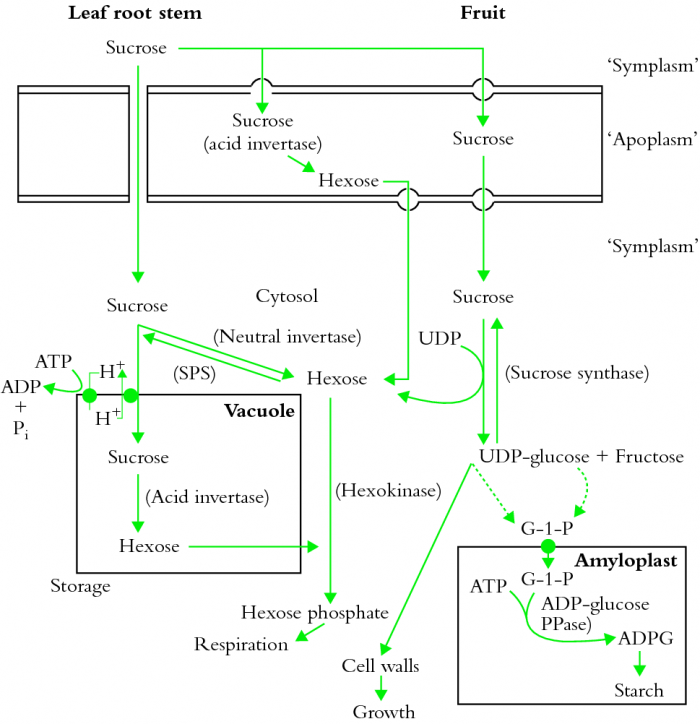
Figure 5.37 Pathways of sugar metabolism and compartmentation within sink cells. Sugars can be delivered to sink cells through either apoplasmic or symplasmic pathways.Within the sink apoplasm, sucrose can be hydrolysed to hexoses by an extracellular invertase. Apoplasmic sugars are transported across plasma membranes of sink cells by proton/ sugar symporters. Alternatively, sucrose enters the sink cytoplasm through a symplasmic path. Within the sink cytoplasm, sucrose can be hydrolysed or compartmented into vacuolar storage. Sucrose hydrolysis provides substrates for energy metabolism or for synthesis of macro-molecules. Invertase activity is important to sustain hexose supply for glycolysis. Sucrose synthesis from the hexose pool is catalysed by sucrose phosphate synthase (SPS). Hydrolysis of sucrose by sucrose synthase generates fructose and uridine diphosphate glucose (UDP-glucose) which enters various biosynthetic pathways including cellulose and starch synthesis. In the case of starch biosynthesis, UDP-glucose and fructose generate glucose-1-phosphate (G-1-P) which is transported across the amyloplast membrane. Accumulated G-1-P is interconverted into adenine diphosphate glucose (ADP-glucose) by the enzyme adenine diphosphate glucose pyrophosphorylase (ADP-glucose PPase). ADP-glucose is the substrate for starch polymer formation. Sucrose compartmentation into the vacuole is mediated by a sucrose/ proton antiporter located on the tonoplast. Within the vacuole, sucrose can be exposed to invertase hydrolysis with the hexose products accumulating or leaking back to the cytoplasm