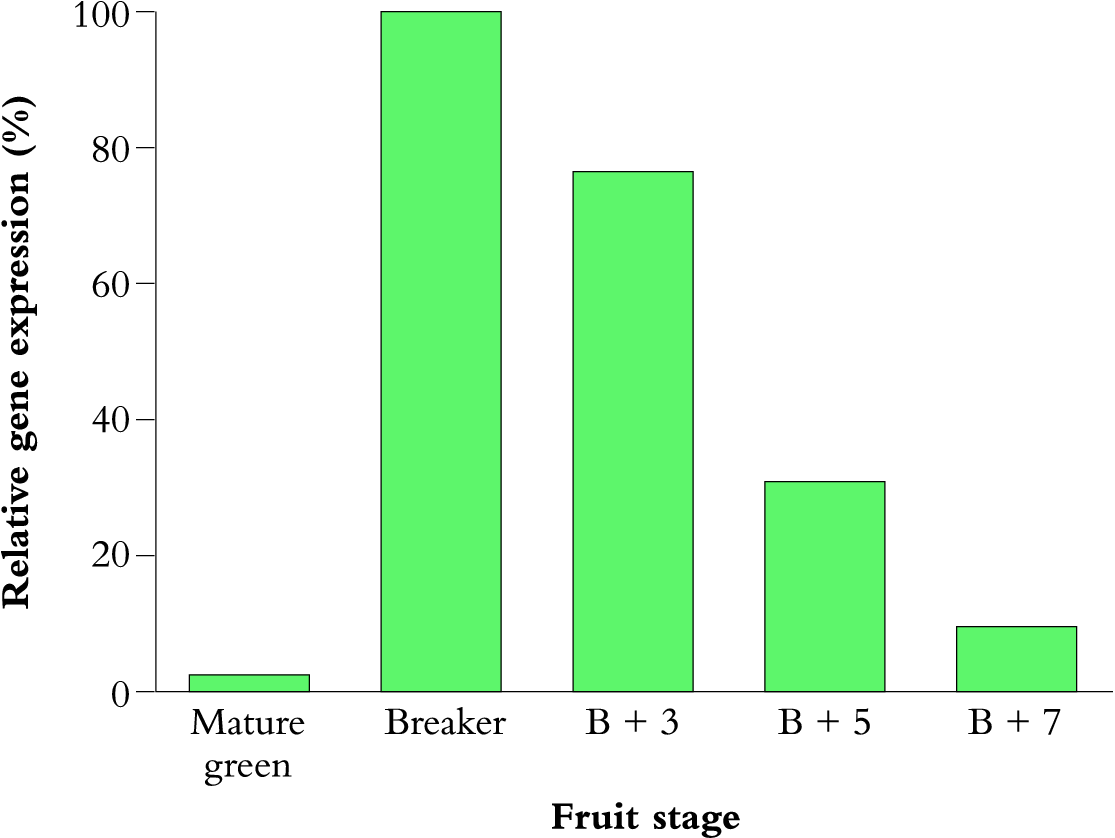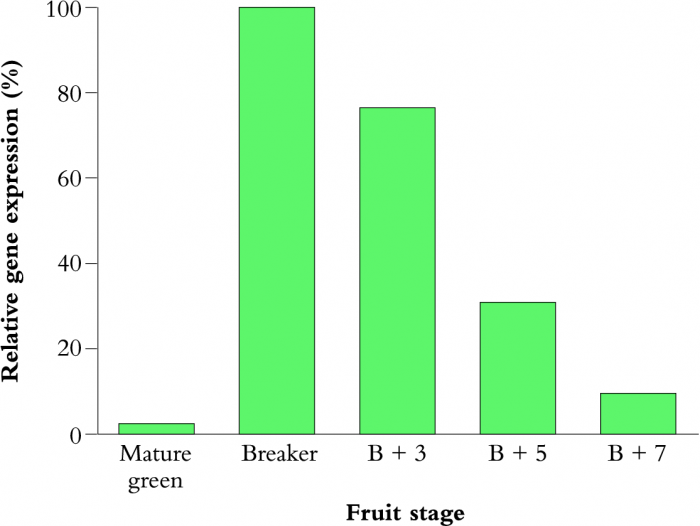
Figure 9.15 Although ripening of climacteric fruit such as tomato is normally associated with autocataclytic ethylene synthesis (see Chapter 11), the physiological response to this increased ethylene level depends on prescence of ethylene receptors. In this experiment, the expression of the tETR gene, which codes for a presumed receptor, was quantified by the relative amount of tETR mRNA present. In mature green fruit, the gene is scarcely expressed, but maximal levels are present in the first visible stages of ripening colour change known as 'breaker' (B). Fruit are fully red by seven days after breaker (B + 7), by which time receptor gene expression has declined again. The developmental regulation of receptor levels may be a key safeguard preventing premature onset of ripening until the fruit and seeds are at the right stage of development. Deliberate manipulation of hormone receptor expression by genetic engineering may become a powerful tool for controlling tissue-specific and developmental-time-based hormone responses.
(Based on Payton et al. 1996; reproduced with permission of Kluwer Academic Publishers)