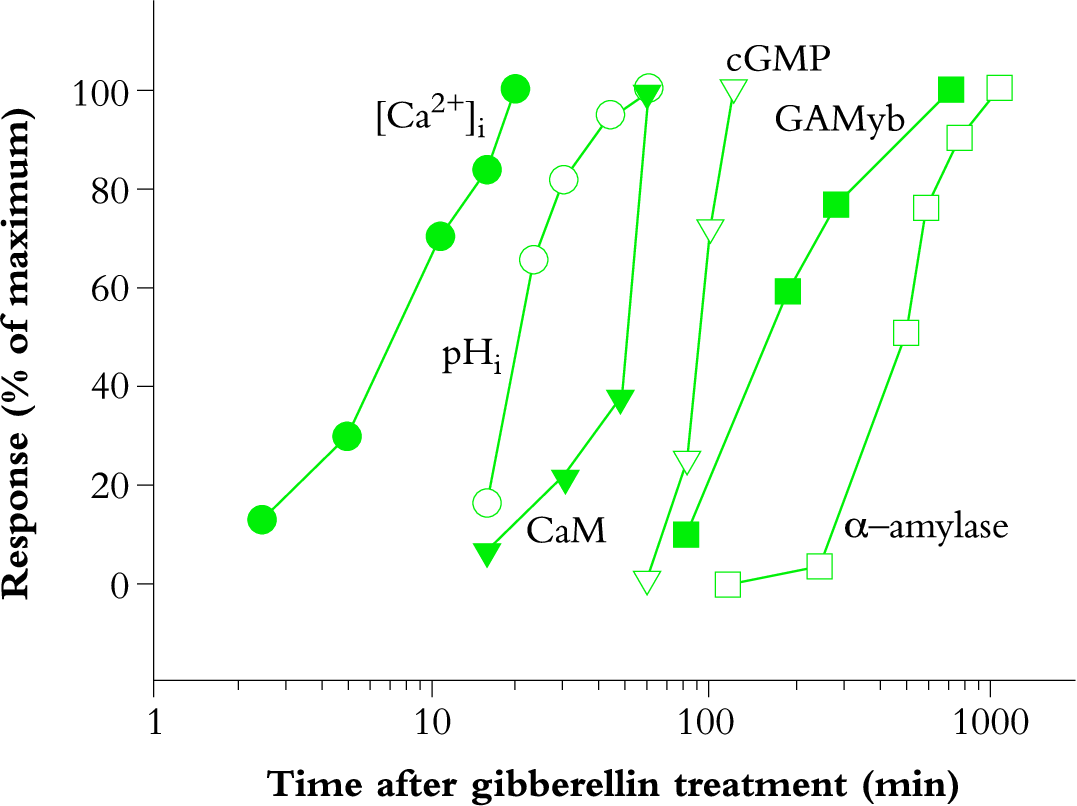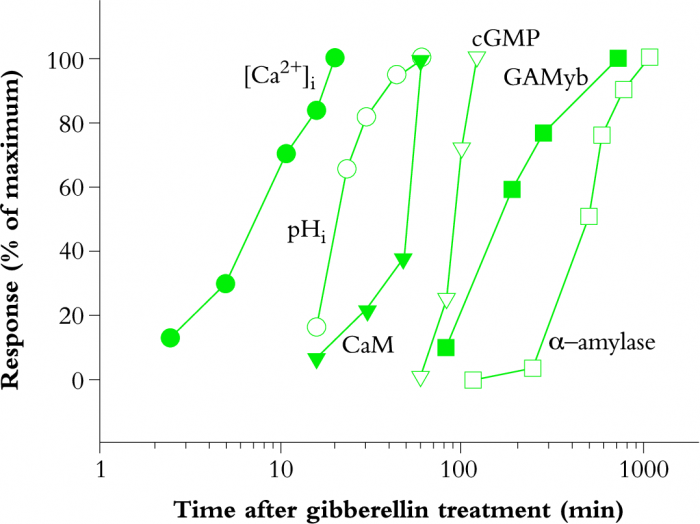
Figure 9.5 A complex chain of events is required to convert a primary hormonal signal, gibberellin, into its final action, in this case synthesis of the starch-hydrolysing enzyme α-amylase during cereal seed germination. After increased gibberellin levels are perceived, the most rapid changes, within 5 min, are in the second messenger Ca2+ ([Ca2+]i is cytosolic calcium concentration) then its receptor protein calmodulin (CaM), together with altered intracellular pH, and after about 1h another second messenger, cGMP. Following this, at abour 3h, there is a rise in GAMyb, a transcription factor protein that binds to promoters of gibberellin-regulated genes, and finally protein that binds to promoters of gibberellin-regulated genes, and finally appearance of α-amylase enzyme about 8h after gibberellin treatment
(Based on Bethke et al. 1997; reproduced with permission of Oxford University Press)