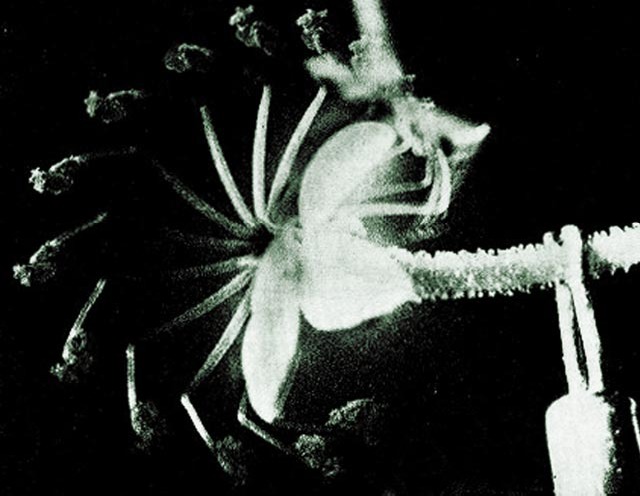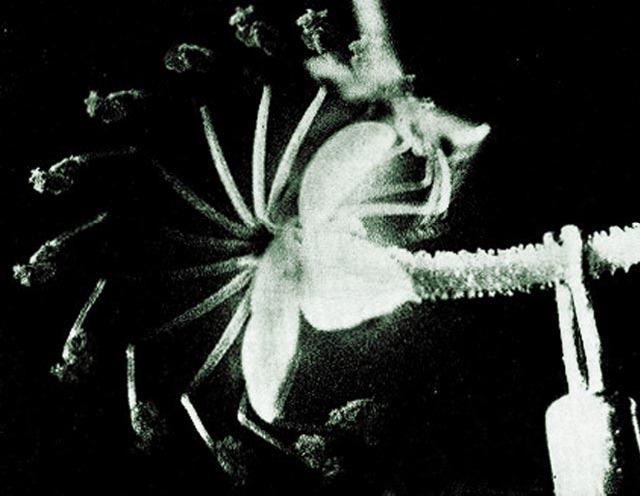
A sequence of superimposed images captures the flower column of a trigger plant (Stylidium crassifolium) as it ‘fires’ in response to a physical stimulus (in nature, an insect). A 1 cm column rotates through more than 200° from a ‘cocked position’ (a) in 10—30 ms to a relaxed position (b) (photographs taken at 2 ms intervals). The kinetic energy manifested in this rapid firing is derived from events controlled at a membrane level. Ions transported into specialised cells cause hydrostatic (turgor) pressure to develop which is suddenly dissipated following mechanical stimulation. Similar rapid movements occur in mimosa (sensitive plant) and some carnivorous plants (Based on Findlay and Findlay 1975)