
In this issue, we are pleased to share news of the 2026 ASPS Award winners, some of whom will be presenting at ComBio2026, introduce the new discipline representative for Future Agriculture, and feature contribution by student representative & outgoing Phytogen co-editor Lucas Auroux. We continue to share reflections from the postgraduate student travel awardees of the 2025 conference. The society has also opened the call for Life and Corresponding members, and Discipline Representatives – come be a part of the community advancing plant science in Australia.
Connect with ASPS on social media: LinkedIn: Australian Society of Plant Scientists; BlueSky: @asps-oz.bsky.social
Join the conversation using #AusPlantSci #ComBio2026 (for the upcoming conference). Tag us to help promote your science on our platforms!
Phytogen is a community-driven newsletter, and we welcome contributions from ASPS member students, early- and mid-career researchers, and established scientists at any time. We are always looking for:
- Student or lab research highlights
- Conference or workshop reports
- Opinion pieces and perspectives
- Field or extension insights
- Upcoming events, webinars, and symposia suggestions
Contributions can be sent anytime to Phytogen co-editors Raz ([email protected]) or Sneha ([email protected]).
ComBio 2026

Conference Dates: 29th Sept-1st October 2026
Venue: Sydney, NSW
The ComBio 2026 website https://www.combio.org.au/ is now live for registration, and a Linkedin page for the conference is now live HERE. Follow for updates regarding the conference
Please note that Abstract submission has closed.
ComBio 2026 brings together ASBMB, NZSBMB, ANZSCDB, and ASPS for three days of cutting-edge life sciences research featuring plenary lectures, symposia, lightning talks and poster presentations across:
Cell and Developmental Biology • Biochemistry and Metabolism • Proteins, Peptides, and Structural Biology • Plant Biology • RNA • ‘Omics and Systems Biology • Education
Tickets for the ASPS cocktail event are now available here https://www.combio.org.au/social-program or here https://www.asps.org.au/asps-2026-cocktail-evening
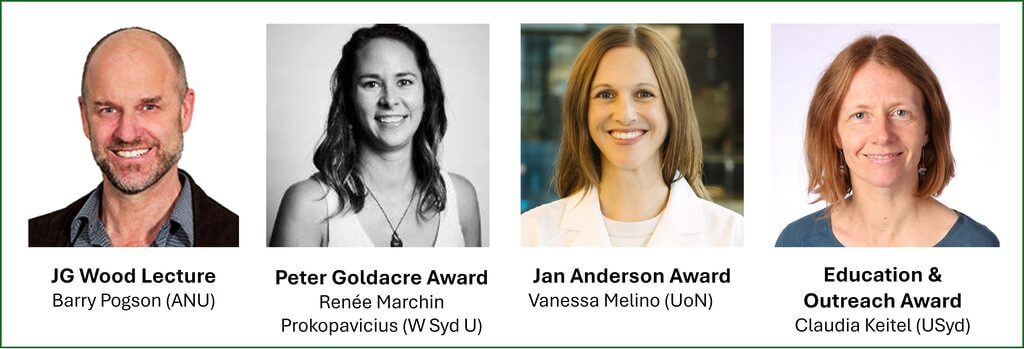
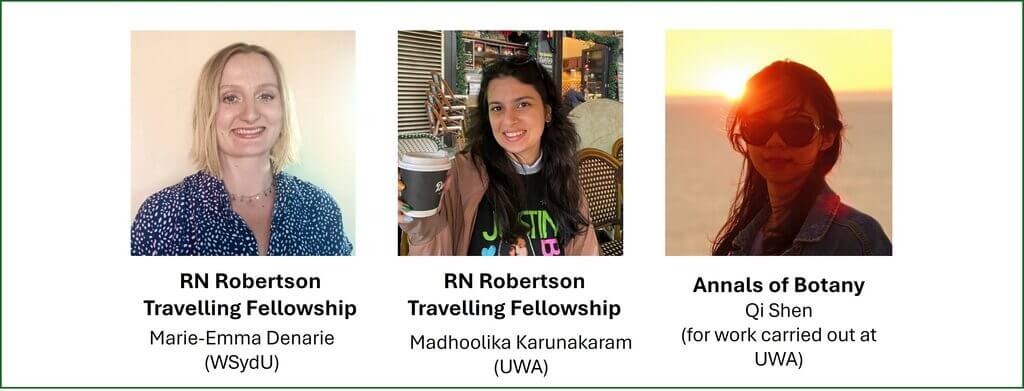
2026 ASPS Award Winners
On behalf of the Society, we are pleased to announce the recipients of the 2026 ASPS Awards, some of whom will be presenting at ComBio2026. In the lead up to Combio2026 and future issues, we will be sharing their profiles, research and presentation abstracts.
Get Involved with ASPS
Life & Corresponding Membership
Life Membership
Life Membership of the Australian Society of Plant Scientists recognises an outstanding and sustained contribution to the Society by a longstanding ASPS member who, through their professional activities, has substantially enhanced the international profile of Australian plant science research.
Nominations for ASPS Life Membership can be made at any time to the Honorary Secretary (Mary Byrne [email protected]). A one-page summary addressing the above criteria must accompany the nomination.
Corresponding Membership
Corresponding Membership of the Australian Society of Plant Scientists recognises overseas colleagues, with a high profile of research achievement in any field of plant science, who have a strong track record of successfully contributing to and promoting plant science research within Australia.
Nominations for ASPS Corresponding Membership can be made at any time to the Honorary Secretary (Mary Byrne [email protected]). A one-page summary addressing the above criteria together with a curriculum vitae of the applicant must accompany the nomination.
Discipline Representatives
Applications for the following Representatives are open and close on 11th September. Application form can be found on the ASPS website Committees & Representatives — Australian Society of Plant Scientists
- Cell Biology
- Plants and the Environment
- Plant-Microbe Interactions
- Plant Science Education and Outreach
- Diversity and Inclusion
- Student Representatives (numerous positions)
New Discipline Representative
Future Agriculture

Samantha Harvie
University of Western Australia
Dr Sam Harvie is a researcher in the School of Molecular Sciences and the ARC Centre of Excellence in Plant Energy Biology at the University of Western Australia, working in plant molecular science with a focus on agricultural nitrogen-use efficiency.
Her research focuses on plant nitrogen interactions across broadacre cropping systems, with an emphasis on improving nitrogen use efficiency and grain quality outcomes. In wheat, she investigates how nitrogen management practices such as fertiliser rate and timing, soil type, urease inhibitors, legume crop rotations, and broader nutrient interactions such as NPK balance interact with the environment and genetics to shape grain protein composition, with a strong focus on environmental plasticity in protein responses. This involves the development of proteomics and big data analysis-based approaches to better interpret nitrogen-driven changes in grain quality and to improve predictive understanding of nitrogen management outcomes across variable field conditions.
In canola, her research focuses on nitrogen use efficiency. Examining how nitrogen management, environment and genetics influence the final seed protein abundance and composition, with relevance to breeding for improved nitrogen use efficiency.
She has fostered extensive cross-sector collaborations across the Australian grains industry, including CSBP, Summit Fertilisers, Incitec Pivot, Nutrien Ag Solutions, GRDC, The Department of Primary Industries, Murdoch University, CSIRO, Millers Foods, Grower Group Alliance, Facey group, as well as individual growers, strengthening the link between molecular research and practical nitrogen management in wheat and canola systems. Dr Harvie also contributes to teaching and academic leadership as Unit Coordinator for a master’s-level unit in collecting, analysing and interpreting big data in biology and holds EMCR leadership roles within the School of Molecular Sciences, supporting early-career researcher development and strengthening research culture.
Student Representative Contribution

Two years behind the scenes
by: Lucas Auroux
ASPS Student Representative for Victoria (2025-2026) & Phytogen Co-Editor (2024-2026)
PhD candidate, La Trobe Institute for Sustainable Agriculture and Food, La Trobe University
Lucas Auroux | LinkedIn @aurouxlucas.bsky.social
When I took on the role of Phytogen co-editor in early 2024, I had a fairly simple idea of what the job would look like: collect contributions, format them nicely, hit send. Two years and roughly twenty-four editions later, I can say with confidence that I was wrong – and that being wrong turned out to be one of the more formative experiences of my PhD. Editing Phytogen alongside my co-editor Dr. Razlin Azman (CSIRO) has meant a lot of things in practice. It has meant chasing contributors across time zones, learning the particular art of a follow-up email that is firm but not unkind, and discovering that “I’ll send it through by Friday” means something different depending on who you ask. It has meant developing a house style and then defending it, gently, every month. It has meant reading hundreds of pieces of plant science writing and developing an instinct for what works in terms of formatting – what makes a reader stay, and what makes them scroll past.
It has also, unexpectedly, meant becoming deeply invested in questions about science communication that I had not seriously thought about before. Why does a monthly newsletter still matter when every institution has a Twitter account, a LinkedIn page, etc.? The short answer I arrived at is that newsletters operate on a different register: slower, more reflective, less governed by the engagement mechanics that reward hot takes and rapid reactions. Phytogen creates a record. It holds space for the kind of contribution – a student spotlight, a discipline rep’s field report, a careful account of five years of post-fire rainforest monitoring – that does not translate entirely to a three-sentence social post.
That said, the newsletter does not exist in isolation from social media; it is in constant conversation with it. For much of the past two years, I have managed ASPS’s social media presence alongside the newsletter. Growing @asps-oz.bsky.social from a standing start into an active community hub has been one of the more satisfying parts of this role. What became clear quickly is that the platforms reward different things: LinkedIn responds to professional milestones and formal announcements; BlueSky has developed into a genuinely collegial space for plant scientists to share work and have real conversations. Neither replaces what a newsletter does, but all three together create something more than any one could alone.
One of the things I feel most strongly about, having worked across both formats, is the value of not being promotional. There is a temptation in science communication to slip into a kind of institutional cheerleading that reads as hollow even when every claim in it is technically true. Authentic content, whether being a student sharing what actually drew them to their research question or a discipline rep being honest about the open questions in their field, performs better – and in my opinion matters more. The contributions I have been happiest with are the ones that felt like a conversation, not a press release.
I want to say something about the editorial role as a form of professional development, because I think it is underappreciated. The skills I have built over the past two years – writing across audiences, managing a production schedule, coordinating with a distributed volunteer team, thinking strategically about communication – sit outside the standard PhD training pathway. They are not the skills a PhD candidate is assessed on. But they are skills that matter for almost every career trajectory a scientist might pursue, inside or outside academia. If you have the opportunity to take on a communications or editorial role within ASPS or another professional body, I can only recommend it. It teaches many things.
It also, I should be honest, adds to an already full plate. There were months where working on the newsletter while managing lab work, analysis, etc., felt like almost too much – but surprisingly never did. The workload is more than manageable and is shared well, and I was fortunate to have a genuinely good collaborator in Raz.
Which brings me to the handover. Phytogen will continue – it is in good hands – and ASPS’s social media presence will keep growing. If you are a student member reading this and wondering whether there is a place for you in the Society beyond attending the annual conference, I want to tell you clearly that there is. The newsletter needs contributors: student spotlights, brief research updates, reflections on field work or career transitions. Writing for Phytogen is free, takes less time than you think (this piece took me no more than 30 minutes), and puts your research in front of a (inter)national community of plant scientists. Beyond that, ASPS has discipline representative roles, and student representative positions that are regularly looking for people willing to put in a few hours a year.
I leave the editorial role having learned that science communication is not a soft skill that sits alongside the real work. It is part of how science actually functions – how communities cohere, how early-career researchers build profiles and form connections. Two years of editing a newsletter taught me that, amongst other things. I hope whoever reads this finds something useful in it, and I hope to see more student voices in Phytogen over the years to come.
Reports from Postgraduate Travel Award Recipients
We are pleased to feature more reports from postgraduate students who received ASPS travel awards to attend the 2025 Adelaide conference. We will be featuring more reports in upcoming issues through the year.
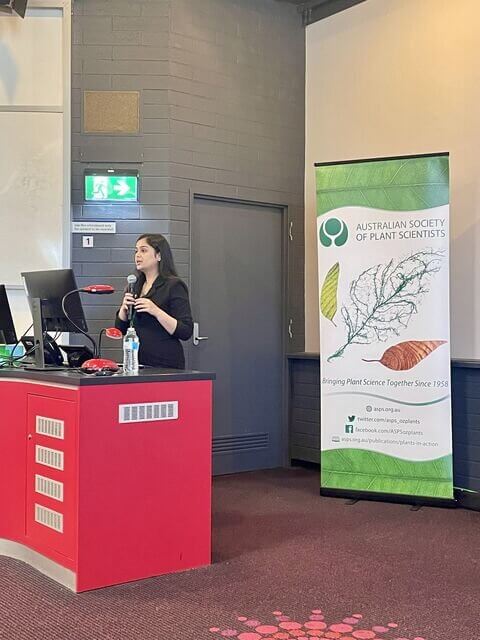
Kritika Sharma
University of Tasmania
Attending the ASPS 2025 Conference in Adelaide was an enriching experience both professionally and personally, made possible by the ASPS Student Travel Award and ARC Plant Success grant. The Fields of Opportunity industry-led session was a particular highlight. I also greatly enjoyed the Teaching, Outreach & Indigenous Learnings session, which highlighted inclusive and impactful science communication. Presenting my research and participating in poster sessions provided constructive feedback and broadened my perspective. Social events, including the Welcome mixer and the Women in Science breakfast, created excellent opportunities to connect with peers and researchers across career stages. A huge thanks to the ASPS team for such engaging sessions and fun experiences.

Yu-Wen Huang
Australian National University
ANU profile | Yu-Wen Cara Huang | LinkedIn
The 2025 ASPS Conference in Adelaide was the first conference I attended during my PhD and an exciting opportunity to engage with diverse plant research across Australia. My poster attracted researchers working on pollen development, hybrid breeding, and wheat, leading to valuable discussions, constructive feedback, and new connections. I was particularly impressed by Stephanie Watts-Fawkes’ talk on arbuscular mycorrhizal fungi and zinc nutrition, which clearly linked molecular mechanisms to crop and human nutrition outcomes. The smooth narrative and comprehensive data made the research especially compelling. Overall, the meeting strengthened my research direction and motivation.
Madhoolika Karunakaram
University of Western Australia
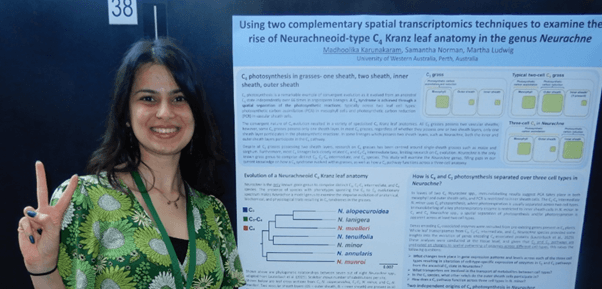
Thanks to support from ASPS, I was able to travel all the way from the University of Western Australia to attend the ASPS 2025 Conference held in Adelaide. I had the opportunity to present a poster which detailed the spatial transcriptomics approaches I will be using during my PhD candidature to investigate the evolution of C4 photosynthesis in the Australian grass genus Neurachne. ASPS 2025 was my first interstate conference and what I enjoyed most was the ability to network with both Australian- and internationally-based researchers. It was especially valuable to have the opportunity to meet and discuss research face-to-face with our collaborators (many of whom are Adelaide-based!), as well as connecting with other C4 researchers. I had a very positive experience and enjoyed the chance to geek out over science with like-minded student researchers.
Yalin Liu
University of Melbourne
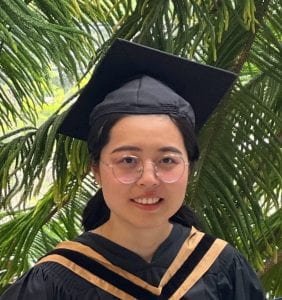
I had a wonderful time at the 2025 Adelaide ASPS conference and am very grateful for both the opportunity to attend and the offer of Student Travel Award. One of the highlights for me was the Teaching, Outreach, and Indigenous learnings session, where I really saw how scientific communication makes a difference in real-world contexts. This was also my first time presenting a poster, so it was exciting to shift from asking questions to sharing my own research story and receiving thoughtful feedback. I really enjoyed the discussions and connecting with others working in related areas. For example, there are a lot of posters working on GWAS across different traits and conditions, and these discussions and comparisons helped me better interpret my own study. The social activities, including visiting the glasshouse facilities and the wine tasting, were also fantastic for networking and building new friendships. Overall, attending ASPS greatly enriched my research perspective and professional development.
Haylie Andrews
University of Queensland
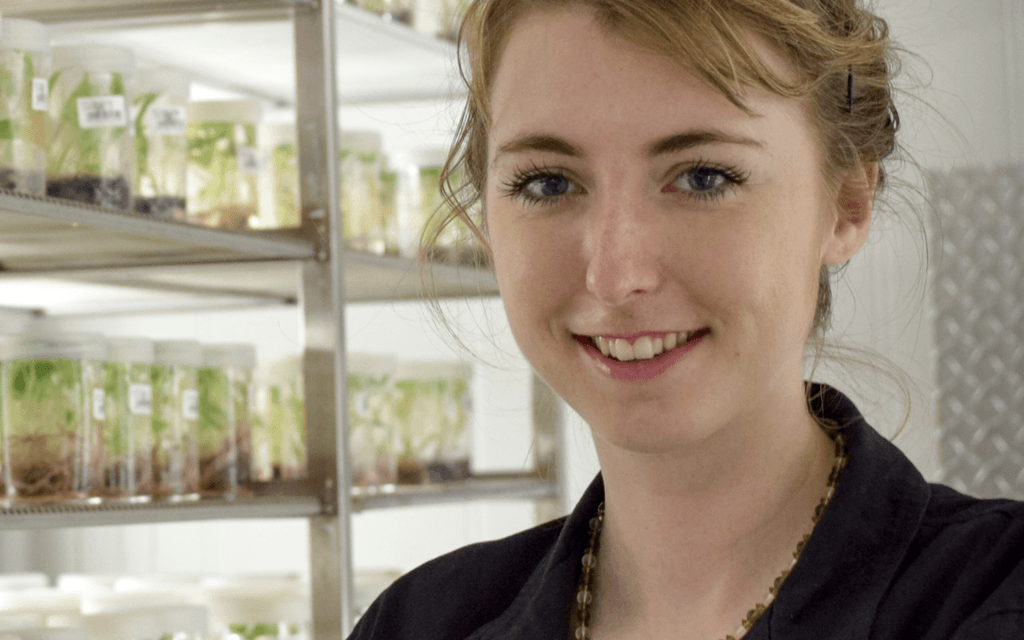
Attending the ASPS conference was an engaging and rewarding experience that provided ample opportunity to network with fellow plant science researchers, both within and beyond my field. It was great to discuss other students’ projects during the poster sessions and to hear some helpful insights and feedback from those who stopped by during my poster presentation titled ‘Exploring genetic resources for complex traits related to bunch architecture in grapevine’. I particularly enjoyed learning about emerging technologies in plant science during Session 5 and the organised social activity, which included visits to local wineries and was a fantastic way to explore the region and get to know new colleagues. I look forward to attending more events in the future.

Soumitra Patekar
Queensland University of Technology
It was an incredible experience to attend the ASPS conference both scientifically and socially. I had the opportunity to present my Ph.D. research on amylose content in wheat under high temperature stress and receive valuable feedback which will be reflected in my future work. The range of talks from plants in space to strawberry and vineyards of Australia made me motivated to learn more. Lunch sessions were more fruitful for the chance to talk and discuss with research groups from universities around the world. Besides that, the dinner and social gatherings allowed us to foster genuine connections and enjoy the locale. I am grateful to ASPS for the travel award that made this experience possible.

Eleanor Imlay
University of Sydney
Foremost, a thank you to the ASPS for their support of student travel to the 2025 society meeting at Flinders University. This was a wonderful opportunity to gain insight into the breadth of plant science research in our region. It was joy to meet academics and fellow students from across the nation and form lasting bonds beyond laboratory walls. I was excited to be able to present my work on leaf development at this event and appreciated the thoughtful insights of all who engaged with my work. Thank you to Crystal Sweetman and the organising committee for facilitating this conference.
Member News
PhD Completion

Congratulations to our ASPS student member Agyeya Pratap on the successful completion of his PhD at the University of Western Australia.
Thesis Title:
Unravelling heat tolerance in bread wheat (Triticum aestivum L.): Insights from flag leaves and spike tissues.
Read his Thesis here:
Opportunities
Conferences, Webinars & Symposia
22nd Australian Barley Technical Symposium (ABTS 2026)
Dates: 17–20 August 2026
Location: Novotel Geelong, Geelong, Victoria, Australia
The 22nd Australian Barley Technical Symposium will bring together researchers, breeders, agronomists, growers, maltsters, brewers, and industry professionals from across Australia and internationally. Held under the theme “The Australian Barley Industry – Pivoting to the Future”, the symposium will focus on innovation, sustainability, and future opportunities across the barley value chain.
Website: ABTS 2026 Official Website
Australasian Precision Agriculture Symposium
Location: The University of Sydney, Camperdown Campus, Sydney
Dates: 31 August – 1 September 2026
The Australasian Precision Agriculture Symposium is a leading forum for researchers, growers, advisors, and agtech professionals to discuss the latest developments in precision agriculture, digital farming, sensing technologies, automation, and data-driven crop management. The symposium promotes collaboration and innovation to improve productivity and sustainability across agricultural industries.
Website: SPAA – Precision Agriculture Australia
76th Australasian Grain Science Conference
Dates: 26–28 August 2026
Location: The Brighton Hotel – MGallery, Sydney, Australia
The 76th Australasian Grain Science Conference, hosted by the Australasian Grain Science Association (AGSA), will be held under the theme “Grain Diversity and Resilience Towards 2050.” The conference will bring together researchers, industry professionals, breeders, food scientists, and agribusiness stakeholders to discuss innovations in grain production, digital agriculture, sustainable breeding, grain quality, nutrition, processing technologies, and future challenges facing the grains industry.
Website: Conference – AGSA
10th Microbiome AgBioTech Summit 2026
Dates: 8–10 June 2026
Location: Raleigh, North Carolina, USA
The Microbiome AgBioTech Summit is a leading international conference focused on plant–soil microbiome science and its translation into commercial agri-biological solutions. The event brings together researchers, agbiotech companies, agronomists, and industry stakeholders to explore innovations in microbial product development, formulation, fermentation, field validation, regulatory pathways, and AI-driven agricultural biology. The summit emphasizes end-to-end solutions for developing reliable, high-performance biologicals for sustainable crop production.
Website: https://microbiome-agbiotech.com/
Skill development
LI-6800 Portable Photosynthesis System Training
Dates: 2–3 June 2026
Location: Australian National University (ANU), Canberra, ACT, Australia
A two-day hands-on training course designed for users of the LI-6800 Portable Photosynthesis System, ranging from beginners to experienced researchers seeking a refresher. The course will cover the fundamentals of gas exchange and fluorescence measurements, LI-6800 hardware and software operation, environmental control, survey and response curve measurements, as well as system maintenance, calibration, and troubleshooting. Participation is free of charge, with registration required.
Venue: RN Robertson Building (46), Slatyer Seminar Room, Australian National University, 46 Sullivans Creek Road, Acton ACT 2601
Website/Registration: LI-COR Training Registration Link
R Statistics for Field Trials
QDPI & GRDC are hosting a 2-day Introduction to Statistics for Field Trials workshop in Toowoomba — covering experimental design, data analysis in R, and how to present your results.
🗓️ 23 & 24 June 2026📍 Tor St Conference Centre, Toowoomba👥 Only 20 spots available💰 FREE for current GRDC project participants | $300/day for others
You can attend just Day 1 if Day 2 isn’t relevant to your work — flexibility built in!
FAO Global Agriculture Training Opportunities 2026 (Scholarships & Free Courses)
Institution: Food and Agriculture Organization of the United Nations
Location: Global / Online
Year: 2026 intake (ongoing applications)
The Food and Agriculture Organization of the United Nations is offering a range of global agriculture training opportunities for 2026, including scholarship-supported programmes and free online courses. These initiatives are designed to strengthen capacity in sustainable agriculture, food security, and agrifood systems transformation.
Training areas include climate-smart agriculture, sustainable food systems, agribusiness development, and environmental sustainability. The programs are open to students, researchers, professionals, and farmers worldwide, and many courses provide internationally recognized certificates upon completion.
Web: elearning.fao.org
ASPS Student Travel Grant 2026
Support for students attending ASPS2026 (ComBio) conference. Funds are set aside to sponsor student travel to our annual conference to contribute to their professional development in plant science. Applicants and their supervisor must be current financial members of ASPS. Funding is contingent on giving a presentation (poster or oral).
Applications are to be emailed to the Hon. Treasurer of ASPS: Joseph Pegler ([email protected])
Application forms can be found HERE.
The deadline for applications received for ASPS2026 is Friday 31 July 2026.
Editors’ Note
Thank you for reading!
In May every year, Fascination of Plants Day is celebrated globally. In honour of that day, we brought together a wide range of contributions that reflect the diversity of plant science today and the people behind it. From celebrating award winners, new discipline representatives and reflections from student members we are reminded that fascination in plants is not only found in experiments and publications, but also in shared experiences at conferences, behind the scenes and hands on work in labs, glasshouses and fields.
Phytogen is a community-driven newsletter, and we welcome contributions from ASPS member students, early- and mid-career researchers, and established scientists at any time. If you have research highlights, opinions, event reports, or field stories to share, we encourage you to get in touch for future issues
Newsletter written & edited by Razlin Azman & Sneha Reddy
We thank the following members for their contributions to this issue: Samantha Harvie, Lucas Auroux, Kritika Sharma, Yu-Wen Huang, Madhoolika Karunakaram, Yalin Liu, Haylie Andrews, Soumitra Patekar and Eleanor Imlay
We also thank the ASPS executive for their continued support of Phytogen.