
In this issue, we celebrate the breadth and diversity of plant science research across Australia and beyond — from molecular mechanisms underlying salt tolerance and crop resilience to evolutionary insights into plant development and the power of large-scale synthesis in advancing plant physiology. We feature contributions from our Jan Anderson Award winner, updates from ASPS representatives, and reflections from postgraduate travel award recipients who share their experiences from ASPS 2025.
We also highlight recent publications, student achievements, and exciting research spanning crop improvement, plant evolution, functional biology and stress adaptation. This issue features opportunities for the plant science community, including upcoming conferences, scholarships and career pathways, as well as updates on events connecting researchers across disciplines.
We invite you to explore the latest stories, celebrate the achievements of our community, and continue being part of the conversations shaping the future of plant science in Australia and beyond.
Connect with ASPS on social media: LinkedIn: Australian Society of Plant Scientists; BlueSky: @asps-oz.bsky.social
Join the conversation using #AusPlantSci #ComBio2026 (for the upcoming conference). Tag us to help promote your science on our platforms!
Phytogen is a community-driven newsletter, and we welcome contributions from ASPS member students, early- and mid-career researchers, and established scientists at any time. We are always looking for:
- Student or lab research highlights
- Conference or workshop reports
- Opinion pieces and perspectives
- Field or extension insights
- Upcoming events, webinars, and symposia suggestions
Contributions can be sent anytime to Phytogen co-editors Raz ([email protected]) or Sneha ([email protected]).
ComBio 2026

COMBIO 2026 PROGRAM NOW AVAILABLE!
We are delighted to release the full three-day program for ComBio 2026, showcasing the latest research across a diverse range of disciplines.
This diverse and comprehensive program features:
- 2 Keynote Plenary and 13 Plenary presentations
- 54 Symposia featuring more than 100 Invited Speakers
- Over 140 oral and 70 lightning presentations
- Extensive Poster Gallery showcasing the latest research
- Student and ECR Meet the Mentors lunch
- Networking at the Welcome Reception & Poster Session
Tickets for the ASPS cocktail event are also now available at these links:
https://www.combio.org.au/social-program
https://www.asps.org.au/asps-2026-cocktail-evening
Registration is now open: REGISTER HERE
Follow the conversation: on LinkedIn
2026 ASPS Award Winners Spotlight
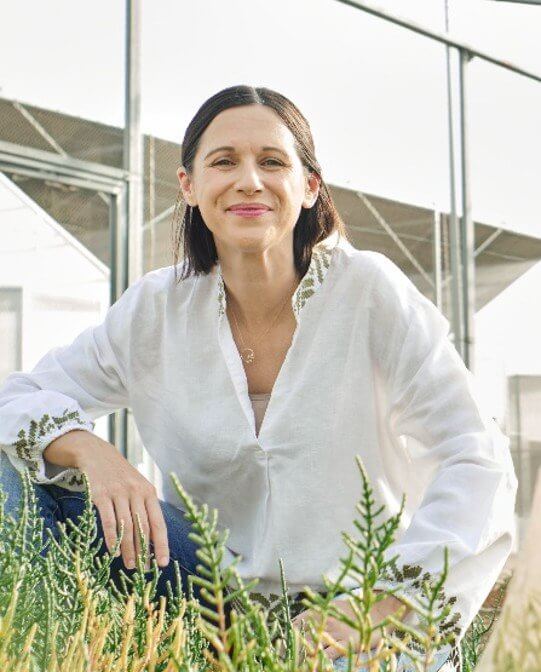
2026 Jan Anderson Award Winner
Vanessa J Melino, PhD
University of Newcastle
UoN Profile | ORCID | LinkedIn
Dr Vanessa Melino is a plant physiologist and molecular biologist at the University of Newcastle, leading research to develop crops for saline and water-limited environments. Her work harnesses the natural resilience of halophytes to address global food security challenges associated with freshwater scarcity. She is internationally recognised for advancing the domestication of the halophyte Salicornia as a novel vegetable and oilseed crop, and for contributing to the discovery of mechanisms of extreme salt tolerance, including tissue tolerance to sodium.
She leads an Australian Research Council Discovery Project investigating a critical gap in our understanding of how salt tolerant plants protect mRNA stability and the translation of mRNA into proteins to sustain growth under salt. In salt-sensitive model and crop species, elevated sodium chloride disrupts the translational machinery; inhibiting translation initiation, reducing transcript–polysome engagement, triggering ribosome disassembly and lowering overall translational efficiency. Dr Melino hypothesises that translational stability is as important as better-defined adaptations such as osmotic tolerance and ion sequestration, exclusion or extrusion.
Dr Melino and colleagues at KAUST (Saudi Arabia) previously identified a salt induced RNA-Binding Protein (RBP) in Salicornia, characterized by glycine–arginine rich regions amongst other key domains. RBPs of this class are evolutionary conserved across eukaryotes and play a role in stress-responsive translational control through RNA and/or ribosome interactions. Despite their well-established role in human diseases, they remain significantly underexplored in plants.
Dr Melino and the wider project team- including Dr Long (University of Newcastle) and collaborating investigators Dr Julkowska (Boyce Thompson Institute, USA) and Dr Zoschke (Max Planck Institute, Germany)- are now investigating the evolutionary conservation and halophyte-enriched sequence features of these RBPs across the Viridiplantae, how these features influence RNA and ribosome interactions, and whether they form biomolecular condensates as a mechanism of translational regulation. The team will further validate the domain features conferring salt-tolerance using high-throughput yeast assays, alongside in-planta functional characterisation in Arabidopsis and tomato. Together, this work aims to establish translational control as a new target for breeding climate-resilient crops, expanding the germplasm available to make use of saline wastewater whilst preserving freshwater resources.
2026 RN Robertson Travelling Fellowship Awardee

Marie-Emma Denarié
PhD candidate
Western Sydney University
My trip to UniSQ in Toowoomba, QLD
Hi, my name is Marie-Emma Denarié and I am a third year PhD student at Western Sydney University (WSU). I am studying the uptake and distribution of silicon in wheat, and its role in defence against antagonists with different lifestyles and modes of attack. In my first year, I got in contact with Dr Rebecca Zwart from the University of Southern Queensland (UniSQ in Toowoomba), as I was inquiring about nematode cultures. She kindly invited me over to Queensland to teach me about the methods and to make my own Pratylenchus thornei culture. This is basically where our collaboration started, as we got the idea to join forces. So, the following year in 2025, we performed a glasshouse experiment and based on those preliminary results we decided to do another larger experiment. In February of this year, we prepared the bottom watering benches linked to the silicon solutions and set up the pots and nematode inoculations. After exactly 16 weeks, it was time to harvest!
As I was planning to bring back all the aboveground plant tissues for elemental analysis here in Sydney, I needed to drive a car up to Toowoomba. As you can imagine, it is quite a long journey on your own: almost 900 km! I did this road trip over the course of two days, with an overnight stay in Armidale, and it was quite enjoyable. Driving long distances allows you to catch up on all your favourite podcasts and is an excellent excuse to go on many many many coffee breaks. A delicious lunchbreak helped me push through the final kilometres before I finally arrived in Toowoomba.
Once I arrived at UniSQ, the work could commence! Before being able to quantify the nematode populations in each pot, we had to ensure that the soils were exactly the right moisture content for the nematode extraction procedure. In the meantime, we harvested the shoots and measured different plant parameters such as height, dry weight, number of heads and kernel maturity.
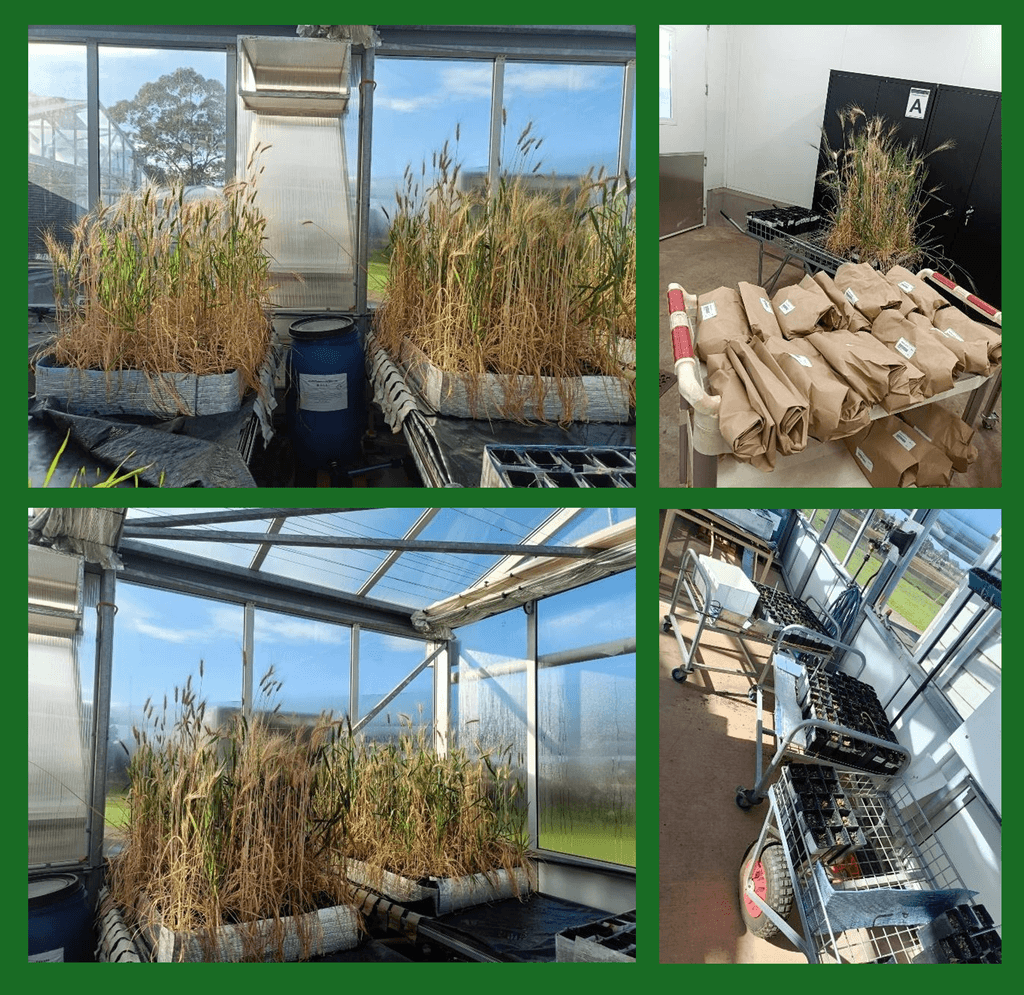
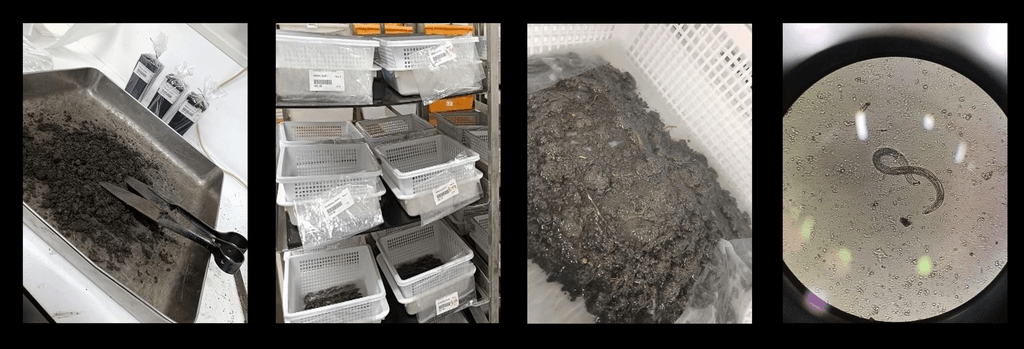
Every day, I would go to the glasshouse to see whether the soils were dry enough for the next experimental steps and brought the pots that were ready to the soil processing lab. Here, I would mix up the soil from each individual pot and finely cut up all the roots. The aim was to completely homogenize the contents of each pot. This was not a difficult task, but it was quite time-consuming due to the large number of plants we had in our experiment! It is very therapeutic to be playing with soil with your hands as it gives you lots of time to ponder and again, to listen to music or podcasts (or voices in your head?? Final year PhD students may be able to relate to this or maybe it is just me….)
Speaking of final year students, while I was at UniSQ I met up with another PhD candidate named Akhila who I had previously met online but never in person! We have both worked with the same fungal pathogen species, so we shared stories and obstacles. I realised how valuable these interactions are, and how similar people’s experiences can be even when they are working in completely different places.
Back to the laboratory works: soils that were homogenized were ready for nematode extraction, which was done by incubating a subset of soil in a layer of water for 48 hours. This setup allowed nematodes to exit the tiny root segments and soil particles while sieving away the soil. After this process, we ended up having many different water suspensions (for each sample one), which meant that we finally had isolated our nematodes! The final yet crucial step was to count them, as this was needed to calculate the P. thornei populations per kg of soil. Admittedly, I got a little bit seasick from using the light microscope at some point, but there is nothing that a scientist’s desire for results cannot overcome!
Before I knew it, three weeks had flown by. It was a lot of hard work, but it felt very rewarding to be able to work at such a high-quality facility with experienced researchers like Dr. Rebecca Zwart. I feel very grateful to have been in this position. Dr. Zwart kindly baked me a farewell cake in this last week, as it was also my 28th birthday! As a Dutchie, I was extremely grateful because she made it with Biscoff, which is based on the speculaas biscuits that originate from my home country of the Netherlands. I was also very happy to see my friend Begita again, who recently completed her PhD at UniSQ and has helped me a lot during my visits. We enjoyed a delicious brunch at one of her favourite cafés in Toowoomba and were able to catch up on all our research and travel adventures.
I would like to thank ASPS for generously sponsoring this trip. Without the Robertson travel fellowship, we would not have been able to conduct this experiment, so we are incredibly grateful for this amazing opportunity! I learned so much and the obtained data will contribute massively to my PhD thesis. Thank you so much!
Get Involved with ASPS
Life & Corresponding Membership
Life Membership
Life Membership of the Australian Society of Plant Scientists recognises an outstanding and sustained contribution to the Society by a longstanding ASPS member who, through their professional activities, has substantially enhanced the international profile of Australian plant science research.
Nominations for ASPS Life Membership can be made at any time to the Honorary Secretary (Mary Byrne [email protected]). A one-page summary addressing the above criteria must accompany the nomination.
Corresponding Membership
Corresponding Membership of the Australian Society of Plant Scientists recognises overseas colleagues, with a high profile of research achievement in any field of plant science, who have a strong track record of successfully contributing to and promoting plant science research within Australia.
Nominations for ASPS Corresponding Membership can be made at any time to the Honorary Secretary (Mary Byrne [email protected]). A one-page summary addressing the above criteria together with a curriculum vitae of the applicant must accompany the nomination.
Discipline Representatives
Applications for the following Representatives are open and close on 11th September. Application form can be found on the ASPS website Committees & Representatives — Australian Society of Plant Scientists
- Cell Biology
- Plants and the Environment
- Plant-Microbe Interactions
- Plant Science Education and Outreach
- Diversity and Inclusion
- Student Representatives (numerous positions)
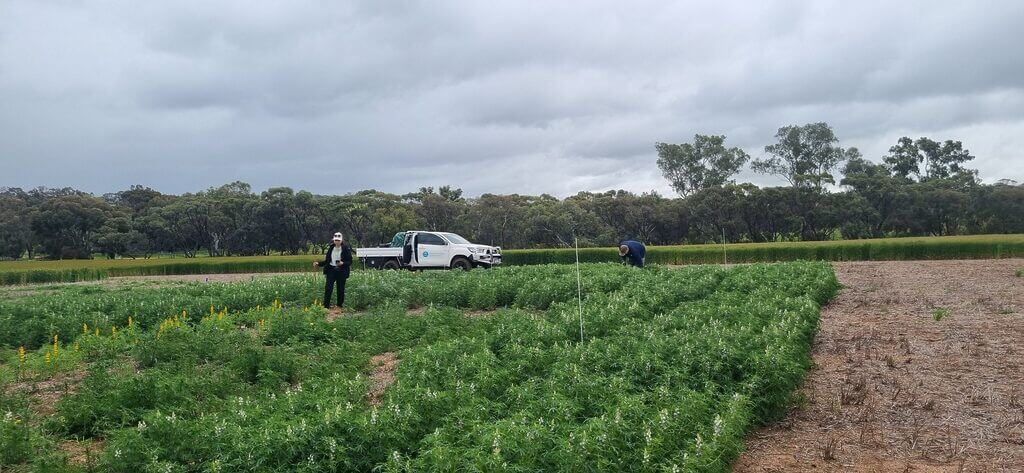
Picture This!
Got a great shot from your research?
We’re launching a new feature in Phytogen and want your photos! From muddy field days and greenhouse experiments to microscopic views and field sites; if it tells a science story, we want to see it.
Send your image with a short 1–2-line caption and we’ll feature selected submissions in upcoming issues.
This month we have one from our editor Raz from her first field trial in Western Australia
Discipline Representative Contribution
Plant Development

Eduardo Flores-Sandoval
Monash University
Email | ORCID | LinkedIn| Bluesky @efloresan.bsky.social
It is such a pleasure to be a new Plant Development representative for the Australian Society of Plant Scientists (ASPS) in 2026. I am a postdoctoral fellow at Monash University and the ARC Centre of Excellence (CoE) for Plant Success in Nature and Agriculture. My research is pretty fundamental as my plant model system of choice, the liverwort Marchantia polymorpha (Marchantia), is not used by humans to make food, clothing, fuel or medicines, at least at an industrial level. But rather it’s become quite useful in helping understand how plants function.
From an evolutionary perspective, Marchantia is important as it is part of a plant lineage that shares a very distant common ancestor with flowering plants, so it provides a reference point to infer the origin of key plant traits during plant evolution. Bryophytes are special too, because they follow a distinct life cycle where the haploid gamete-producing generation (i.e., gametophyte) is free-living and dominant over the diploid spore-producing generation (i.e., sporophyte). This is the opposite to what occurs in flowering plants, where gametophytes are internal, non-free living and composed of just a handful of cells that terminate soon after gamete production. Conversely, bryophyte sporophytes are short-lived and fully dependent on the gametophyte, with the latter exclusively producing photosynthetic light-absorbing tissue (thalli or leaflets) and nutrient-uptake structures such as rhizoids. In bryophytes, sporophytes are exclusively in charge of spore dispersal after a brief period of growth via cell elongation and desiccation. Working with a species with a free-living gametophyte is very special because this is an ancestral trait, reflecting the way the first plants grew in the mid-Ordovician (~470 million years ago), with aquatic fertilization and a simple genome also being ancestral traits retained by some bryophytes like Marchantia.
From a genetic point of view, Marchantia is useful because of its minimal but highly conserved regulatory genome. Moreover, because Marchantia is haploid-dominant, any genetic changes triggered by forward or reverse genetic approaches can be seen immediately after a somatic transformation event. In a sterile tissue culture environment, clones of a wild-type organism can be transformed with Agrobacterium and a single cell can regenerate into a thallus in a single asexual generation! Of course, as a geneticist this provides a beautiful vehicle to test any ideas related to plant gene function.
When I commenced work with Marchantia many years ago, my objective was to decipher the antiquity and function of gene families important for developmental patterning in flowering plants. The main reasoning here is that if a gene family is present in Marchantia and Arabidopsis (and other land plant representatives), and mutants in both lineages show shared defects (despite the drastic differences in morphology), it is possible to infer that a distant common ancestor must have used those genes for this shared function. This approach allows the gradual reconstruction of the nature of the first plants and ancestral genotype to phenotype interactions. Even more fascinating is to find gene families that exist exclusively in the land plant lineage and not in algae, suggesting they determine land plant-specific traits.
Understanding the genetic basis of traits defining macro-evolutionary transitions has always been a passion of mine. When I joined John Bowman’s lab here at Monash, no developmental genetic studies had been done in Marchantia yet. It was a bit of a mad pursuit (quoting Francis Crick) that required building systems and tools from the ground up. For example, I still remember cloning genes in the dark without a reference genome by designing degenerate primers based on phylogenetic comparisons. Things have changed drastically since those early days, and now the Marchantia community is robust, widespread and full of energetic and inquisitive people. Our research output (Figure 1), while still modest, is following a robust upward trend thanks to the establishment of tractable transformation tools (e.g. Ishizaki et al 2008 Plant & Cell Physiology), the first draft of the genome assembly (Bowman et al Cell 2017) which now stands at chromosome level (see MarpolBase) and a CRISPR/Cas9 toolkit for efficient gene targeting (Sugano et al PLOS ONE 2018). More importantly, it seems like we weathered COVID-related disruptions unlike other archegoniate (non-seed plant) model systems (Figure 1).
I’d like to finalize my post by mentioning that the Marchantia community is re-convening in Japan, the hub of Marchantia research, at the end of November in Kobe, in a Workshop organised by Kimitsune Ishizaki. I personally can’t wait to see some old friends and colleagues and present my advances in the field of auxin biology, in particular how auxin repressors are needed to maintain stem cells (Figure 2). A key message I’d like to share with the ASPS community is this: If you are interested in working with Marchantia, I’d be more than happy to help you get set up with the tools and lines at my disposal. You could even come and learn how to transform plants (only need about a week’s time). If you want a break from highly redundant gene families, or maybe you just need to test a cool hypothesis generated in a system lacking functional tools, I’d be more than happy to help.
With best wishes
Eduardo Flores-Sandoval
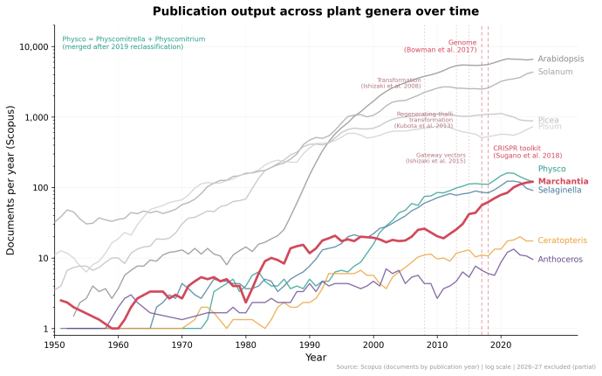
Figure 1: Article counts (y-axis, log transformed) per year (x-axis) using common plant model system genera in a Scopus search ranging from years 1950 to 2025. Marchantia production is shown in bold and key papers facilitating research are marked as vertical dotted lines.
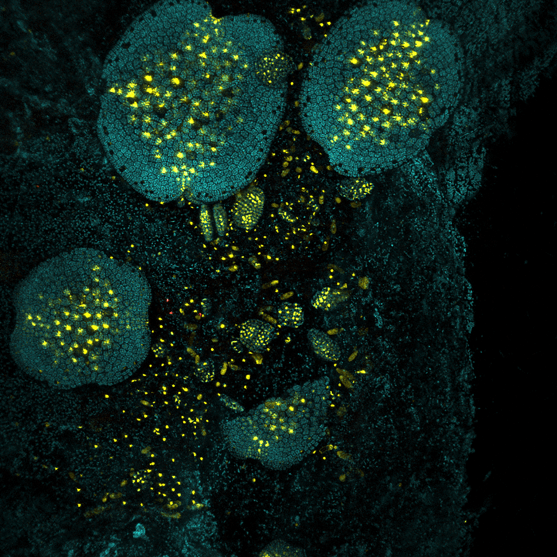
Figure 2. Developing clonal gemmae of Marchantia polymorpha imaged with a Confocal microscope and expressing fluorescent nuclear-localized VENUS marker (yellow) driven by a microRNA precursor promoter (MpMIR160), chlorophyll is shown in teal. Gemmae are deposited in cup-like organs and bear two opposing meristems that remain dormant until detachment occurs and environmental cues trigger germination.
Student Representative Contribution
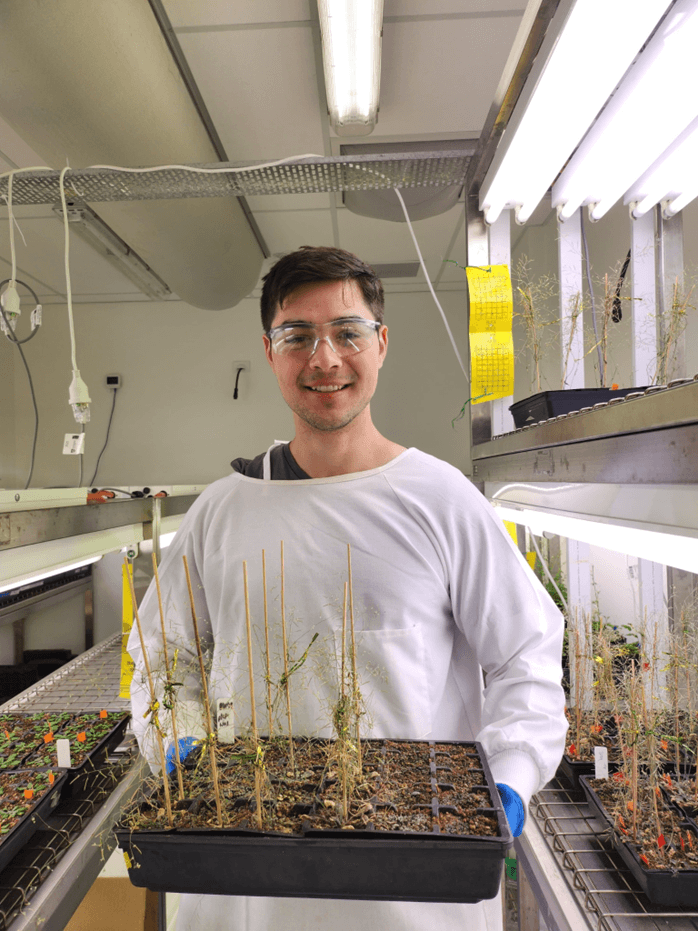
Daniel Wallis
PhD candidate, the University of Sydney
ASPS Student Representative for NSW (2025-2026)
I am Daniel Wallis, and I am a second year PhD student at the University of Sydney. I’m passionate about plants and fascinated by their phenotypic diversity. I’m also excited to contribute to the Australian plant science community through my role as a student representative for the ASPS! In this role I have had the opportunity to meet with both student and discipline representatives and to contribute to raising the profile of ASPS online. I am looking forward to ComBio 2026, where I will be assisting together with the other student representatives. I hope to see everyone there!
I am undertaking my PhD in the lab of Associate Professor Mary E. Byrne, and my project is concerned with understanding the genetic underpinnings of leaf shape1. Understanding how genes shape leaves would deepen our understanding of how such a variety of forms may have evolved and be informative for any future attempts to breed or engineer specific leaf shapes. I am working on the model species Arabidopsis thaliana,which has oval shaped leaves with subtle marginal serrations. These serrations are produced by a conserved molecular system which creates leaflets in other species.
So far, I have focused upon the characterization of a gene expected to be a regulator of serration development. Using the CRISPR/Cas9 gene editing system I have produced the first loss-of-function mutations in this gene, and analyzed the phenotypes. In the mutant background there were some leaves without any serration at all, some which were barely serrated, and some which resembled the subtle serrations of wild-type. This introduced a challenge, since the subtle phenotype demanded statistical support, yet identification and measurement of very subtle serrations could be spurious. Therefore, I developed an algorithm which employed a strict set of geometric criteria and analyzed digital scans of wild-type and mutant leaves. This enabled unbiased quantification of the phenotype, confirming that distributions of both serration numbers and intensities in mutant leaves decreased on average, whilst retaining roughly the same variance. Therefore, this gene is an example of how the relationship between genotype and phenotype can be subtle, as well as how the effects of genes can be to shift the mean of a phenotypic distribution without affecting the variance. I look forward to further characterizing the molecular effect of this gene upon key components of the conserved serration patterning system through reporter lines and various genetic backgrounds.
References
Byrne, M. E., Imlay, E. & Ridza, N. N. B. Shaping leaves through TALE homeodomain transcription factors. J. Exp. Bot.75, 3220–3232 (2024).
Reports from Postgraduate Travel Award Recipients
We are pleased to feature more reports from postgraduate students who received ASPS travel awards to attend the 2025 Adelaide conference. We will be featuring more reports in upcoming issues through the year.

Zhe Zhang
University of Western Australia
I was very grateful to receive the ASPS Student Travel Award to attend the ASPS conference in Adelaide. During the conference, I presented my research on Eucalypt species and root economics space, focusing on how root economic traits coordinate with mycorrhizal strategies under nutrient limitation. The conference provided an excellent platform to discuss my findings with researchers working on plant functional traits and plant–soil interactions, and I received constructive feedback that will help strengthen both my data analysis and the framing of my PhD project. In addition, the meeting offered valuable social and networking opportunities, allowing me to connect with peers and establish new friendships within the plant science community. I sincerely appreciate ASPS’s support, which made this enriching academic experience possible.
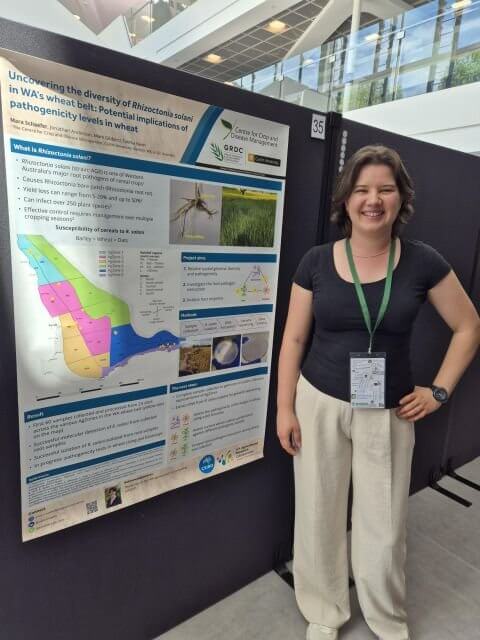
Mara Schaefer
Curtin University
Thanks to the ASPS Student Travel Award, I was able to attend the 2025 ASPS Conference in Adelaide. It was great to meet other researchers and engage with the different aspects of plant research happening across Australia. I had the opportunity to present my research during the poster session and received valuable feedback that I can incorporate into my future work. During the conference, I had plenty of insightful discussions with peers and learnt a lot from many interesting presentations, which helped me consider other aspects and avenues my research could take. Overall, the conference was a great learning experience and very enjoyable, and I look forward to any future ASPS events.
Anthony Brown
University of Newcastle
Attending the ASPS conference was my first experience being involved in a scientific exchange event, and I found it very rewarding. I particularly enjoyed the talks showcasing new technologies in plant science, especially the presentation on nanoparticle-mediated gene silencing, which highlighted exciting possibilities for approaches to gene regulation outside of genetic modification techniques and aligned with my own research. The strong industry involvement was also impressive, providing valuable insight into translating research to practice. My poster presentation allowed me to communicate and connect with scientists in my field of research. The networking and social events created a welcoming environment, and overall, the conference was a positive and informative experience.
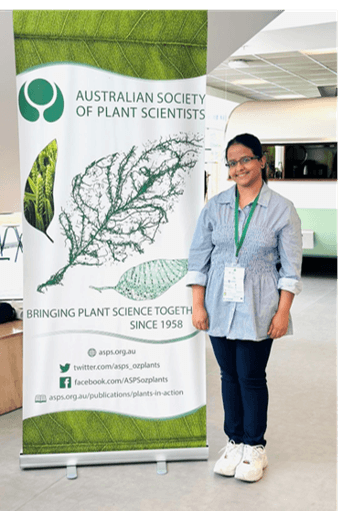
Chamilka Ratnayake
Queensland University of Technology
Attending ASPS 2025 as an ASPS Travel Awardee was grounding and energising, that time barely seemed to pass. Delivering my 15-minute talk and receiving thoughtful questions sparked conversations that extended well beyond the session. As the Queensland representative for the past two years, I felt proud to have supported a society that nurtures plant biology through scientific talks, posters, workshops, and socials, bringing together researchers at all career stages. The diverse program and networking opportunities made it easy to connect across the field. Flinders University’s convenient location, well-organised facilities and excellent catering created an environment where scientific exchange and genuine connection flourished effortlessly.
ZiXiong Zhuang
Australian National University
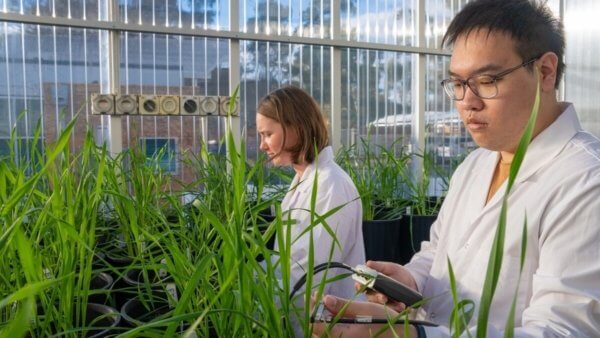
I enjoyed the 2025 ASPS meeting as one of my earliest conference experiences as a PhD student. During my poster presentation, I had the opportunity to connect with researchers in related fields from across Australia and internationally. The highlight of my experience was the various social events took place throughout the conference. These events not only allowed me to make meaningful connections with both senior researchers and other PhD students with similar interest but also allowed me to enjoy what Adelaide has to offer. This enriches my PhD experience and broadens my professional connection.
Juel Datta
University of Queensland
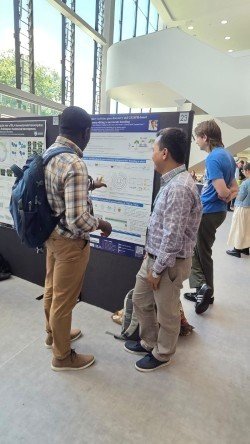
The ASPS 2025 conference in Adelaide was a comprehensive experience, supported by an ASPS travel award. As an ASPS student representative and a member of the conference organising committee, I helped deliver a significant and memorable event for the scientific community. I also co-chaired the “Frontiers in Genetics and Molecular Biology” session, first time in this role was an invaluable learning experience. In addition, my abstract was selected for both a short talk and a poster presentation on my PhD research. I presented an efficient in vitro regeneration system for sweet orange that enables the generation of CRISPR edited plants within just 4 months, as well as collaborative work identifying major QTL associated with early flowering.
Member News
New Publication
Congratulations to PhD student member Xiaolong Feng on the publication of his second paper in Plant, Cell & Environment!
This study investigated how phosphorus (P) is distributed among leaf tissues in five chickpea accessions with contrasting P-allocation strategies. The research revealed that tissue-specific P allocation was more strongly linked to leaf lifespan than to photosynthetic P-use efficiency or P remobilisation efficiency. Chickpea accessions allocating more P to mesophyll cells showed longer leaf lifespan, associated with lower jasmonate concentrations. The study highlights tissue-specific P allocation as a potential breeding target for improving phosphorus-use efficiency and crop performance.
📖 Read the paper: Plant, Cell & Environment (2026)
Opportunities
Conference, Webinar, Symposia,
Soil Science Australia Conference 2026
The Soil Science Australia Conference 2026 will be held in Perth, bringing together researchers, practitioners, and students working across soil health, agriculture, and environmental systems.
This is a great opportunity to share research, build networks, and engage with the latest advances in soil science.
📅 1–5 November 2026
📍 Boorloo (Perth)
🎟️ Early bird registration is now open — don’t miss the discounted rate (check the website for closing date details).
👉 More information and registration: https://www.soilscienceaustralia.org.au
76th Australasian Grain Science Conference
📅 26-28 August 2026
📍 The Brighton Hotel – MGallery, Sydney, Australia
The 76th Australasian Grain Science Conference, hosted by the Australasian Grain Science Association (AGSA), will be held under the theme “Grain Diversity and Resilience Towards 2050.” The conference will bring together researchers, industry professionals, breeders, food scientists, and agribusiness stakeholders to discuss innovations in grain production, digital agriculture, sustainable breeding, grain quality, nutrition, processing technologies, and future challenges facing the grains industry.
Website: Conference – AGSA
Australian Cotton Conference 2026
4–6 August 2026 | Gold Coast, Queensland
The Australian Cotton Conference 2026 will bring together growers, researchers, industry professionals and innovators to explore the future of Australian cotton under the theme “Future Fit Cotton”.
The conference will showcase advances in cotton research, sustainable production, innovation and industry collaboration.
📍 Gold Coast Convention and Exhibition Centre
🔗 More information: Australian Cotton Conference 2026
MicroSeq 2026: Abstract Submissions Open
Calling Australian and New Zealand early career researchers and PhD students!
Abstract submissions and registration are now open for MicroSeq 2026. Researchers are invited to submit abstracts for medium-length presentations or lightning talks and share their latest work in microbiology and related fields.
📅 Abstract submissions open: 6 July 2026
🔗 More information: MicroSeq 2026
UWA Farm Ridgefield 2026 Open Day
11 September 2026 | West Pingelly, WA
Explore the future of sustainable agriculture at the UWA Farm Ridgefield Open Day. The event will showcase innovative UWA research through field visits and project demonstrations focused on resilient farming systems, environmental stewardship and agricultural innovation.
The open day is a great opportunity for researchers, students, industry and the community to connect and discover current agricultural research in action.
📍 UWA Farm Ridgefield, West Pingelly🔗 Registration: UWA Farm Ridgefield 2026 Open Day
PhD, Postdoctoral positions & Scholarship
The ARC Training Centre for Smart and Sustainable Horticulture is seeking applications for:
🔬 Postdoctoral Research Fellow – Plant Photosynthesis and Phenotyping (REF1453Y)
A postdoctoral opportunity focused on plant photosynthesis and phenotyping research.
🎓 PhD Project Scholarships
Two domestic PhD scholarships are available:
- Optimising Crop Photosynthesis in Protected Systems
- Biomass Allocation and Yield Modelling in Protected Crops
These opportunities are ideal for researchers interested in advancing sustainable horticulture through plant science, phenotyping and crop modelling.
📌 Applications and further details: ARC Training Centre for Smart and Sustainable Horticulture
ASPS Student Travel Grant 2026
Support for students attending ASPS2026 (ComBio) conference. Funds are set aside to sponsor student travel to our annual conference to contribute to their professional development in plant science. Applicants and their supervisor must be current financial members of ASPS. Funding is contingent on giving a presentation (poster or oral).
Applications are to be emailed to the Hon. Treasurer of ASPS: Joseph Pegler ([email protected])
Application forms can be found HERE.
The deadline for applications received for ASPS2026 is Friday 31 July 2026.
Editors’ Note
Thank you for reading!
As we approach ComBio2026, we encourage you to submit an abstract and get involved if this conference is relevant to you. This surely will be another memorable conference for the Australian plant science community. We also invite you to send your contributions to our new segment “picture this” where you can share snippets of your work or behind the scenes look at your life as a plant scientist.
Phytogen is a community-driven newsletter, and we welcome contributions from ASPS member students, early- and mid-career researchers, and established scientists at any time. If you have research highlights, opinions, event reports, or field stories to share, we encourage you to get in touch for future issues
Newsletter written & edited by Razlin Azman & Sneha Reddy
We thank the following members for their contributions to this issue: Vanessa Melino, Marie-Emma Denarié, Eduardo Flores-Sandoval, Daniel Wallis, Zhe Zhang, Mara Schaefer, Chamilka Ratnayake, ZiXiong Zhuang and Juel Datta
We also thank the ASPS executive for their continued support of Phytogen.