
Welcome to the September 2025 edition of Phytogen!
This month, we present conference updates as we approach the registration and abstract submission deadline on 3 October 2025. With the 2025 conference approaching, we encourage members to complete registration and accommodation arrangements. In this issue we also have research contributions from our ASPS representatives, including Dr. Nipuni Peththa Thanthrige’s advances in plant molecular farming for antimalarial therapeutics and Queensland student representatives Chamilka Ratnayake’s innovative work on anthocyanin reporter systems, and Juel Datta’s thought piece on his involvement with ASPS. Professor Sigfredo Fuentes provides insights into the future of space agriculture through the ARC Centre of Excellence in Plants for Space, highlighting upcoming lunar experiments and career opportunities in this emerging field. We also have an update from the Society Executive by Honorary Treasurer Mark Waters and congratulate all the recipients of the Student Travel Award for the 2025 conference.
You can stay connected with ASPS on social media on the following platforms:
LinkedIn: Australian Society of Plant Scientists; BlueSky: @asps-oz.bsky.social
Join the conversation using #AusPlantSci and #ASPS2025 (for the conference). Tag us in your posts to help us promote your science! Phytogen contributions will also be featured on our social media pages.
We welcome contributions from students, E/MCRs and established researchers at any time for publication in Phytogen. It is free and a great way to give your research profile a boost and share your findings! You can send your contribution to our editors Raz ([email protected]) or Lucas ([email protected]).
Security Alert: Conference-Related Phishing Activities
Fraudulent communications targeting conference participants have been identified. These unauthorized emails offer “registrants/attendees lists” from non-institutional addresses (gmail, etc.). ASPS exclusively communicates through .edu/.org.au institutional domains. Exercise vigilance and verify sender authenticity before responding to conference-related communications.
Here is what some members are receiving in their emails

ASPS Conference 2025
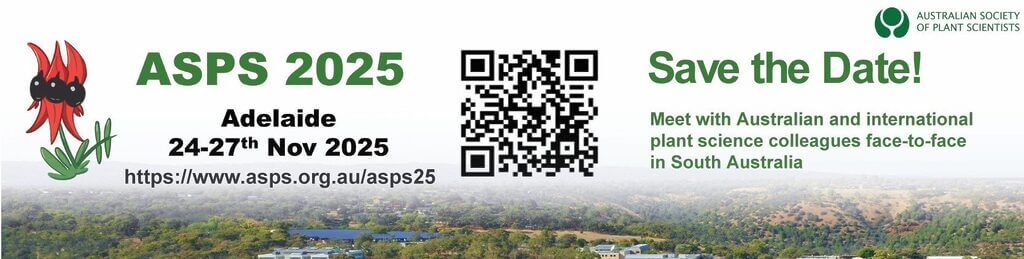
Registrations & abstract submission are closing soon!
Conference Dates: 24-27 November 2025
Venue: Flinders University, Bedford Park Campus, Adelaide
Registration and abstract submissions remain open with the deadline approaching on 3 October 2025. Early bird registration rates conclude simultaneously with abstract submissions.
You can find all relevant info about the conference, including registration, abstract submission, accommodation and more on the site: ASPS annual conference. If you have any questions about the conference please contact Dr. Crystal Sweetman at [email protected].
Conference programme
The program encompasses eleven specialized sessions addressing contemporary plant science research:
- The Future of Plant Science (student-led)
- Teaching, Outreach & Indigenous Learnings
- Nurturing Symbiosis – Insights from Early and Mid-career Researchers
- Stress Sensing, Signalling and Membrane Transport
- Plant Evolution & Ecology
- New Technologies & AI in Plant Science
- Plant Nutrition & Development
- Frontiers in Genetics & Molecular Biology
- Synbio / Green Biomanufacturing
- Plant Organelle & Energy Biology
- Industry-led Session
The program incorporates keynote presentations, poster presentations, and structured networking opportunities designed to facilitate collaborative interactions across Australia’s plant science community.
For comprehensive conference information, including registration and abstract submission protocols, visit: https://www.asps.org.au/asps-annual-conference
Conference Social Programme
Conference Dinner
The National Wine Centre of Australia, adjacent to Adelaide Botanic Gardens, will host the conference dinner. This venue provides an optimal setting for professional networking while featuring premium culinary and wine selections. Tickets available through the conference registration portal.
Social activities – Tuesday, 25 November
Three professionally guided excursions are available:
- Mt Lofty Botanic Gardens & Summit Tour (~$10 per person) Guided botanical tour with summit access for panoramic city views
- Waite Campus Research Facility Tour (~$10 per person) Access to The Plant Accelerator, Waite Arboretum, and Campus Winery
- McLaren Vale Viticultural Experience (~$70 per person) Visits to d’Arenberg and Wirra Wirra wineries with tastings Salvador Dali exhibition available at additional cost
Transportation included. Participant numbers may be limited based on facility capacity.
Accommodation deals
Please note that the conference will be at the Bedford Park campus of Flinders University. Flinders University has several campuses in Adelaide so don’t get caught out at the wrong campus!
Accommodation offers can be found here: ASPS 2025 accommodation
ASPS2025 Organising Committee
As the conference draws closer, we would like to acknowledge all the work being done by the conference planning committee, led by Dr Crystal Sweetman.

Dr Crystal Sweetman, Flinders University
Academic Members:
- Sunita Ramesh (Flinders University)
- Kathleen Soole (Flinders University)
- Peter Anderson (Flinders University)
- Megan Shelden (Flinders University)
- Beth Loveys (Adelaide University)
- Nipuni Peththa Thanthrige (UQ)
- Ronan Broad (La Trobe)
- Kim Johnson (La Trobe)
- Mark Waters (UWA)
- Eloise Foo (UTas)
- Ghazanfar Khan (Deakin University)
- Brett Williams (QUT)
- Razlin Azman, Co-editor of Phytogen (CSIRO)
ASPS Student Representatives:
- Lucas Auroux, Co-editor of Phytogen, Victoria ([email protected])
- Juel Datta, Queensland ([email protected])
- Alistair Hockey, Western Australia ([email protected])
- Katie Schleyer, South Australia ([email protected])
- Alexandra Cunningham, South Australia ([email protected])
Student member:
Grace Weston-Olliver ([email protected])
Discipline Representative Contribution
ASPS Genetics and Molecular Biology Representative Update

Institute for Molecular Bioscience, The University of Queensland
X: @NipuniT90
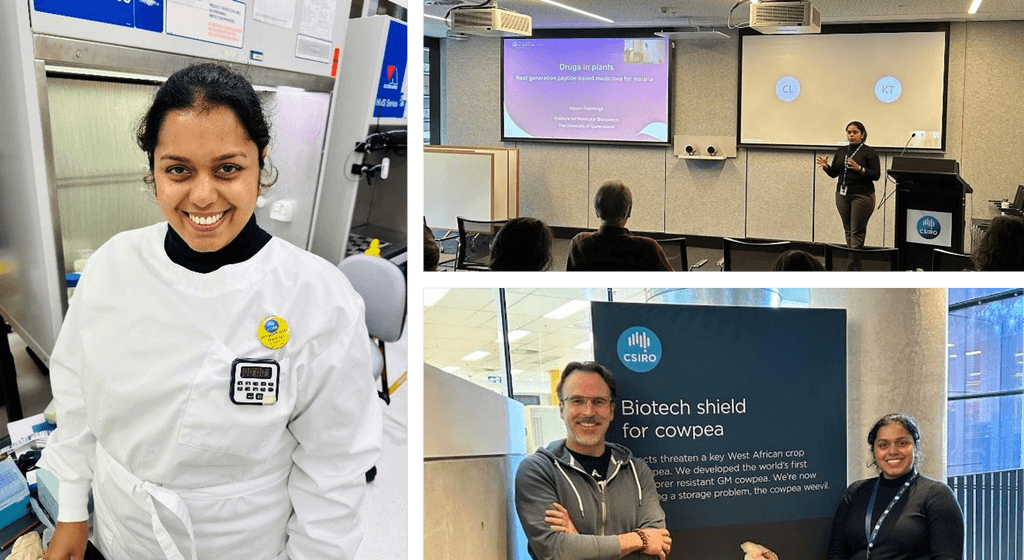
I am a postdoctoral research fellow at the Institute for Molecular Bioscience, The University of Queensland, and affiliated with the ARC Centre of Excellence for Innovations in Peptide and Protein Science (CIPPS). My research interests include plant molecular farming, abiotic and biotic stress tolerance, programmed cell death, and plant-microbe symbiosis. Currently, I work in Professor David Craik’s lab, where I use Nicotiana benthamiana and cowpea as platforms for producing antimalarial peptides in plants, aiming to develop plant-based treatments for malaria. The Craik group achieved a significant breakthrough fifteen years ago with the discovery of cyclotides – ultra-stable peptides with a unique structure resistant to digestive breakdown. This discovery has opened the door to the development of a new generation of targeted, potent drugs and agrichemicals. My work applies this innovation to the production of antimalarial peptides in plants, pushing the boundaries of plant-based therapeutic production.
I was recently awarded a CIPPS Capacity Building Grant to visit the Legume Engineering Research Team at CSIRO, Canberra, led by Dr. José Barrero Sanchez. This internationally recognized group developed the world’s first insect-resistant genetically modified cowpea, now being grown by farmers in Africa. During my visit, I gained hands-on training in stable cowpea transformation, covering the entire pipeline – from vector construction and tissue culture through to generating genetically modified plants, acclimatization to soil, and glasshouse management. Beyond the technical experience, I benefited greatly from expert troubleshooting guidance, mentorship, and collaborative discussions, which will significantly enhance our ongoing work at IMB to produce cowpea plants expressing antimalarial peptides. I am sincerely grateful to Dr. José for providing this invaluable opportunity and for his generous support throughout the visit. I would also like to thank the entire team – Jenny Gibson, Luch Hac, Javier Atayde, Andy Moore, Helen Lee, and Sue Allen – for their exceptional guidance, training, and advice. Special thanks to Dr. TJ Higgins for his insightful career advice and encouragement, which has been truly inspiring. This experience has not only strengthened my technical capabilities but also laid the foundation for future collaborations and mentorship opportunities that I am excited to build upon.
Finally, I am thrilled to announce that I will be co-chairing the “Frontiers in Genetics and Molecular Biology” session with Dr Brett Williams at the ASPS Conference this November in Adelaide. I look forward to catching up with many of you there and sharing exciting science in this rapidly evolving field!
Invited Contribution
The Future of Plant Science: Exploring the Cosmos with the ARC Centre of Excellence in Plants for Space

Sigfredo Fuentes
Professor in Digital Agriculture, Food and Wine Sciences, School of Agriculture, Food and Ecosystem Sciences, Faculty of Science, The University of Melbourne
Chief Investigator, ARC Centre of Excellence in Plants for Space
As we stand on the verge of a new era in space exploration, the role of plant science has never been more crucial. The ARC Centre of Excellence in Plants for Space (Plants4Space) is at the forefront of this exciting frontier, pushing the boundaries of our understanding of plant biology and their behaviour in space environments. This article delves into the centre’s vital work, my role within it, and the inspiring insights gained from a recent visit to NASA’s Kennedy Space Center (Space Crop Production), all to inspire the next generation of plant physiologists in Australia.
The ARC Centre of Excellence In Plants for Space: Cultivating Innovation
Funded by the Australian Research Council, the ARC Centre of Excellence in Plants for Space, established in 2023 and running until 2030, is a collaborative hub that brings together leading researchers, institutions, and industry partners from across Australia and around the world. Our mission is to develop innovative solutions for sustainable plant production in space and extreme environments on Earth. By focusing on cutting-edge research in plant physiology, genetics, and biotechnology, we aim to overcome the unique challenges posed by space environments and contribute to the future of long-term space exploration as part of the Artemis program, to land on the Moon in 2030 and Mars in 2040.
The centre’s research spans several key areas in plant biology, including:
- Developing space-resilient plants for food, pharmaceuticals, and biomaterials
- Optimising controlled environment agriculture for space applications
- Enhancing plant stress tolerance and adaptation mechanisms
- Exploring novel bioregenerative life support systems
- Investigating the effects of microgravity and radiation on plant growth and development
- Integrating Indigenous Australian plant knowledge and sustainable practices
Importantly, by integrating Indigenous Australian plant knowledge and sustainable practices, Plants4Space recognises and respects the profound understanding of Australian flora developed by Aboriginal and Torres Strait Islander peoples over 60,000 years. We are committed to ethically incorporating this invaluable knowledge into our research.
Through these research streams, Plants4Space is not only advancing our understanding of plant biology but also paving the way for sustainable food production in space and improving crop resilience on Earth in the face of climate change.
My Role and Research at Plants4Space
As a Professor of Digital Agriculture, Food and Wine Sciences at the University of Melbourne and a Chief Investigator at Plants4Space, my work focuses on developing and implementing cutting-edge technologies to monitor and optimise plant growth in extreme environments. My research combines expertise in plant physiology, remote sensing, and artificial intelligence (AI) to create innovative solutions for space agriculture.
One of my primary areas of focus is the development of non-invasive sensing technologies to assess plant health and stress responses in real-time. This includes the use of hyperspectral imaging, thermal cameras, and other advanced sensors, such as electronic noses, to monitor physiological parameters, including water status, nutrient uptake, and photosynthetic efficiency. By integrating these technologies with machine learning algorithms, we can create intelligent systems that autonomously manage plant growth in space environments, optimising resource use and maximising crop yields.
Another key aspect of my research involves studying the effects of simulated space conditions on plant physiology and developing strategies to mitigate stress responses. This includes investigating the impacts of altered gravity, cosmic radiation exposure, and limited resources on plant growth and development. By understanding these effects, we can develop more resilient plant varieties and cultivation techniques tailored for space environments.
Highlights from NASA Kennedy Space Centre: Collaboration and Innovation
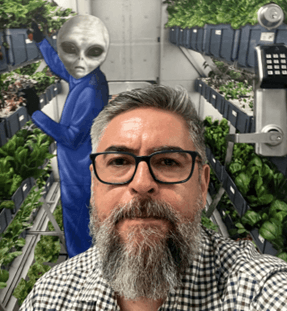
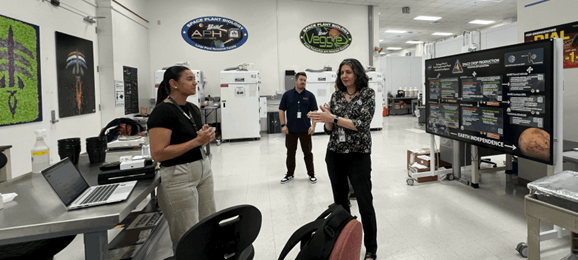
A recent visit to NASA’s Kennedy Space Center last August 2025 provided invaluable insights into the cutting-edge research being conducted by our United States counterparts in space plant biology. The visit highlighted the importance of international collaboration and knowledge-sharing in advancing our understanding of plant growth in space.
One of the most striking aspects of the visit was the emphasis on interdisciplinary approaches to solving complex problems. At NASA, plant scientists work closely with engineers, physicists, and other specialists to develop integrated solutions for space agriculture. This collaborative model is something we’re actively fostering at Plants4Space, recognising that the challenges of space exploration require diverse expertise and innovative thinking by “thinking outside the planet”.
Another key takeaway was the importance of Earth-based research and simulations in preparing for space missions. NASA’s extensive microgravity facilities, which simulate space environments, provide crucial data and insights that inform the design of space-based experiments and systems. This reinforces the value of our work at Plants4Space, where we’re developing advanced controlled environment facilities to simulate various aspects of space conditions. The visit also highlighted the rapid pace of technological advancement in space plant science. From advanced LED lighting systems optimised for plant growth to novel nutrient delivery methods in microgravity, the innovations being developed at NASA are pushing the boundaries of what’s possible in space agriculture. This serves as both inspiration and motivation for our work at Plants4Space, continually challenging us to innovate and explore new possibilities.
Inspiring the Next Generation of Plant Physiologists
For young plant physiologists charting their career paths, the field of space plant science presents an exhilarating and rapidly evolving frontier. The groundbreaking work conducted at Plants4Space and similar institutions worldwide is not only advancing our understanding of plant biology on Earth but also contributing to some of humanity’s most ambitious endeavours, such as space exploration.
As we approach the Artemis III mission, scheduled to be launched in mid-2027, Plants4Space is poised to make significant contributions to space exploration. We are currently participating in one of three experiments to be conducted on the lunar surface for a week-long duration. This experiment, known as the Lunar Effect on Agricultural Flora (LEAF), aims to grow three plant species for the first time in the lunar environment: Arabidopsis thaliana, Brassica rapa, and Wolffia (duckweed). The primary objective is to assess the effects of lower lunar gravity and cosmic ray stresses on plant growth and development.
The LEAF experiment represents a remarkable opportunity for the field of plant physiology. With 500 grams of samples returning to Earth, it will provide unprecedented insights into plant physiological behaviour in an extraterrestrial environment, potentially paving the way for sustainable food production on future Lunar and Martian bases. For young plant physiologists, this project exemplifies the exciting possibilities that lie ahead in their careers.
The LEAF experiment and similar projects demonstrate that for today’s plant physiologists, “the sky is no longer the limit”. The field of space plant science is expanding rapidly, offering abundant opportunities for innovation, discovery, and meaningful contributions to science and society on Earth.
We encourage young plant scientists to consider the exciting possibilities in this field. Whether your interests lie in stress physiology, controlled environment agriculture, or plant genetics, there’s a place for your expertise in the realm of space plant science. By joining initiatives like those at Plants4Space, you can be at the forefront of scientific discovery, helping to write the next chapter in the story of plants – and humans – on Earth and in Space.
Student Contributions
Metabolic Engineering Through Anthocyanin Reporter Systems
Centre for Agriculture and the Bioeconomy, Queensland University of Technology
ASPS Student Representative, QLD
When I began my PhD, I was fascinated by a deceptively simple question: how do plants turn genes into colours? Walk through any garden and you’ll see the answer shimmering in red petals, purple leaves, or even blue flowers – colours born from anthocyanins. These pigments don’t just decorate plants; they act as antioxidants, sunscreens, and ecological messengers, protecting tissues, luring pollinators, and sometimes warning off herbivores.
For me, anthocyanins became more than pigments – they became a window into the wider metabolic orchestra of the plant. My research asks how we might re-score that music through metabolic engineering. At its core, metabolic engineering is about intentionally reprogramming a plant’s cellular networks – its metabolism, gene regulation, and signalling systems – to generate new and beneficial traits. This approach holds immense promise for agriculture, medicine, and biotechnology.
I work with Nicotiana benthamiana, a polyploid plant from the Solanaceae family, already a workhorse in plant biotechnology. Many important crops – citrus, wheat, potato, cotton, and sugarcane – are polyploids too, so N. benthamiana is an excellent model to explore how we might “mix and match” biochemical pathways using tools like CRISPR. My aim is to interlink plant metabolic pathways and generate proof-of-concept phenotypes that reveal how regulatory networks function.
One of the most exciting parts of this project is building an anthocyanin reporter system. Current plant reporter systems rely heavily on transgenic approaches, which have significant limitations for field applications and commercial development. To address these challenges, there is a need to develop non-transgenic methods for real-time monitoring of metabolic pathway regulation under field conditions. By engineering plants to produce differently hued anthocyanins which are endogenous to most plants in nature, I can “colour-code” the activity of specific genes and pathways. Instead of relying on invisible molecular readouts, I can literally see whether a pathway is switched on or off by the colours the plant produces. This makes anthocyanins an elegant tool for tracking transcriptional regulation, stress responses, and pathway flux.
The cytochrome P450 enzymes F3′H and F3′5′H, for example, determine whether plants produce cyanidin (red) or delphinidin (blue), depending on which hydroxylation reactions they catalyse. By tweaking the expression of these enzymes, I am in the process of making the plant paint itself in new colours—a direct readout of genetic and metabolic changes.
Ultimately, the goal of my PhD is to create transgene-free plants with novel phenotypes using CRISPR/Cas-mediated homologous recombination, where anthocyanins help me track those changes in real time, offering insights into how regulatory circuits shape metabolism. Beyond discovery, this work has practical implications: from producing stress-tolerant crops, to biopharming natural pigments, to biofortifying food with compounds that benefit human health.
In essence, I’m using colour as both a language and a tool – teaching plants to signal when their pathways are active and learning from those signals how to design the next generation of crops, far beyond colour as a mere pigment.
Beyond lab: connecting through our scientific society
Juel Datta
Centre for Agriculture and the Bioeconomy, Queensland University of Technology
ASPS Student Representative, QLD
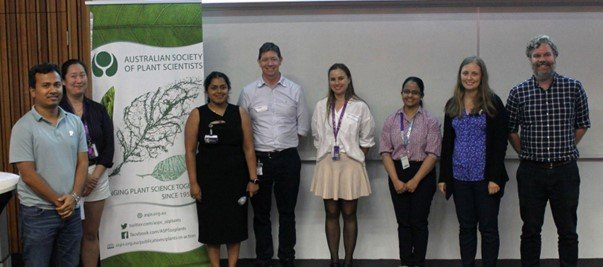
Image: Juel (far left) at the 2024 ASPS meeting in QLD
In 2024, I was thrilled to present my research as a poster at the International Plant Molecular Biology congress (IPMB2024) – my very first conference as a PhD candidate! It was an inspiring experience to share ideas and connect with researchers from around the world. I am grateful to the Centre for Agriculture and the Bioeconomy and the School of Biology and Environmental Science, QUT for supporting my participation, and to Australian Society of Plant Scientists (ASPS) for their travel grant, which made the journey even smoother. Such initiative of ASPS makes a real difference for higher degree research students.
Later in 2024, I had the chance to serve as a committee member for the ASPS Hybrid Conference (Queensland node), an experience that helped me build skills beyond the lab. From managing various aspects of the event, which allows me to strengthen my communication, teamwork, and organizational skills, and even enhance my photography skills along the way. Opportunities like these show how scientific societies including ASPS empowers higher degree and early-career researchers to grow not only as a scientist but also as well-rounded professionals.
*Editors’ Note: These contributions are submitted as part of the authors’ role as ASPS Student Representatives. For questions regarding ASPS activities and feedback in Queensland, please contact Chamilka ([email protected].) or Juel ([email protected].)
Update from the Society Executive
ASPS Honorary Treasurer
Senior Lecturer, UWA
Dear ASPS Members
Your latest issue of Phytogen has landed, and with it another contribution from the Executive team. It is my turn, as Honorary Treasurer, to grasp the nettle and beat around the bush no longer. I’ve been an ASPS member – with somewhat discontinuous membership, I must admit – since arriving in Perth in 2010. I joined the Executive team in January 2022, having taken over from Mike Haydon, together with Kim Johnson (Honorary Secretary) and Martha Ludwig (Honorary President). Some basic mental arithmetic will tell you that my three-year term as Honorary Treasurer is almost up, and so it is with some sadness that I will soon relinquish my access to the Society bank accounts.
More seriously, I have genuinely enjoyed learning about the financials of running a small association, the responsibility of making sure all those dollars are accounted for, and for taking part in maintaining a healthy and vigorous Society. Naturally I am happy that the Society’s finances have continued to improve steadily over my three years, but this has only come about through the consistent support of our members, especially students and their supervisors, and from hard work by our voluntary conference organisers. We have benefitted from generous backing from conference sponsors, including consistent support from ARC CoE for Plant Success, Functional Plant Biology, Annals of Botany and Agrisera. With a sound financial footing, we can continue to keep our membership dues affordable, and our meetings both engaging and well-catered.
Over the years, we have returned over $48,000 in Student Travel Awards to ASPS 2023 in Tasmania, IPMB 2024 in Cairns, and ASPS 2025 in Adelaide. We have continued our Carer’s Support Travel Grants (~$2,000 per year) to widen access to our meetings. And most recently, as no doubt you will all have noticed, we have greatly modernised our website with a fresh look and a more user-friendly experience. It should also make the task of tracking memberships and sending renewal notices much more streamlined. We hope you’ll agree that these expenditures are a worthwhile use of our funds. Of course, the Executive team is always open to suggestions for initiatives that benefit Australian plant science and our membership – so don’t be a shrinking violet, and let us know your thoughts.
I would like to thank the membership for the trust you have given me in looking after our Society for the past few years. Of course, this means we will need a new volunteer to take control of our bank accounts from 2026. I will help with the transfer of power in any way that I can – there’s no shortage of login details to learn, that’s for sure – and I’ll be available for guidance as needed. So, if you are interested and would like to know more about the role (no purchase necessary), please feel free to drop me a line.
In the meantime, I look forward to seeing as many of you as possible at Flinders University in November, where the ASPS 2025 meeting is shaping up to be yet another great success.
Kind regards,
Mark Waters
Honorary Treasurer, Australian Society of Plant Scientists
ASPS Conference Student Travel Award

The ASPS Student Travel Award program continues to provide essential financial support for student participation in the 2025 Adelaide conference. Award recipients contribute to the scientific program while benefiting from professional networking opportunities and exposure to cutting-edge research presentations. This initiative reflects the Society’s commitment to fostering the next generation of plant scientists and ensuring diverse participation in conference proceedings.
Congratulations to all students below who received a travel grant and see you in Adelaide! Don’t forget to submit your abstract and register.
ACT
Australian National University: Joseph Esimu, Sabrina De Zen, Rose Zhang , Marvin Jin, Zixiong Zhuang, Yu-Wen Huang.
NSW
University of Sydney: Szczepan Jakub Glewicz, Eleanor Imlay, Gabriella Jessica, Daniel Wallis.
Western Sydney University: Reshma Mohan, Sk Rabiul Alam.
University of Newcastle: Anthony Brown, Benjamin McDermott, Haylie Andrews.
QLD
University of Queensland: Richard Dixon, Grace Weston-Olliver, Max Harding.
Queensland University of Technology: Juel Datta, Soumitra Patekar, Chamilka Ratnayake.
TAS
University of Tasmania: Kritika Sharma, Jiacun Sun.
VIC
Monash University: Russell Woodford, Anshuman Singh.
La Trobe University: Arka Dutta, Louise Walker, Lucas Auroux.
The University of Melbourne: Francis Kuang, Yalin Liu.
WA
University of Western Australia: Evan James, Yunpeng Tao, Sneha Priya Pappula Reddy, Chuangwei Fang, Xialong Feng, Madhoolika Karunakaram, Shuyan Li, Xiawen Feng, Zhe Zhang.
Curtin University: Mara Schaefer
Editors’ Note
Thank you for engaging with the September 2025 Phytogen
We thank Prof. Fuentes and our discipline representatives who shared their research insights and experiences. Special thanks to the conference organizing committee, especially Dr. Crystal Sweetman, for taking the lead on the enormous task of organizing a nationwide conference. Our next issue will provide final conference logistics and highlight additional research developments from the Australian plant science community.

Contributions:
Newsletter written & edited by Lucas Auroux and Razlin Azman.
Invited contributions: A/Prof Mark Waters (on behalf of Society Executive), Dr. Nipuni Peththa Thanthrige (Genetics & Molecular Biology Representative), Chamilka Ratnayake (QLD ASPS Student Representative), Juel Datta (QLD ASPS Student Representative) and Professor Sigfredo Fuentes (ARC Centre of Excellence in Plants for Space).