
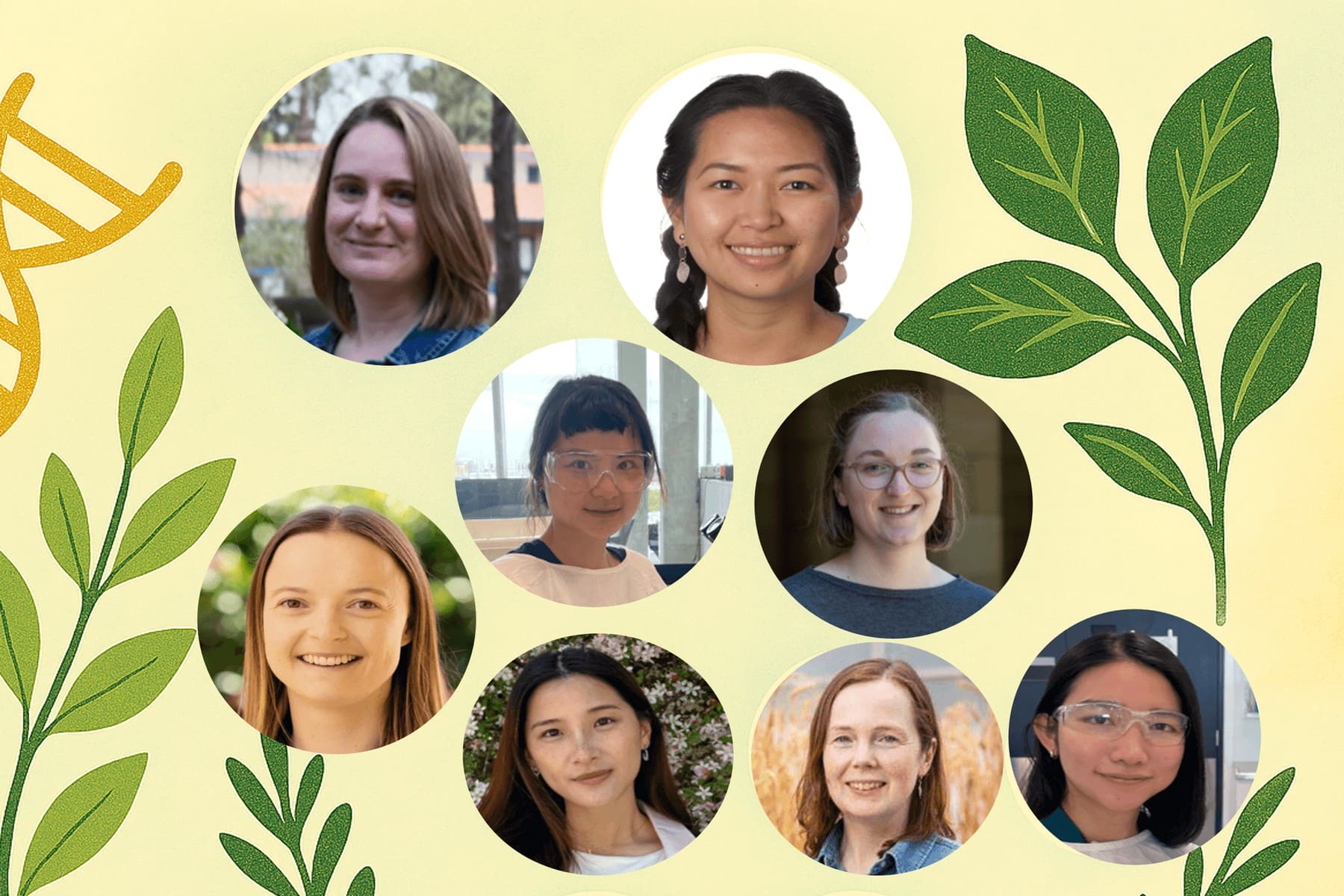
Welcome to the March 2026 edition of Phytogen, our Special Issue celebrating Women in Australian Plant Science in conjunction with International Women’s Day
This month we celebrate women in plant science across Australia. Guest-edited by Dr. Alison Bentley (CSIRO), this special issue features diverse voices and experiences: a day in the life of plant scientists across different career stages and research environments, pathways into and across plant science disciplines, and ‘first’ milestone stories from students to established researchers. From bioinformaticians to field agronomists, molecular biologists to industry leaders, we showcase the breadth of contributions women make to Australian plant science.
Connect with ASPS on social media: LinkedIn: Australian Society of Plant Scientists; BlueSky: @asps-oz.bsky.social
Join the conversation using #AusPlantSci and #WomenInPlantScience. Tag us to help promote your science!
We welcome contributions from students, EMCRs and established researchers at any time for publication in Phytogen. Contributions will also be shared on our social media platforms. Contact editors Raz ([email protected]) or Sneha ([email protected]) for more info.
The Phytogen team would like to thank Alison Bentley and all contributors for this special issue: Irina Kuznetsova (Curtin University), Suyan LYee (Australian National University), Rose Zhang (Australian National University), Alison Gill (Adelaide University), Amelia Keynton (University of Melbourne), Qinqin Yang (University of Sydney) and Gabriella Jessica (University of Sydney)
From our Guest Editor
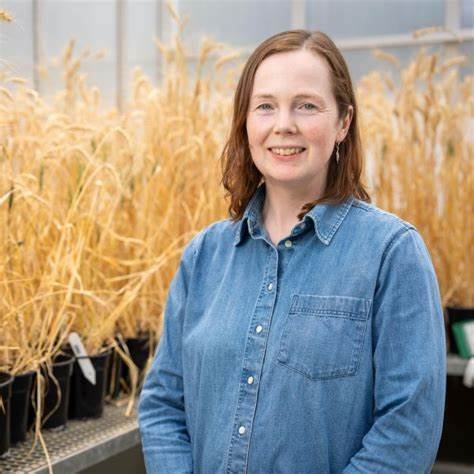
My friend and fellow advocate for women in plant and crop science, Stéphanie Swarbreck recently shared the obituary of Nancy Lane Perham with me (Nancy Lane Perham obituary | Science | The Guardian). As well as being a leading cell interaction scientist (in the Department of Zoology at The University of Cambridge, UK), Nancy was a strong advocate for women in science.
She was part of the group who set up the UK’s Athena Swan Project (in 1998) and in 1999 she was the first director of the Women in Science, Engineering and Technology Initiative in Cambridge. The Australian branch of the Athena Swan Charter (known as Science in Australia Gender Equity; SAGE) was initiated as a pilot in 2014, launching in 2015.
Stéphanie and I reflected on the importance of these and other programs, like Superstars of STEM which I’m fortunate to be in the current cohort of, in increasing the visibility of women in science. But there is work to be done. That is implicit in the theme for this year’s International Women’s Day: balance the scales. Imbalances exist and persist. Sometimes, we even see the scales slipping further out of balance, especially in the current geopolitical climate.
What’s next? It’s certainly not less, and it’s very likely more: more advocacy, more strong voices, more work to do. And who’s going to do that? It is going to take the whole community.
In this Special Issue of Phytogen to mark International Women’s Day (now an annual feature thanks to the strong support of co-editors Razlin Azman and Lucas Auroux), we find inspiration in the stories of incredible women working in plant science in Australia. These stories have been championed and collated by co-contributors who all support a future for Australian plant science that is diverse and inclusive of people from all backgrounds, disciplines and genders. Hats off to the collective brilliance of Irina Kuznetsova (Curtin University), Suyan LYee (Australian National University), Rose Zhang (Australian National University), Alison Gill (Adelaide University), Amelia Keynton (University of Melbourne), Qinqin Yang (University of Sydney) and Gabriella Jessica (University of Sydney) for bringing this issue to you. We learn about a ‘day-in-the-life’ of a range of role models working in different aspects of plant science. We hear about transitions into and out of plant science and several of our community share important ‘first’ moments on their career journeys.
We all hope that you enjoy reading this special issue as much as we enjoyed putting it together. We need many hands to make light work of balancing the scales.
Alison Bentley
Section 1: A Day in the Life of a Plant Scientist
In this section, we feature ten women working across different research environments and career stages, providing snapshots of their typical workdays and the diverse pathways within plant science.
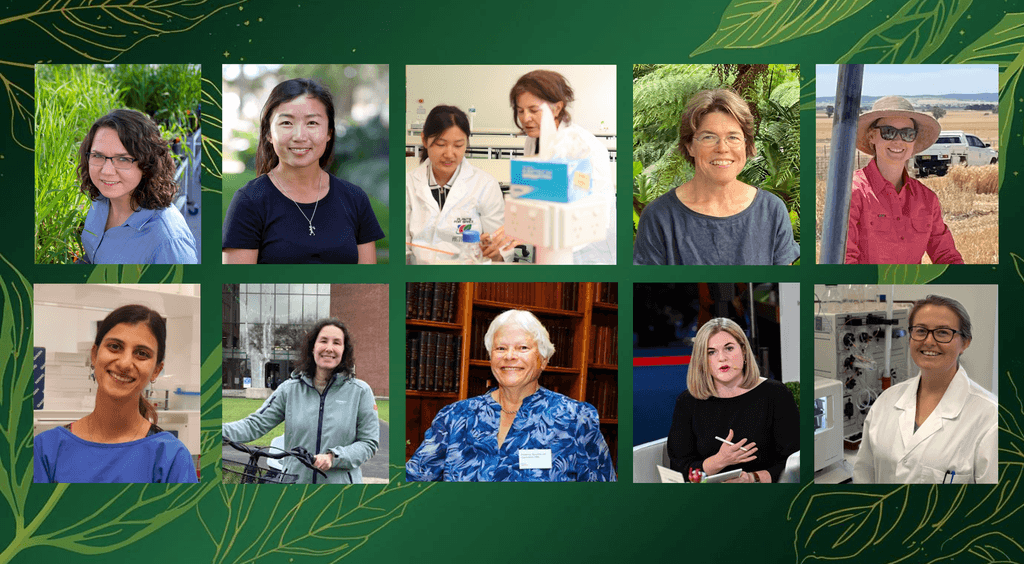
Bottom row (L-R): Sonu Yadav, Stephanie Watts-Fawkes, Susanne von Caemmerer, Katherine Delbridge, Megan Outram
Powering the data behind plant & crop science
Dr. Fonti Kar (Australian National University) | Github
Fonti Kar is a research fellow working at the ANU node of the Analytics for the Australian Grains Industry (AAGI), a GRDC-funded partnership aiming to deliver valuable grain data analytics for Australian growers. In her current role, Fonti helps to advise on statistically-robust glasshouse & field trial designs while developing new statistical methods and software for analysing agricultural data from single and multi-environment field trials. Alongside her day-to-day collaborations with grain industry partners, Fonti also works closely with other AAGI nodes across Australia to implement improved communities of practice for collaborative and open-source code sharing. She is highly passionate about accessible data science resources that can deliver longstanding value to diverse user groups and greatly enjoys the tangible and translational impact of working alongside the grains industry.
Plant biosecurity: from bench to community
Dr. Sonu Yadav (Charles Darwin University) | LinkedIn
I’m a molecular biologist in the plant biosecurity sector. My work spans scientific research, laboratory diagnostics, data analysis, science communication, student and staff supervision, writing papers, reports and grants, and team management. A key part of what I do is plant pest and pathogen identification using genetic tools. Think of it as “crime scene investigation” at the molecular level of pests and pathogens. Someone might send us a mysterious larva found on their prized garden plant, and we aim to answer two key questions: What is this organism, and how concerned should we be? My science doesn’t stop at the laboratory door, as I collaborate with community engagement officers, First Nations people, partners from schools, universities, museums, libraries, and other organisations to deliver science talks and hands-on biosecurity and molecular science workshops, particularly in very remote schools across northern Australia. Sharing science and discovery with students is among the most rewarding aspects of my work. What drives me is broadening participation in STEM and making science real, inclusive, and accessible. It is this impact that truly makes transformational and intergenerational change.
A typical day starts with coffee and emails, followed by a team meeting to review new diagnostic cases. We assess and prioritise samples, perhaps a suspected pest or a pathogen affecting crops and decide on the best course of action. From there, it’s into the lab. We extract nucleic acids, run molecular assays, and perform DNA sequencing. Throughout the day, I attend meetings to stay connected with local and national projects. I collaborate with colleagues to design new biodiversity monitoring and diagnostic protocols and apply for research funding to enhance our preparedness. I also work on manuscripts for publication, some days that means running a specific bioinformatic pipeline or other days it’s refining just a few sentences. On outreach days, I travel to schools to deliver talks and workshops. I often end the day analysing data from the morning’s experiments and interpreting the results. Sometimes we confirm a pest organism, sometimes we rule one out. Either way, our work helps protect ecosystems, safeguard agriculture, and strengthen biosecurity. What I love most about my work is its diversity, no two days are ever quite the same. In a single day, I might be a pest detective, data analyst, writer, educator, mentor, manager, but always, a science communicator!
Taking research to the field
Dr Laura Goward (CSIRO) | ORCID |LinkedIn
Diversity is abundant in the life of a Farming Systems researcher. In my current role I work across projects from the controlled environment to the field across species, across enterprise types, and excitingly across disciplines which connects me to people across CSIRO teams, grain growers, universities, state research departments and international scientists. This week is a perfect example: Monday – meeting with ANU and CSIRO biochemist colleagues about Honours student project investigating canola energy partitioning to gain insight into the physiology leading into the critical period for seed yield and oil formation. Afternoon – meet with the oils group and fellow technicians to share the use of NMR machine but also share knowledge on the applications of genetics of oil formation. Email economist to collaborate on research providing tools for growers to assist with assessing risk of on-farm management decisions. Tuesday morning – harvest controlled environment experiment looking at the effect of soil strength on canola emergence. Last piece of info to go into a methods manuscript that is ready to be submitted to journal. This piece of physiology has formed the basis for subsequent work done by canola genetics team looking at long hypocotyl canola – a trait with great potential to assist climate variability. Project team mate finishes data collection as I dash to catch a plane to Brisbane. Wednesday-Thursday – meet with national project team for new canola project to plan next 3-years of physiology field experiments that are industry linked and will both progress science and provide recommendations to grain growers. Discuss, debate and refine experimental plans with advisory committee consisting of breeders, agronomists, plant physiologists and farmer consultants. Friday – put the last data from Tuesday into figure using developing digital skills to finish that manuscript, meet with technical team – organise development of field irrigation manifolds and sampling protocols because next thing you know it’ll be April and time to sow a new canola experiment on the research farm to see what we’ll learn next!
Making protein crystals (for structural biology)
Dr. Megan Outram (Australian National University) | ANU profile | LinkedIn | X: @MeganOutram91
Megan Outram is a structural biologist at ANU who was inspired while an undergraduate in NZ by a female lecturer who showed her what science and a scientist could look like. From her honours project on screening resistant crop cultivars to help farmers make informed decisions, the age old question of “Why?” has driven her towards elucidating molecular-level mechanisms, interactions, and the deeper architecture driving plant immunity. A typical day in Megan’s life is unpredictable; in her own words: On any given day I might move from wet lab work at the bench, to running computational analyses, to assessing the biochemistry of my isolated proteins and interpreting their structural biology, sometimes all in the same day. But the highlight of any given day is seeing a protein appear on a gel after weeks of optimising its expression and purification. Or seeing my protein form crystals for the first time! As I like to say, “Crystals are a girl’s best friend, better yet if they diffract, and they don’t even have to be pretty.” Learning something new every day is quite exciting, and this career has not stopped delivering that yet. For Megan, structural biology is very much protein-dependent, which is both its strength and biggest frustration. When proteins behave, science moves forward, but when they don’t, everything stalls. How quickly the field and technology has evolved in recent years can be challenging too, making keeping up is a constant effort. And because of that fast pace, knowing when a piece of work is good enough to publish and being okay with sharing ‘incomplete’ stories, rather than waiting to have the complete mechanistic picture is something we have to consider too. Aside from her scientific contribution to the field, Megan is passing on the impact she experienced in her career to the new crop of researchers. “My input in their journey may be small and only for a short period of time, but the downstream impact on their careers can be enormous, even if it isn’t immediately visible. That ripple effect is my definition of success and what I‘m most proud of contributing to”.
Inspiring the next generation
Dr. Janine Oldfield (plants4space, University of Melbourne) | LinkedIn | plants4space
Janine Oldfield has been an Education and Outreach Officer in the ARC Centre of Excellence in Plants for Space for a year and a half, among her many roles in education. With a background spanning science, teaching, journalism, and adult education, she has helped to develop the education and outreach program, which aims to bring the Plants for Space missions to school kids and the public. A typical day in her life begins with sifting through emails and lining up meetings for the many collaborative projects she’s involved in. Her day then shifts into organising outreach trips, and creating hands-on education materials: writing workbooks, designing teacher professional development activities, and building science demonstrations that connects real research from the Centre with engaging experiences for students. When she heads into the community—whether to festivals, schools, or remote communities—the job becomes its most rewarding. Janine highly enjoys delivering interactive STEM sessions and watching students light up with curiosity. This face-to-face engagement allows young people to connect with science in meaningful and culturally relevant ways, and helps them to picture themselves as future scientists, even “astrobotanists,” a term most learn for the first time that day. She says a lifelong knack for juggling many tasks at once has helped her immensely in such a diverse role and would encourage everyone to get involved with outreach activities to see the impact your work can have for the next generation of scientists.
Investing in science with impact
Dr. Camilla Hill (Australian Grains Research and Development Corporation)
As an Investment Manager in Genetic Technologies at GRDC, my role focuses on helping turn new research ideas into tangible outcomes with real world value for Australia’s grains industry. At its heart, my work involves connecting science and people including growers, advisers, research organisations, government, international collaborators, and other stakeholders to deliver R&D strategy and ensure innovation has real‑world impact.
No two weeks in my role are the same. My week might begin with internal updates, tender evaluations, or reviews, and checking progress across a portfolio of investments and working through what is needed to keep projects moving effectively with research partners and other collaborators across organisations in Australia and overseas. As the week unfolds, I move between online and in person meetings, bringing together people from different teams to work through challenges, draft agreements, and collaboratively find solutions to challenges experienced during projects. Other days are spent writing investment proposals, drafting procurement plans and negotiating contracts, consulting with stakeholders, or in broader planning discussions. My work involves frequent travel to meet research partners and participation in workshops, seminars and conferences. These settings provide valuable opportunities to listen to new perspectives, explore ideas, and identify where challenges faced by Australian grain growers can be transformed into meaningful R&D investment opportunities.
What I value most about my work is collaboration. Progress depends not only on technical capacity and expertise, but on trust, shared purpose and teams working together and aligned towards a common goal. Seeing the many different roles involved, each contributing something essential, come together to turn complex ideas into meaningful, real world outcomes for growers is what makes my role both challenging and deeply rewarding.
Representing industry & engaging with policy
Katherine Delbridge (Australian Seed Federation)
Katherine Delbridge is the Chief Executive Officer of the Australian Seed Federation (ASF), the peak industry body for the Australian seed industry. In her role, Katherine works mostly around policymaking and advocacy at national and global levels. On a day-to-day basis, Katherine is involved in reviewing seed industry codes of practice, provides consultation for agricultural regulations such as the Gene Technology Act, or liaising with seed federations in the broader Asia-Pacific or global regions. Peak bodies like the ASF often face unpredictable challenges, but Katherine sees these moments as part of the fun and as valuable opportunities for future learning. Katherine finds the agricultural sector highly inspiring and particularly values the way it brings together diverse forms of knowledge, including scientific, farming, and Indigenous expertise. Katherine encourages students and researchers to embrace new opportunities and invest in their networks – in her experience, simply asking a question or starting a conversation can open unexpected doors of opportunity!
Establishing plant science research – an international perspective
Dr. Stephanie Watts-Fawkes (Wageningen University & Research, Netherlands) | LinkedIn | Wageningen profile | Research website
I’m an Assistant Professor at Wageningen University in the Netherlands, where I moved to around 9 months ago from Adelaide. I work on the symbiosis between plants and mycorrhizal fungi, working out how to exploit the symbiosis to improve crop nutrition.
My mornings always start early, around 6am, regardless of whether it’s a weekend, work day, or my mamadag (the day off every week that most Dutch people take to look after their young kids; papadag for fathers). My kids (aged 1 and 3) ensure there are no sleep-ins. The first thing I do is check the weather and rain radar apps, because my commute to work is dictated by the weather. I’m looking at the rain/snow forecast, wind strength and direction, and “feels-like” temperature. I really enjoy my 30-minute bike ride to work, but if it’s pouring rain, or the feels-like temperature is below -5 °C, I work from home or drive.
I like to get to work nice and early, usually by 7:30am, so that I can knock over admin tasks and emails before meetings start. I still have a number of PhD students and collaborations active in Australia, so I hold meetings with Australia between 7am and 9am, because it’s already the end of the workday there!
Mid-morning, there is usually a Masters student thesis defence, as we have many MSc students undertaking their projects across the three Chair groups in my building. Today I am an examiner for an MSc student in the Crop Physiology group. Their project involved using drone-based measurements of potato yield and nitrogen nutrition, comparing them to destructive measurements of the same plants, to see whether drone data could inform N fertilizer management in real-time. I learned quickly that potato is by far the most popular study crop in the Netherlands. Nitrogen management is also a hot topic here, because farmers are penalized for applying excess N fertiliser, which has a legacy of contributing to environmental damage.
After the examination I spend some time working on a fellowship application for the NWO (Dutch Research Council), before taking lunch with my colleagues in the tearoom. The lunchtime conversations with my colleagues are a nice break from work, but also very informative as I integrate into the Netherlands. Often I’ve got tips on how to navigate confusing bureaucratic systems, both at the University and in Dutch life more generally, from lunchtime chats.
After lunch I spend some time planning my upcoming experiments with one of the technical staff who know all the ins-and-outs of growing plants in the glasshouse and field facilities on campus. I’m looking forward to launching my research into mycorrhizal fungi and crops at Wageningen, but everything needs to be decided and sourced from scratch since these will be my first experiments here – from soil, to mycorrhizal inoculum, to crop and variety choice.
The last part of my day is then dedicated to preparing slides for a series of lectures that I have coming up. Although I’m not teaching in the current period (there are six teaching periods of unequal length at Wageningen, not semesters or trimesters), I have a fair bit of teaching in the next period that I need to prepare for. Around 4pm, I check the rain radar app again to decide on when to leave the office for the cycle home – sometimes this is the difference between getting caught out in a rain shower or not. I pick my kids up from daycare on the way home and then it’s time to switch back to parenting mode.
Leading Plant Science & Beyond
Professor Ulrike Mathesius (Australian National University) | ANU Profile | LinkedIn
Professor Ulrike Mathesius is Director of Research School of Biology at the Australian National University, as well as a group leader and professor. Her role spans research, leadership, teaching, and strategic planning. As a group leader, she supports her team by securing funding, fostering collaboration, mentoring students and researchers, and guiding both short-term and long-term research directions. Alongside supervising and teaching, she contributes to committees and manages administrative responsibilities. In her role as Director, her focus extends beyond her own laboratory to supporting colleagues across the School, strengthening research infrastructure, and shaping strategy planning. Her vision is to make the School the leading destination for research and teaching in Australia, offering students support from undergraduate to postgraduate levels to enjoy their learning journey and nurture their passion for research, setting them up for a long-term career.
Despite the breadth of her responsibilities, her enthusiasm for plant science remains central. She continues to be fascinated by symbiosis and how cells of different kingdoms have evolved to live together, a question so big it won’t be solved within a lifetime. Having this big unknown and trying to find out little pieces of it still excites her every day. Even now, returning to the lab and uncovering new pieces of that puzzle brings genuine excitement. She hasn’t forgotten that the most important thing she does in a leadership position is to make sure people can do basic science and to create an environment where young researchers can focus on science and enjoy it.
Plant Science Luminary
Emeritus Professor Susanne von Caemmerer (Australian National University) | ANU profile
Emeritus Professor Susanne von Caemmerer is a giant of plant science, whose mathematical model of photosynthesis has underpinned our scientific understanding of leaf gas exchange for decades, earning her the Royal Medal (Biological) among many other honours. Read more about the Royal Medal (Biology) jointly awarded to Professor Graham Farquhar and Professor Susanne von Caemmerer here
My Honours was in pure mathematics, and while I loved the discipline itself, the environment was lonely and quite competitive. With biology, the experimental and collaborative nature of the work was a stark contrast, so I stayed on for a PhD in plant science and never looked back. Mathematics and plant science turned out to be a natural pairing, something I don’t think people always appreciate, and that intersection became the foundation of my work.
A typical day (in those early years compared to now) started very early, We would set up equipment for mesophyll conductance and gas exchange measurements at 5 am, collecting gases in tubes by hand with no automation. I would get the experiments running, head home to get the children ready for school, then come back to the lab to continue. It was very much a team effort, tag-teaming with my colleagues through the day so that measurements and enzyme extractions for biochemical assays could all be done on the same day.
Now, the equations we developed back then are embedded into automated instruments like the LiCor, making taking these measurements much easier for photosynthesis researchers around the world. These days, I can be exploring plants out in nature on remote islands with limited WiFi, travelling to visit family, or catching up with joint lab meetings, which feels like a fitting way to enjoy the science at this stage.
Looking back, the most rewarding part of my career is that the work we did all those years ago is still widely used today and continues to form the basis of so much current research. Our goal was always to develop a mathematical model that was succinct, robust and practical enough for plant scientists to use, and we achieved that by bringing together several fields of research and getting them to talk and collaborate with each other. The fact that the model has stood up to the passage of time says something about the strength of the underlying science. Beyond the C3 photosynthesis model, there were many other rewarding parts, like developing a model for C4 photosynthesis, and contributing to developing tobacco tissue culture. I have always been able to follow the questions I found genuinely interesting and useful, so the research was driven by curiosity, and that has made all the difference.
When asked what advice she would give to researchers considering cross-disciplinary research, Susanne had this to say:
“Connect with like-minded people who share your curiosity. Attend conferences, both so that others know your work and so that you can see what others are doing. If you can, be willing to host visitors and share equipment and expertise, because that is how you draw people in and build real collaborations. Lean on the people around you, because some of the most valuable things I learned came from colleagues. And look for the small opportunities, like fellowships, visiting positions, little pots of funding. Visiting other labs to see how things can be done differently is one of the best things a young researcher can do.”
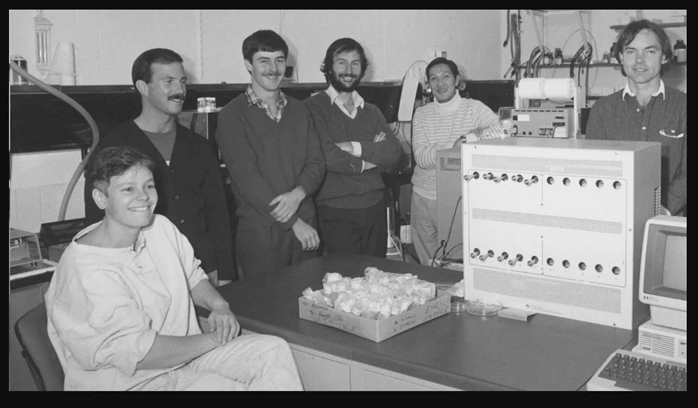
History in the making
ANU archival photo of the early days of pioneering research by Susanne and colleagues. Susanne and Graham Farquhar (far right) were jointly awarded the Royal Medal in 2025. The medal recognises their influential work creating a model for photosynthesis, which has underpinned the scientific understanding of leaf gas exchange for decades.
Section 2: Pathways to & from Plant Science
This section highlights diverse career pathways – moving into plant science from other fields, transitioning from plant science to new disciplines, and navigating between academia and industry
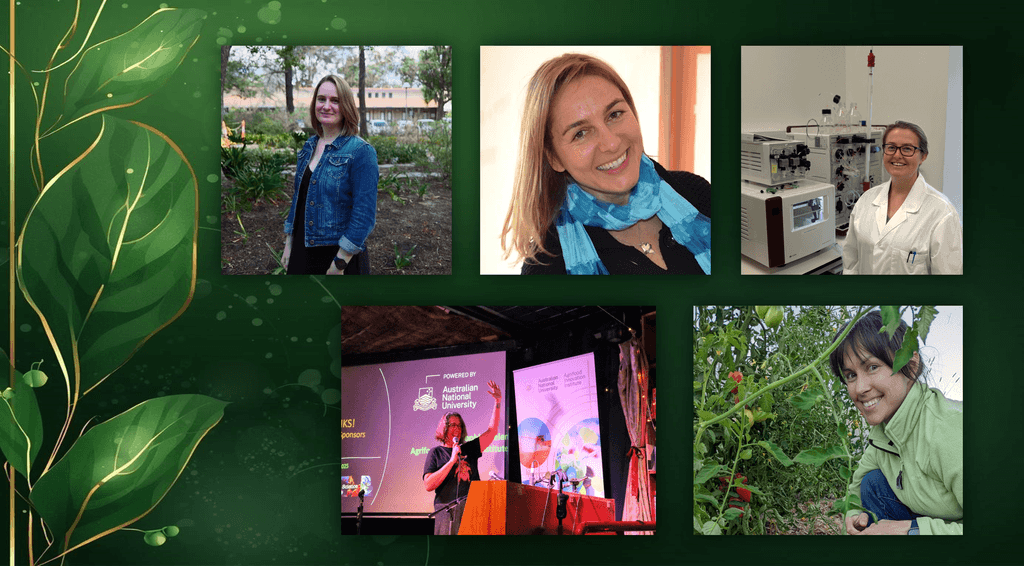
Bottom row (L-R): Anne-Sophie Dielen, Madeline Mitchell
Changing Fields: From Biomedical Research to Plant Science
Dr. Irina Kuznetsova (Curtin University)
LinkedIn | ORCID | Google Scholar
Changing from biomedical to plant research has been a challenging and rewarding journey for me. Many colleagues had assumed that this transition would be quite easy, as I had long experience with analysing a wide range of biomedical data previously. However, when actually taking the leap, it initially felt like a huge risk. Plant research has its own professional terminology, research areas, and scientific culture that I needed to understand quickly so I could start meaningful contributions.
A few months after joining the Analytics for Australian Grains Industry (AAGI) team at the Centre for Crop and Disease Management (CCDM) at Curtin University, I had an opportunity to attend the 2024 Wheat Congress in Perth (WA). I attended every session from start to end, regardless of the topic, which helped the terminology, concepts, and the scale of plant research fall into place. This turned out to be a pivotal experience in integrating into the plant science space.
I love that this field provides such great opportunities to work with a diverse range of sequencing technologies, including short read, long read, peak calling and single cell, which in contrast was more focused while working on biomedical data. This shift allowed me to strengthen my skills in RNA seq, while also developing entirely new ones such as genome assembly and single cell work in plants. The design of projects is also more complex than I had previously encountered. For example, in one particular RNA-seq study having a multi-factor design, I needed to identify an appropriate statistical model to account for all structural and experimental factors. Finding a solution was not easy but was ultimately incredibly satisfying. Genome assembly analysis was completely new to me, but again it was great to upskill and get out of my comfort zone. The single-cell work pushed me even further; I found myself engaged in brainstorming discussions on the wet-lab protocol optimisation. Although, I haven’t yet received the single-cell data, I am expecting more challenges during downstream analysis, specifically in finding appropriate marker genes and annotating cell functions. This project also connected me with wonderful people from La Trobe University, 10x Genomics, and Millennium Science.
It is undeniable that changing research fields is hard. You will find yourself suddenly behind in many aspects, such as understanding field-specific terminology, familiarity with plant or pathogen species, publications, and being able to quickly put together project proposals. However, this transition also brings great professional growth, broadens your expertise, helps you in developing new skills and allows you to meet new people. Despite the challenges, I think it is absolutely worth it.
From Plant Science to Statistics and Data Science
Dr. Sandra Tanz (Curtin University, WA)
Linkedin | ORCID | Google Scholar
For more than a decade at the University of Western Australia, my research life as a molecular biologist revolved around plants—specifically the fascinating intricacies of chloroplast gene regulation, C4 photosynthesis, and protein localisation. I loved the deep biological questions and the precision of experimental work in the lab, but over time I found myself increasingly drawn to the data behind the biology. Large transcriptomic datasets, Unix pipelines, scripting, and statistical interpretation became as exciting to me as the wet lab itself. That curiosity quietly set the stage for what came next, even if I didn’t fully realise it at the time.
During a period away from full-time research while caring for my young children—and then, unexpectedly, during the COVID lockdowns—I decided to formally lean into that interest. Over 1.5 years, I completed a Graduate Certificate in Applied Data Science, studying Python, statistical modelling, big data analysis and business intelligence alongside family life. It was challenging, sometimes chaotic, but also incredibly empowering. The transition allowed me to reconnect with science in a different way, one that was less tied to the bench and more focused on extracting insight from complex datasets.
Today, as a Data Scientist with the Analytics for Australian Grains Industry (AAGI) team at the Centre for Crop and Disease Management (CCDM) at Curtin University, my work sits at the intersection of biology, statistics and real-world impact. I now contribute through designing and analysing field trials, working closely with growers and industry partners, and translating data into practical outcomes for the grains sector. While my tools have changed, my scientific mindset hasn’t—and this transition has allowed me to apply years of biological training in a way that directly supports farmers and agricultural decision-making.
My journey hasn’t been linear, but it has been deeply shaped by adaptability, curiosity and the willingness to learn something new at every stage of life. As we celebrate International Women’s Day, I hope my story resonates with other women in science who may be navigating career pauses, pivots or reinventions—because stepping sideways can sometimes be the most powerful way forward.
From Plant Science to Amphibians: a cross-species structural biology journey
Dr. Megan Outram (ANU, ACT)
My work now spans plant and amphibian immunity, but navigating that cross-disciplinary leap was initially a challenge. My core knowledge had to shift substantially between the two systems, without any shortcuts through that learning curve. But novel territory is always exciting, and the transferable skills from one discipline to the next set me up quite well for that jump. Experimental expertise, problem-solving workflows, and the ability to ask the right questions aren’t unique to any one field.
If I were to give any advice to PhD students and ECRs considering a cross-disciplinary move, i would say don’t be afraid to take the chance! Be adaptable and be okay with reinventing yourself! The key is not to resist reinvention but to move through it with intention. Stay adaptable and take opportunities even when the destination isn’t clearcut. But whatever path you take, make sure you maintain a coherent narrative, even if the subject matter evolves. That through-line is what gives shape and meaning to your career, and it’s what the community will hold onto and connect with. A career is not a straight line, it’s a story you write as you go so make sure that it is one worth telling. And most importantly, have the capacity to be creative in your science and in how you define success.
Looking forward in this field, I am excited to see the technological advancements. With AlphaFold and AI having changed how we ask our scientific questions, the field has moved beyond structure and into real-world applications with protein design. The idea that we might be able to engineer on-demand, customised disease resistance against plant and amphibian fungal pathogens is extraordinary! We are approaching a future where science doesn’t just describe our problems but can also provide elegant solutions to them, and I find that incredibly exciting.
From Plant Science to Industry Engagement
Dr. Anne-Sophie Dielen (Senior Manager – Industry Engagement at the Agrifood Innovation Institute at the Australian National University)
She writes: About twenty years ago, I sat in a welcome event for new PhD students while university leaders told us we were the “cream of the cream.” My best friend and I exchanged eye-rolls when someone warned that most of us would eventually leave research for the “real world.” We were plant scientists—of course, we were going to stay in research forever.
And yet… about ten years ago, I too stepped out of research after postdoc roles at CSIRO and ANU. It felt like jumping into the dark: I had no idea what life outside academia looked like. And it turned out to be the best career decision I’ve ever made.
Since 2015, I’ve worked across science regulation, policy, advocacy, communication, and public engagement. Every one of these roles has used the core skill my PhD gave me: the ability to frame a problem and ask good questions. No one has ever asked me about my Western blot technique, though (to be fair, it is quite a niche skill).
One of the things I love most is the variety. I get bored easily, and this career keeps me on my toes. I might meet with industry leaders one day and run a science engagement event in a pub the next. This week, for example, I briefed government officials on a project I’m leading, then hosted a sustainability workshop I organised with artists. I’ve worked on national campaigns that helped shift biotechnology regulations and even legislation. In the last decade, I’ve had far more impact than I ever did at the bench. For someone who cares deeply about making positive change, that’s incredibly fulfilling and motivating (did I mention that I get bored easily?).
Research remains the foundation of my work, though it is no longer my primary focus. Being able to understand and explain complex concepts is invaluable, as is knowing how to break a big goal into manageable steps. My science background didn’t limit my options; it helped me open doors and positioned me as an expert.
From Plant Science to Venture Capital
Dr. Madeline Mitchell (Tenacious Ventures, Investment Principal) | Website | LinkedIn
Maddie Mitchell joined Tenacious Ventures who work “at the intersection of capital, innovation and adoption, and systems change” in mid-2025 after career experiences in plant sciences, synbio and agrifood and natural capital projects. From a PhD studying photosynthetic carbon concentrating mechanisms at the University of Cambridge, UK to an investment role in agri-food at Breakthrough Victoria Maddie’s career reflects how research skills provide an excellent foundation for diverse applications of plant science. In her current role, Maddie brings a depth of technical plant and agricultural expertise to decision-making. She understands the challenges of scaling technologies and knowledge from the lab to a scale that provides a commercial opportunity. She reflects that working in a specific science realm requires a narrow focus and advocates for a science lens being important at a much broader scale. Her role enables her to interrogate the technical potential of pitch decks which are part of the “processing pipeline” in VC, to interact with founders and tech teams to understand the scalability or potential of an early stage idea, and to participate in wider ecosystem events with an eye to investments that are likely to deliver real impacts to the agricultural sector. And if she ever misses the lab bench or glasshouse she spends weekends on the family farm doing hands-on biodiversity work closely aligned to her passion for plant science.
Section 3: A Collection of ‘Firsts’
Women at all career stages share their ‘first’ milestone experiences – from first presentations to first leadership roles – offering insights and encouragement for others approaching similar milestones.
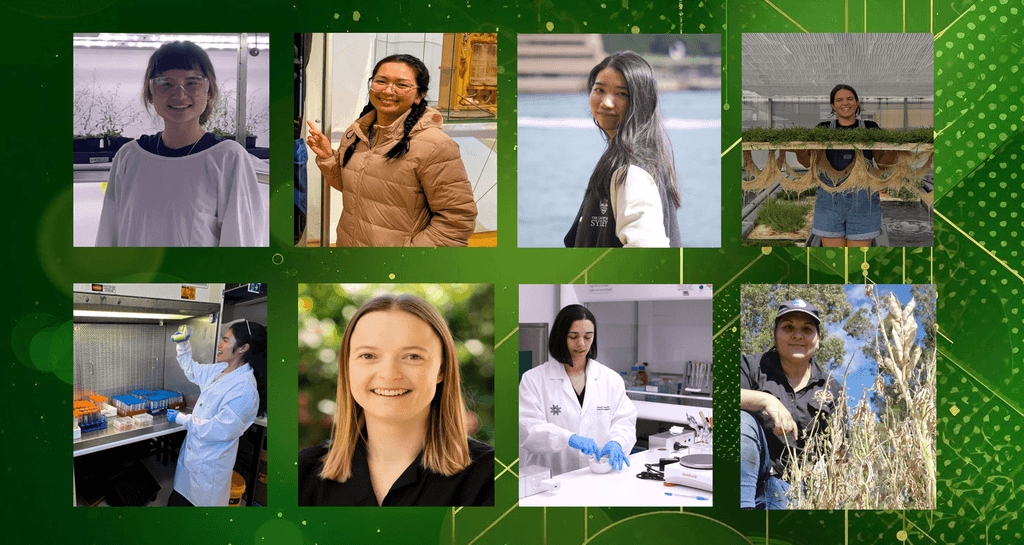
Bottom row (L-R): Mariel Theresa Jean Gonzales Candelaria, Alison Gill, Alyssa Martino, Razlin Azman
Braving a first ASPS Conference Presentation
Qinqin Yang (The University of Sydney) | ASPS Student Representative | LinkedIn
My name is Qinqin, and I am a PhD student at the University of Sydney. My research focuses on developing a nanomaterials platform to deliver genetic materials into Arabidopsis pollen. I gave my first ASPS presentation at the ASPS Conference in Adelaide. Although I felt both nervous and excited, I’m very glad I did it. The experience gave me valuable inspiration and the opportunity to connect with plant scientists in the field, which was incredibly valuable.I also joined the ASPS Student Representative team, where I have felt warmly welcomed and supported. I am truly happy to be part of such a lovely and encouraging group, and I look forward to creating many more great memories together.
Embedding Connections: Hosting a Women in Australian Plant Science Breakfast Event
Dr Alison Gill (Adelaide University) | Researcher profile | LinkedIn | aligill.bsky.social
As part of the Australian Society of Plant Scientists (ASPS) annual conference at Flinders University, Adelaide in November 2026, myself (Dr Alison Gill, Adelaide University, ARC CoE in Plants for Space) and Dr Alison Bentley (CSIRO) ran a Women in Plant Science breakfast. It was my first time running a community event like this, but I was well-supported by the very-experienced other Alison. The breakfast was primarily funded by the Yitpi Foundation, with additional support from the Waite Research Institute, CSIRO, and the ARC CoE in Plants for Space. We were very pleased with the turnout of approximately 70 people and it was a wonderful chance to hear from three diverse women plant scientists at different career stages. Prof. Jenny Mortimer (Adelaide University), Dr Vanessa Melino (University of Newcastle) and Rose Zhang (PhD student, Australian National University) discussed their careers and answered panel and audience questions including:
- Do you have any experiences you can share about ways in which we can make our community more open and inclusive?
- What advice do you give to others about forging a successful path for yourself and others?
- How did you manage the challenges of moving internationally for your career?
Feedback from the event was extremely positive and started discussions about women in plant science broadly. Next time we would plan for a longer timeslot, including more time for informal networking as well as the one-hour panel discussion. The conversations could have continued well into the morning! It was a fantastic experience hosting this event and a great opportunity to connect with the plant science community across Australia.
From Canberra to Uppsala: my first international research exchange
Suyan Yee (Australian National University) | ASPS Student Representative | Researcher profile | X:scienceYeeSu
Last October, I traded the warm, albeit hay fever-laden Australian spring for a chilly Swedish autumn. My first international research exchange to the Stael Lab, a collaborator at the Swedish University of Agricultural Sciences (SLU) was funded by the Hansen Scandinavian Friendship Endowment and VC’s Travel Grant from the Australian National University (ANU).
During my time there, I was trained up on how to run single-cell high-light stress experiments by an expert in the field. I learned how to set up complex time-course measurements on isolated plant cells, using confocal imaging and blue light to detect changes in Ca2+ ion and H2O2 levels under the imposed stress. I spent my month at SLU investigating the unique Ca2+ signatures that can be induced in plant chloroplasts under high-light conditions, specifically comparing responses across plant cells that perform C3 vs C4 photosynthesis.
Beyond the microscope, I also experienced the ‘maker’ side of science culture, where custom lab tools, such as seed-plating guides and anti-reflection phenotyping trays were created via 3D printing. These 3D prints taught me that a little resourcefulness and creativity can go a long way in making lab work easier.
While the Swedish weather was chilly, I found the atmosphere within the Stael Lab and the Plant Catabolism research groups at SLU to be very warm and welcoming. One of my biggest cultural takeaways was the tradition of ‘fika’, which is the daily Swedish coffee break. I realised that fika is about more than just caffeine, supporting good mental and physical health. It provided a dedicated time to slow down, stay in touch with colleagues, and to discuss science in a relaxed, collaborative setting.
I also had the chance to experience the Swedish version of National Science Week in Uppsala. I thoroughly enjoyed seeing how curiosity and a passion for science is fostered in children from a very young age through activities that make photosynthesis, robotics and chemistry approachable and fun.
Since returning to Australia, I have implemented several of the technologies and techniques that I picked up in Sweden within the Chan Lab here at ANU. We are now applying these imaging methods to assess cell-specific stress responses in our model plant species, while the 3D prints have helped streamline high-throughput screening of our fluorescent transgenics. As for fika? I am still working on incorporating that into my routine here, trying to slow down for a regular coffee to foster that collaborative spirit one cinnamon bun at a time. Or rather, one Tim Tam at a time.
If the opportunity arises, I cannot recommend enough going on a research exchange.
Contributing to community – my first ASPS Representative Role
Gabriella Jessica (The University of Sydney) | ASPS Student Representative | LinkedIn
I’m a PhD candidate from the University of Sydney studying leaf development in Cardamine hirsuta. This year, I just started a new role as a student representative in ASPS (Australian Society of Plant Scientists). I applied for the role because I am passionate about plant science and want to contribute to supporting the community. My first task has been helping to build this special edition Phytogen newsletter you are currently reading. Through this, I’ve had the opportunity to connect with amazing plant scientists, which has been incredibly rewarding. I hope their stories inspire others as much as they inspire me. I also feel very supported in this role as everyone is very encouraging and collaborative. I am excited for what’s ahead!
First Postdoc Position
Dr. Alyssa Martino (Research Centre for Ecosystem Resilience, Royal Botanic Gardens, Sydney) |LinkedIn
I currently work at the Royal Botanic Gardens, Sydney, in the Research Centre for Ecosystem Resilience. In my role, I conduct population-level genomic analyses of threatened plant species from across New South Wales to support the NSW Government’s Saving Our Species program. My work is incredibly rewarding, and I’m fortunate to be part of a kind and talented group of scientists who share the same goal: plant conservation.
The transition from PhD to postdoc was fairly smooth. I applied for my current postdoctoral position about a year before completing my PhD, but was not initially offered the role. After a few conversations with the group’s head, I was offered a part-time position while finishing my PhD. That opportunity gave me a foot in the door, allowing me to establish myself within the team and transition to full-time after completing my doctorate. Perhaps the most challenging yet rewarding aspect of my postdoc has been learning a new discipline and developing a new set of skills. Coming from a molecular plant pathology background, I had little knowledge of conservation and population genetics when I began. It’s been a steep learning curve, but after more than a year in this position full-time, I’m now seeing the benefits. Recently, I secured funding for a small project that brings together my expertise in plant pathology and population genomics.
If my postdoc doesn’t keep me busy enough, I also run a plant pathology newsletter called Robigalia, which has grown to several thousand readers. You can check it out here: https://robigalia.beehiiv.com/. I’m also expecting my first child in July. Although I know it will be challenging, I’m incredibly excited for the next stage of my life and career, juggling research, personal endeavours, and motherhood!
First Real-World Plant Science Experience: CSIRO Summer Vacation Studentship
Cayla Deane
I am a third-year Bachelor of Environmental Science student at Griffith University on the Gold Coast, with a strong interest in plant-based remediation systems and sustainable agriculture. I was fortunate to receive a CSIRO Summer Vacation Studentship, which gave me an exciting and transformative first experience working on halophyte remediation research under the supervision of Dr Matt Nolan. My primary research focused on halophyte-based remediation of saline aquaculture wastewater, investigating how substrate type and microbial inoculation affect nutrient removal efficiency and plant biomass production within a decoupled aquaponics system—an integrated, circular approach to plant and fish production. In addition to this work, I also had my first experience independently designing and implementing a pilot experiment, which was both rewarding and exciting, as it allowed me to apply creativity alongside scientific rigour in developing the experimental design. Being immersed in a collaborative research environment at CSIRO was incredibly inspiring, allowing me to learn from others’ diverse research journeys and aspirations. From experimental design and data analysis through to presenting at a CSIRO symposium, this first experience in plant research was invaluable, strengthening my technical skills, career motivations, and confidence as I look toward a future in plant science.
Mariel Theresa Jean Gonzales Candelaria
Science with an impact. This was what I witnessed and experienced during my Vacation Scholarship with my supervisor, Dr. Leela Rizal and the Sustainable Disease Management team at CSIRO Black Mountain from November 2025 to February 2026. We investigated microbial wheat stubble degradation, specifically the enzymatic activities of sixteen microbial isolates and a Synthetic Microbial Community (SynCom). While pursuing my BSc in Biotechnology (Biochemistry) at the University of Melbourne I developed a solid theoretical foundation but had no prior experience working in a real research team. Admittedly, I was nervous with my inexperience but with the guidance of my supervisor, I became familiar (and eventually grew to love) the rhythm of lab work, of understanding the logic behind raw data, and communicating my findings to others. Despite months of groundwork laid before my studentship and with the path forward seemingly clear, obstacles came our way during the experimental period. But those moments of frustration taught me what books and lectures could not: that “real research” can be unpredictable but pushing through with problem-solving, hard work, and resilience can turn a dead end into a breakthrough. The project, led by Dr. Rizal, is still ongoing and there is still much to know about these powerful microbes. But I am proud to know that the insights I contributed from my short stay at CSIRO will be used in developing a SynCom with enhanced stubble degradation ability. As part of my studentship, I also visited the CSIRO Myall Vale site in Narrabri, NSW. It was amazing to see in-person the biotechnological applications in GM crops that I had studied in lectures and to observe the new technologies farmers use in their paddocks. It excited me – seeing the impact that could be achieved when research is connected to growers and industry. Speaking to growers and hearing about their work and struggles with stubble reminded me of the human aspect to my research. This grounding experience revealed to me that real people depend on scientific outcomes. Throughout my studentship, I found that it was the people that made the most significant impact within me. I loved asking scientists and technicians about their projects and hearing their passion shine through made me eager to learn more. While being surrounded by other students who share the same drive and curiosity as me during the Agriculture & Food Student Symposium showed me the importance of community in research. The collaborative and supportive environment at CSIRO is truly one to remember, where people from different disciplines from microbiology and entomology to economics and data science work hand-in-hand to enhance impact. I am fortunate to have met incredible women, including Dr. Leela Rizal, Dr. Susan Sprague, and Dr. Alison Bentley, who will continue to inspire and motivate me throughout my scientific journey. I would also like to thank Dr. Luke Barrett, Dr. Simon Law, Dr. Abebayehu Geffersa, and Mr. Luch Hac for their guidance. My studentship experience reinforced my love for scientific research and make me excited about pursuing a career in this field. I look forward to carrying my knowledge gained into future opportunities, with the hope of creating lasting and meaningful impact.
First Editorial Role
Dr. Razlin Azman (CSIRO) | Phytogen Co-Editor | LinkedIn | CSIRO profile | razlin.bsky.social
I started my current position as Phytogen co-editor in May 2024, coincidentally as I was moving my life across the country to start a postdoctoral position at CSIRO Agriculture & Food in Perth. This opportunity came about from the 2023 ASPS meeting in Hobart, Tasmania where I just wanted to join the communications subcommittee. Little did I know then Phytogen editor Georgia was leaving her post!. So after a few bumpy months navigating the role, (with thanks from Janet Wheeler, legend that she is! and my co-editor Lucas) the Phytogen team became a lean mean newsletter & communications machine operating within the website and communication subcommittee of ASPS.
Being the Phytogen co-editor is an amazing and unique voluntary opportunity with the coolest bunch of plant science nerds. I get the chance to network with other plant scientists, help shape Phytogen and the stories we share, and help promote the amazing plant science research here in Australia. The role is immensely rewarding and it’s a nice break from the research-data analysis-writing roadhouse that defines most postdoc days. I thank the exec for their trust in me as Phytogen co-editor, Janet Wheeler (ASPS Webmaster) and my co-editor to Lucas Auroux for their support in this role. I’m looking forward to another year as editor especially as we welcome a new co-editor Sneha, but bid farewell to Lucas. Although my research has taken me towards agronomy and mixed farming systems, being Phytogen co-editor allows me to still keep in touch with the molecular plant science research in Australia.
So, if you ever get this opportunity, grab it! It truly is a unique and rewarding volunteer role.
Opportunities
GAGE: Women in STEM Platform
Gage, powered by 500 Women Scientists, is a global search platform designed to connect journalists, media outlets, conference planners, and others seeking to discover women and gender diverse individuals in STEMM. The platform is named after suffragette Matilda Gage, who coined the term “Matilda Effect” to highlight the tendency to overlook the contributions of women in scientific progress. Gage serves as a valuable resource for those seeking the expertise of underrepresented voices in STEMM, offering a directory of over 10,000 profiles of women from around the world. The platform is searchable using keywords by location and discipline, and it includes additional filters such as race and ethnicity, allowing users to find specific groups of women in STEMM. Gage is a testament to the efforts of 500 Women Scientists to build an inclusive scientific society and advocate for science and marginalized communities.Website link
PhD Opportunity: La Trobe University
🌱 Harnessing transcription factors for nitrogen efficient crops
Fully funded 3.5-year position. Contact: Dr. Dugald Reid ([email protected])
Fascination of Plants Day 2026
May 18, 2026 – Global celebration of plants!
Australian Coordinator: Mary Byrne ([email protected]) Website:https://www.plantday18may.org
ASPS Student Travel Grant 2026
Support for students attending ASPS2026 conference
Deadline: 31 July 2026 Contact: Joseph Pegler ([email protected])
ComBio 2026
29 Sept-1 Oct 2026 | ICC Sydney
Abstract submissions and early bird registration open! Website:www.combio.org.au
ASPS membership
ASPS membership provides access to Australia’s plant science community and professional development opportunities. Student memberships available at reduced rates.
Benefits:
- Professional networking across institutions
- Conference registration discounts
- Award and travel grant eligibility
- Regular Phytogen updates
Verify membership status and/or Become a Member — Australian Society of Plant Scientists
Editors’ Note
Thank you for reading our International Women’s Day Special Issue of Phytogen!
This edition celebrates the diverse contributions women make to Australian plant science – from students taking their first steps at conferences to emeritus professors continuing to shape the field, from wet labs to real fields, from academia to industry. Each story reminds us that there is no single path in plant science, and that our community is strengthened by embracing diverse experiences, perspectives, and career trajectories.
We extend our deepest gratitude to Dr. Alison Bentley for guest-editing this special issue and to all the women who were part of the editorial board for this issue, as well as all women who generously shared their stories, time, and insights. Your contributions inspire the next generation of plant scientists and remind us of the importance of visibility, mentorship, and community.
Looking Ahead: Phytogen returns in April with updates from the plant science community, conference announcements, and member contributions.
Guest Editor: Dr Alison Bentley, with technical support from RAzlin Azman & Lucas Auroux
Contributions: Dr. Fonti Kar, Dr. Sonu Yadav, Laura Goward, Dr. Stephanie Watts-Fawkes, Professor Ulrike Mathesius, Professor Susanne von Caemmerer, Dr. Megan Outram, Janine Oldfield, Dr Camilla Hill, Dr Madeline Mitchell, Katherine Delbridge, Dr. Irina Kuznetsova, Dr. Sandra Tanz, Dr. Anne-Sophie Dielen, Qinqin Yang, Dr. Alison Gill, Suyan Yee, Rose Zhang, Gabriella Jessica, Dr. Alyssa Martino, Mariel Theresa Jean Gonzales Candelaria, Cayla Deane, Razlin Azman, Amelia Keynton